Commercial Water Tanks: Storage Solutions for Hotels, Facilities, and Campuses
A resort in a drought zone, a hospital that cannot lose pressure for one minute, a logistics campus with sprinkler demand the municipal main cannot meet — commercial properties live and die by water reliability, and the water tank is where that reliability is bought. The wrong choice shows up as tenant complaints, failed fire inspections, and emergency water trucking.
Commercial water tanks store potable, fire protection, irrigation, and greywater volumes for hotels, hospitals, campuses, and industrial facilities, typically sized between 50 and 5,000 m3, designed to AWWA D103-09 with NSF/ANSI 61 potable coatings and NFPA 22 fire provisions. Modular bolted construction lets commercial projects gain certified storage in weeks rather than seasons.
1. What Storage Roles Does a Commercial Property Need?
Different duties belong in different tanks — combining them incorrectly compromises both.
· Potable buffer storage: Holding 0.5-1.5x peak-day demand rides through main interruptions and pressure dips; hospitals often carry 24-hour-plus autonomy by code.
· Fire protection reserve: NFPA 22 tanks hold dedicated sprinkler and hydrant volumes, with anti-vortex fittings and arrangements the fire marshal verifies at commissioning.
· Irrigation and reuse: Stormwater harvesting and greywater tanks shrink utility bills where municipal pricing punishes peak consumption.
· Process and HVAC water: Cooling tower makeup and boiler feed tanks stabilize plant operation on the same footprint strategy.
2. Why Are Bolted Steel Tanks Winning Commercial Projects?
Commercial sites reward speed, cleanliness, and predictability — all modular strengths.
· Fast, quiet erection: Bolted panels go up with small crews and hand tools — no welding arcs, blasting noise, or coating odors disrupting guests and neighbors.
· Factory-certified potable surfaces: NSF/ANSI 61 GFS and epoxy coatings, holiday-tested in the plant, pass health inspections without site-coating documentation disputes.
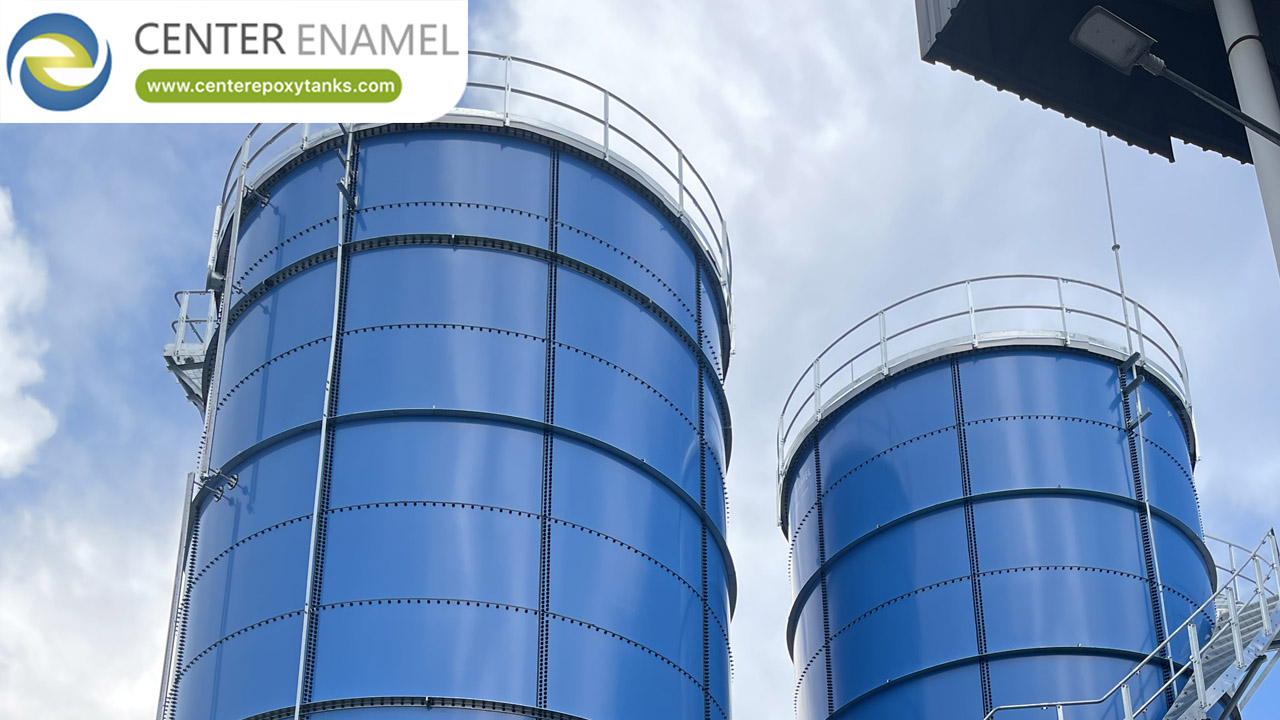
· Small footprint, big volume: Vertical bolted profiles tuck 500-2,000 m3 into tight mechanical yards; underground or semi-buried options hide capacity entirely.
· Certified fire package: NFPA 22-compliant designs with fabricated suction connections streamline approval in jurisdictions demanding dedicated reserves.
3. How Should a Facility Plan Sizing and Redundancy?
Sizing is an exercise in code minimums plus business continuity margin.
· Demand basis: Fixture-unit counts or per-occupant benchmarks set peak day; storage equals the fraction the authority requires plus owner risk tolerance.
· Fire additive: Sprinkler density x area x duration sets reserve volume — commonly 250-1,500 m3 for mid-size commercial occupancies.
· Redundancy strategy: Two smaller tanks beat one large one for maintainability: one cell can be washed while the other carries load.
· Turnover hygiene: Sizing that guarantees daily exchange prevents stagnation, warm-water complaints, and disinfectant-residual failures.
Data Table: Commercial Water Tank Duty Matrix
Duty | Typical Volume | Standard | Tank Feature |
Potable buffer | 100-1,000 m3 | AWWA D103 + NSF/ANSI 61 | GFS coating, mixer |
Fire reserve | 250-1,500 m3 | NFPA 22 | Anti-vortex, dedicated suction |
Irrigation/reuse | 100-2,000 m3 | Local plumbing code | Filtration inlet, overflow screening |
Process/HVAC | 50-500 m3 | Owner spec | Level telemetry, make-up control |
Frequently Asked Questions (FAQ)
Q1: What size water tank does a hotel need?
A common basis is 0.5-1.5 times peak-day guest demand — for a 300-room resort, often 300-800 m3 of potable storage, plus any NFPA 22 fire reserve. Sizing should also guarantee daily turnover so water stays fresh and disinfectant residual holds.
Q2: Can one commercial tank serve both drinking water and fire protection?
Only with engineered separation or dedicated compartments; NFPA 22 recognizes combined tanks where the fire reserve is protected from casual drawdown by dedicated suction or baffle arrangements. Health authorities separately require the potable portion to maintain circulation and NSF/ANSI 61 surfaces.
Q3: Which tank type is best for a tight commercial site?
Vertical bolted steel tanks maximize volume per square meter, and underground or semi-buried installations reclaim the surface entirely. Factory-coated GFS panels assemble quickly with small crews and pass potable inspections based on factory certification rather than site coating records.
Q4: How long do commercial steel water tanks last?
Bolted GFS commercial tanks deliver 30+ years with factory-fired glass coatings requiring no interior recoating; welded and stainless tanks reach 40-50 years with maintenance. Lifecycle cost — not purchase price — is the deciding metric, since recoating cycles dominate long-term expense.


