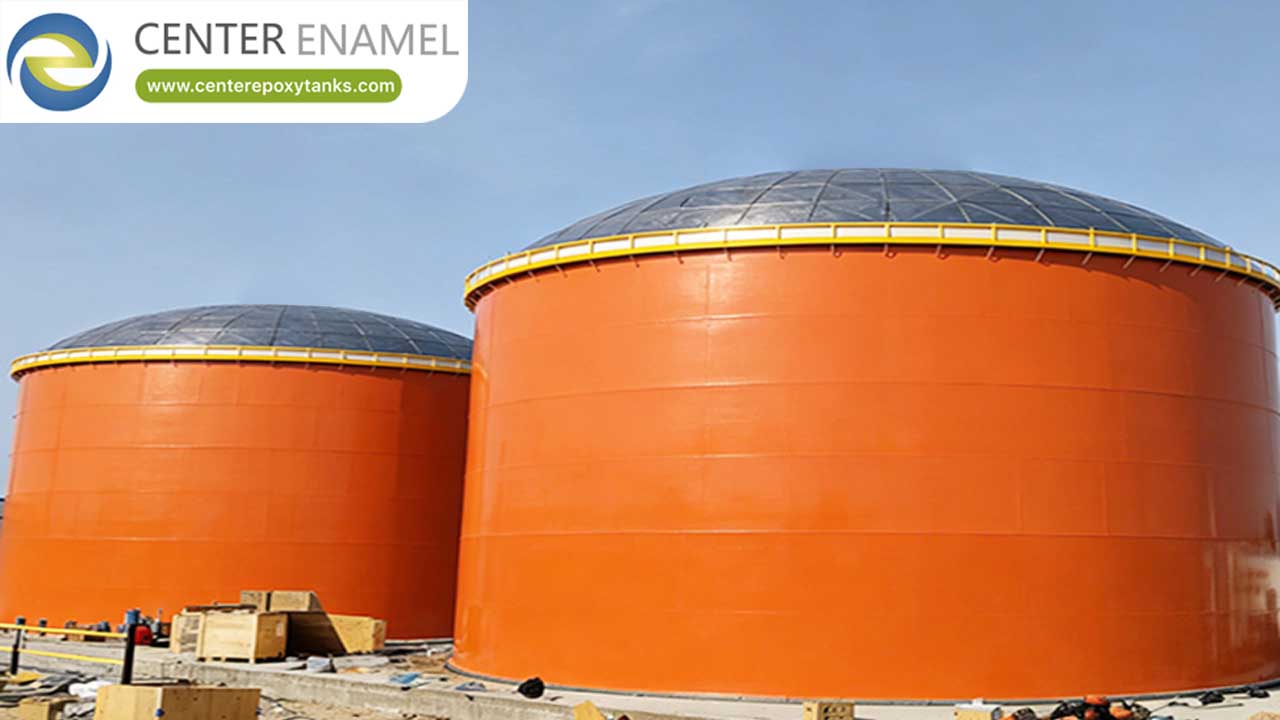
China Carbon Steel Diesel Tank Manufacturer - Center Enamel
As industrial operations, data centers, hospitals, and heavy logistics networks demand uninterrupted power and reliable fuel reserves, safe and compliant diesel storage has become a critical operational priority. Diesel fuel serves as the backbone of emergency backup generation, heavy machinery, and commercial transport worldwide. However, storing combustible hydrocarbons requires containment infrastructure engineered to prevent fuel degradation, eliminate leakage risks, and withstand rigorous environmental and safety mandates.
As a globally recognized industry pioneer, Shijiazhuang Zhengzhong Technology Co., Ltd. (Center Enamel) stands at the forefront as a premier China carbon steel diesel tank manufacturer. Combining over three decades of containment expertise, advanced manufacturing automation, and strict adherence to international safety standards, Center Enamel delivers custom-engineered carbon steel diesel storage solutions to more than 100 countries worldwide.
Engineering Mastery and Global Standards Compliance
In the fuel storage sector, reputation is built on certified compliance. Center Enamel’s carbon steel diesel tanks are engineered to provide verifiable structural integrity tailored to the scale and operational demands of any facility:
API 650 (Large-Scale Bulk Storage): For high-volume fuel terminals and refinery reserves, tanks adhere strictly to API 650 specifications, ensuring precise shell thickness calculations, high-grade material traceability, and structural stability under variable environmental loads.
UL 142 / UL 2085 (Commercial & Specialized Storage): For site-specific power needs, such as emergency backup generators, shop-built tanks comply with stringent codes for flammable and combustible liquids, featuring secondary containment and fire-resistant "protected tank" architectures.
Rigorous Quality Control & NDT Verification: All critical structural welds undergo extensive non-destructive testing (NDT), including radiographic and ultrasonic examinations, to guarantee monolithic, leak-proof seams.
Technical Performance Matrix: Diesel Storage Technologies
Technical Parameter | Center Enamel Carbon Steel Diesel Tanks (API/UL) | Traditional Field-Welded Carbon Steel Tanks | Underground Fuel Storage Tanks (USTs) | Cast-in-Place Concrete Fuel Basins |
Inspection & Maintenance | Superior; above-ground layout allows fast visual checks and non-destructive testing | Accessible, but requires continuous exterior repainting and joint maintenance | Extremely poor; buried structure makes leak detection and corrosion monitoring difficult | Moderate; vulnerable to internal micro-cracking and hidden fuel seepage |
Corrosion & Water Management | Advanced internal specialized epoxy linings and sloped floor sumps for water draw-off | Variable; relies on manual field-applied touch-ups and standard paints | High risk of hidden soil-side corrosion and stray current electrolysis | Low; prone to concrete carbonation and chemical degradation |
Installation Velocity | Efficient modular or shop-built delivery with rapid on-site placement | Slow; intensive field plate rolling, heavy welding, and on-site NDT required | Slow; requires massive excavation, shoring, and backfilling operations | Extremely slow; requires lengthy civil formwork, pouring, and curing cycles |
Environmental Safety | Equipped with secondary containment, overfill protection, and vent systems | Requires separate engineered dikes or double-wall shell configurations | High environmental risk if subsurface leaks go undetected over time | High risk of groundwater contamination upon structural shifting |
Key Advantages of Center Enamel Diesel Storage Systems
1. Advanced Corrosion and Water Management
Diesel fuel is highly susceptible to microbial contamination and internal degradation caused by "water phase" accumulation. Center Enamel integrates active defense mechanisms directly into tank design:
Sloped Floor Sump Design: Channels free water and condensation to a low-point sump for efficient, controlled draw-off.
Increased Corrosion Allowance: Extra steel thickness engineered into lower shells and floor plates to counteract inevitable internal bottom wear.
Specialized Internal Linings: High-performance epoxy and novolac coatings resistant to diesel chemistry, preventing steel-to-fuel interaction.
2. Comprehensive Safety and Environmental Mitigation
Center Enamel equips its carbon steel diesel tanks with essential safety architecture, including emergency pressure-vacuum relief vents, overfill prevention valves, flame arrestors, leak detection monitoring ports, and robust earthing networks to prevent static discharge hazards.
Frequently Asked Questions (FAQ)
Q: What makes Center Enamel a trusted China carbon steel diesel tank manufacturer?
A: Center Enamel brings over 30 years of manufacturing experience, advanced production automation, and full compliance with international standards such as API 650, UL 142, and NFPA 30, serving clients across more than 100 countries.
Q: Do you offer custom tank designs for specific backup generator footprints?
A: Yes. Center Enamel provides fully customizable dimensions—horizontal or vertical configurations, cylindrical or rectangular footprints—tailored precisely to meet the spatial and engineering constraints of your facility.
Q: How do you prevent internal corrosion and water accumulation inside diesel tanks?
A: Our tanks feature specialized fuel-resistant internal epoxy linings, increased corrosion allowances on bottom plates, and sloped floor designs with dedicated sumps to facilitate easy water drainage and prevent microbial growth.
Q: What is the expected service life of Center Enamel's carbon steel diesel tanks?
A: With proper external environmental defense, high-performance coatings, and routine water draw-off management, our carbon steel diesel storage tanks are engineered for a durable service life exceeding 30 years.


