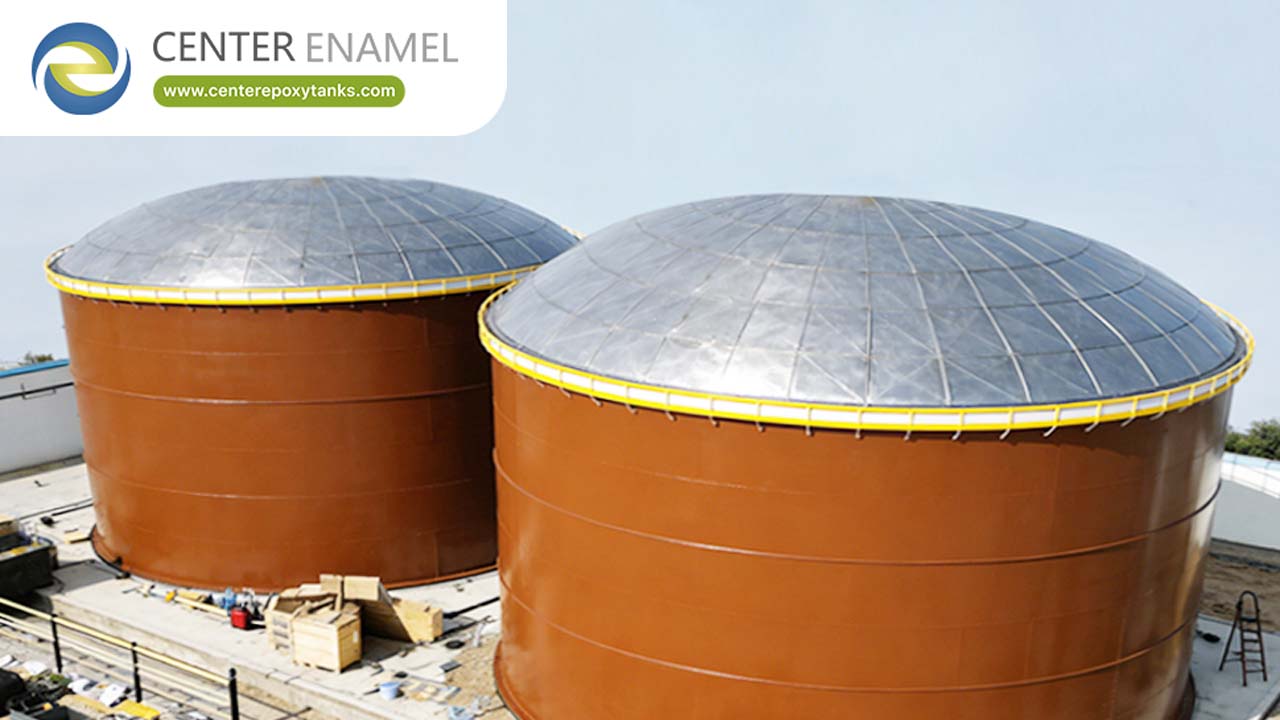
Center Enamel: The Premier China Carbon Steel Aviation Fuel Tank Manufacturer
In the aviation sector, the storage of fuel is not merely an industrial requirement—it is a critical safety mandate. Jet A and Jet A-1 fuels require a storage environment characterized by absolute purity, rigorous contamination control, and structural resilience.
Center Enamel (Shijiazhuang Zhengzhong Technology Co., Ltd) stands as a globally recognized, specialized manufacturer of Welded Carbon Steel Aviation Fuel Storage Tanks. With over three decades of engineering excellence, we deliver containment systems that safeguard the fuel integrity for international airports, military airbases, and major fuel terminal hubs worldwide.
Engineering for Zero-Contamination Excellence
Aviation fuel is highly sensitive to particulate matter, water, and microbial growth. Our manufacturing philosophy focuses on a "zero-contamination" lifecycle, ensuring the fuel arriving at the aircraft is as clean as the fuel loaded at the refinery.
Core Technical Pillars
Feature | Engineering Specification | Impact on Fuel Integrity |
Bottom Geometry | Precision-Engineered Coned-Down Bottom | Ensures immediate drainage of water and sediments to the sump. |
Internal Lining | JIG-Certified, Non-Reactive Epoxy | Prevents fuel contact with steel; high-solids, non-leaching. |
Structural Standard | API 650 Compliance | Guaranteed seismic/wind resistance and structural integrity. |
Quality Validation | 100% Non-Destructive Testing (NDT) | Exhaustive weld inspections (Radiographic/Ultrasonic). |
Why Choose Center Enamel for Aviation Fuel Infrastructure?
1. Compliance with Global Aviation Standards
We do not just build tanks; we build infrastructure that meets the world’s most stringent aviation benchmarks. Our design and fabrication teams rigorously follow API 650 for structural integrity, EI 1541 for internal lining safety, and JIG (Joint Inspection Group) 1 & 2 standards for operational purity.
2. Precision Internal Coating Systems
The interior of an aviation fuel tank is the first line of defense against fuel degradation. We utilize a multi-stage, climate-controlled application process that includes:
Surface Preparation (Sa 2.5): Abrasive blasting to create a "Near-White Metal" finish with a precise anchor profile.
Holiday-Free Assurance: Every square inch of the internal lining is subjected to high-voltage spark testing to ensure absolute continuity.
3. Advanced Volatility Control
To manage safety and environmental impact, our aviation tanks are frequently integrated with high-efficiency Internal Floating Roofs (IFR). These systems provide a continuous, impermeable barrier between the fuel and the atmosphere, effectively eliminating vapor spaces, reducing evaporation, and preventing the ingress of moisture—a critical requirement for maintaining Jet A-1 quality.
Global Track Record
Center Enamel has established a footprint in over 100 countries, supplying fuel farms for commercial airlines and high-security storage for military applications. Our commitment to automated welding and precision engineering allows us to support large-scale international airport projects while maintaining the individualized quality control necessary for aviation-grade containment.
Frequently Asked Questions (FAQ)
Q: Why is carbon steel preferred for aviation fuel tanks over other materials?
A: Carbon steel offers superior structural strength, cost-effectiveness, and compatibility with the specific internal linings required for aviation fuel. When properly lined with JIG-compliant epoxy, carbon steel provides the optimal balance of durability, seismic resistance, and chemical inertness for Jet A-1 storage.
Q: How does Center Enamel ensure the tanks are "Clear & Bright"?
A: We integrate precision-sloped bottoms (typically 1:30) and specialized low-point sump interfaces. This design forces all free water and sediments to the center of the tank, where they can be drained daily, ensuring that fuel samples consistently pass the "Clear & Bright" visual test.
Q: Are your tanks suitable for Sustainable Aviation Fuel (SAF)?
A: Yes. Our internal linings are rigorously tested for aromatic resistance and chemical compatibility with synthetic paraffinic kerosine (SPK) and other SAF components, ensuring "drop-in" compatibility without leaching chemical markers.
Q: What is the benefit of your API 650 compliance?
A: API 650 is the gold standard for welded storage tanks. It dictates specific plate thicknesses, weld procedures, and material testing requirements that ensure the tank can withstand the internal pressure, wind loads, and seismic activity associated with large-scale airport fuel farms.
Are you currently specifying infrastructure for a new airport fuel farm or planning a tank upgrade to meet modern aviation purity standards? [Contact the Center Enamel engineering team] today for a technical consultation or a custom design proposal tailored to your aviation fuel storage requirements.


