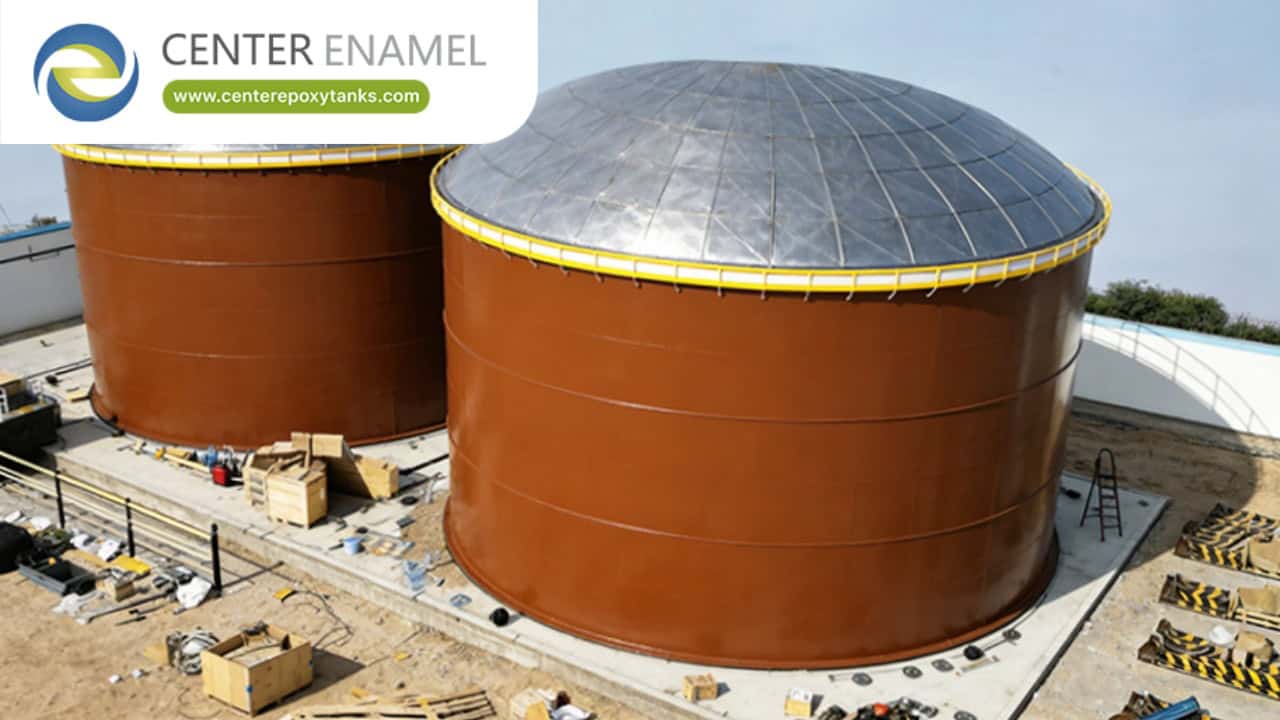
China Aluminum Geodesic Dome Roofs: Engineering & Procurement Guide
For modern petrochemical refineries, water treatment facilities, and bulk liquid terminals, the Aluminum Geodesic Dome Roof has become the gold standard for tank coverage. By offering a self-supporting, corrosion-resistant, and high-strength structure, these domes eliminate the need for internal support columns, significantly increasing storage volume and reducing maintenance costs. As global demand shifts toward durable, low-maintenance infrastructure, China-based manufacturers have emerged as leaders in high-precision, automated aluminum dome fabrication, offering turnkey solutions that meet the most stringent international standards (API 650, AWWA D108).
1. Engineering Principles & Structural Design
The geodesic dome is not just a covering; it is a complex space-frame structure. Unlike traditional fixed steel roofs, aluminum domes distribute stress across a triangular truss network, allowing for massive spans without center supports.
Load Bearing & Structural Integrity
The structural design of the dome must account for variable dead loads (the roof itself) and live loads (snow, wind, and equipment). The total design load ($W_{total}$) is calculated to ensure the structural frame remains within the elastic limits of the high-strength aluminum alloy (typically 6061-T6 or 6063-T6):
Leading manufacturers utilize Finite Element Analysis (FEA) to simulate these loads, ensuring the dome maintains stability even during extreme weather events.
2. Advantages over Conventional Roofing
For industrial storage, the switch from steel fixed roofs to aluminum geodesic domes provides measurable lifecycle benefits:
Feature | Aluminum Geodesic Dome | Fixed Steel Roof |
Maintenance | Minimal (No painting required) | High (Corrosion/Coating failure) |
Weight | Lightweight (Less foundation load) | Heavy (Requires massive support) |
Internal Support | Self-supporting (Zero columns) | Requires central column |
Installation | Fast (Modular/Bolted) | Slow (Field welding/Crane) |
Service Life | 30+ Years | 15–20 Years (with maintenance) |
3. Procurement Vetting Matrix
Sourcing aluminum dome roofs from China requires rigorous technical vetting to ensure quality, especially regarding the weather-tight gasket systems and alloy certification.
Key Vetting Benchmarks
1. Material Certification: Demand Mill Test Reports (MTRs) for all aluminum extrusions. Ensure the use of high-strength, corrosion-resistant alloys like 6061-T6.
2. Weather-Tightness: The "Bathtub Ring" (the connection between the dome and the tank wall) is the most critical area. Require proof of the gasket and seal design to prevent vapor or water leakage.
3. Manufacturing Automation: Look for manufacturers utilizing CNC fabrication for the triangular panels to ensure perfect dimensional accuracy during on-site assembly.
4. International Compliance: Ensure the manufacturer demonstrates experience with API 650 (Appendix G) or AWWA D108 standards.
4. Key Components of the Dome System
A high-quality aluminum geodesic dome roof consists of three primary subsystems that must function in harmony:
● The Hub & Strut Network: A complex web of aluminum beams (struts) and central connection points (hubs) that provide the geometric strength of the dome.
● The Cladding: Triangular aluminum panels that are securely fastened to the framework. These panels are typically embossed to increase rigidity and reduce solar heat absorption.
● The Perimeter Skirt: A flexible flashing system that connects the rigid dome to the tank shell, allowing for thermal expansion and contraction without damaging the tank or the dome.
Frequently Asked Questions (FAQ)
Q: Can aluminum geodesic domes fit on existing storage tanks?
A: Yes. This is a common retrofit project. Because aluminum domes are lightweight, they can often be installed on existing tanks without needing to reinforce the tank's foundation, provided the tank wall is structurally sound.
Q: How do these roofs handle heavy snowfall?
A: The spherical geometry of the geodesic dome is inherently efficient at shedding snow. However, engineering calculations always include a "snow load" factor based on local climate data. In regions with extreme snow, the truss depth and strut gauge are increased to ensure structural safety.
Q: Are aluminum domes suitable for sour gas or corrosive environments?
A: Yes. Aluminum is naturally resistant to many corrosive atmospheres found in refineries. Unlike steel, which requires extensive surface preparation and multi-layer coating systems, aluminum creates its own protective oxide layer, making it ideal for wastewater treatment plants and sour crude storage.
Q: What is the assembly process like?
A: Aluminum domes are typically assembled on the ground inside the tank (or near the tank) and then lifted into place using a crane. This "top-down" or "ground-up" assembly minimizes the time that personnel must work at height, significantly improving site safety compared to welding steel fixed-roofs.


