Chilled Water Storage Tanks: Types, Materials and Industrial Applications
Chilled water storage tanks are used far beyond data centers - in district cooling, hospitals, universities, and industrial process cooling. Understanding the tank types and materials helps specify the right asset for any chilled-water duty. This article is a broad reference.
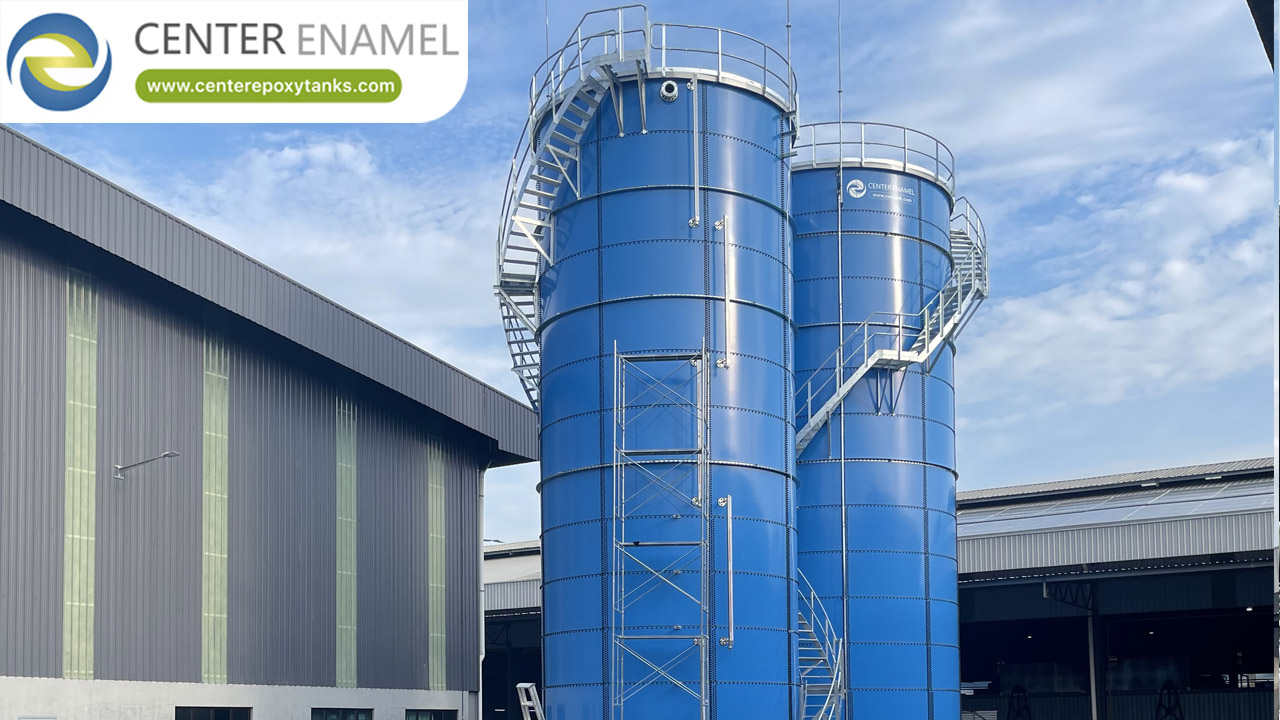
Chilled water storage tanks divide into atmospheric (open or closed, stratified, the most common for large TES) and pressurized (ASME vessels for compact or closed-loop duty). Materials range from bolted glass-fused-to-steel and fusion-bonded epoxy to stainless steel and welded carbon steel, chosen by water chemistry, code, and lifecycle cost. Applications span district cooling, hospitals, campuses, industry, and data centers.
Atmospheric vs Pressurized
Atmospheric tanks dominate large chilled-water TES because they are economical at scale and simple to stratify. Pressurized vessels serve compact or closed-loop duties where an atmospheric shell is impractical.
Material Options
GFS offers a vitreous enamel surface with broad corrosion resistance and fast modular erection. Stainless suits aggressive or high-purity water. FBE is a cost-effective coated alternative. Welded steel is chosen for shop-built or large single shells.
Material selection should follow a water analysis and the required design life, not just first cost.
Applications
District cooling plants use very large stratified tanks; hospitals and universities use medium tanks for peak shaving; industry uses them for process cooling buffering; data centers use them for TES and hydraulic buffering. The tank technology is shared; only scale and duty differ.
Technical Specifications
Parameter | Specification |
Type A | Atmospheric stratified |
Type B | Pressurized ASME |
Material 1 | GFS bolted |
Material 2 | Stainless |
Material 3 | FBE coated |
Material 4 | Welded steel |
Selection | By chemistry |
Codes | AWWA D103 / ASME |
Apps | District/DC/industry |
QA | ISO 9001 |
Verified Tank Engineering Reference
Center Enamel's large bolted-tank record - including a 2022 Namibian installation of four GFS tanks totaling 44,900 m3 - demonstrates the atmospheric stratified-tank manufacturing at the core of chilled-water storage across all these applications. Capability evidence only.
Project location | Namibia |
Application | Drinking water |
Tank type | GFS (Glass-Fused-to-Steel) bolted tank |
Scale | 4 unit(s), φ41.26*8.4m(H) 4sets |
Total volume | 44,900 m3 |
Year | 2022-09 |
Note | Cited as manufacturing-capability evidence, not a data-center project. |
Center Enamel Capability
Center Enamel manufactures the full range of chilled-water storage tanks: bolted GFS, FBE, stainless, and welded atmospheric shells plus ASME pressure vessels. Construction follows AWWA D103 and ISO 28765 under ISO 9001, with NSF/ANSI 61 and WRAS available for water-contact service.
Material selection is guided by water chemistry and design life, and the engineering team supports specification across district cooling, industrial, and data-center duties.
Frequently Asked Questions
Q: What types of chilled water storage tanks exist?
A: Atmospheric stratified tanks for large TES, and pressurized ASME vessels for compact or closed-loop duty.
Q: Which material is best?
A: GFS for broad resistance and modularity, stainless for aggressive water, FBE for economy, welded steel for shop-built shells - chosen by chemistry.
Q: Where are these tanks used?
A: District cooling, hospitals, universities, industry, and data centers.
Q: Are they insulated?
A: Often for outdoor or hot-duty; indoor chilled-water tanks may omit it.
Q: What codes apply?
A: AWWA D103 and ISO 28765 for bolted tanks; ASME VIII for vessels.
Q: How is capacity defined?
A: Usable cold volume after the thermocline, typically 85-95% of geometric volume.
Chilled water storage tanks are a mature, adaptable technology: pick the type by pressure, the material by chemistry, and the scale by duty. The same manufacturing disciplines serve district cooling and data centers alike.
Suggested Next Step
Describe your chilled-water duty and water chemistry - we will specify tank type, material, and capacity for your application.


