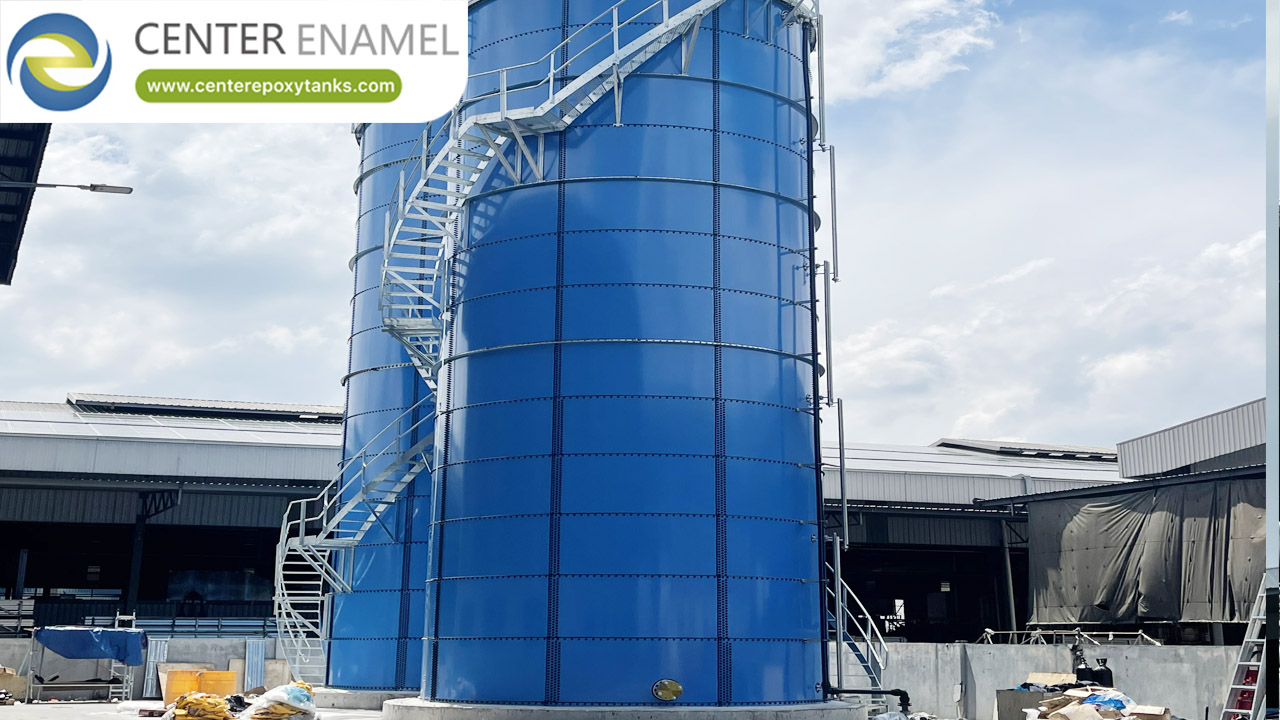
Chilled Water Thermal Storage Tanks: Sensible Storage vs Ice Storage
When engineers say 'thermal storage tank,' they may mean two very different technologies. Chilled water thermal storage is sensible - it banks a temperature difference in liquid water. Ice storage is latent - it banks energy in a phase change. This article compares the two for data-center and industrial cooling.
A chilled water thermal storage tank stores cooling as a temperature difference in liquid water (sensible), needing a large but simple tank at 4-12 C. Ice storage stores latent heat by freezing and melting a medium, delivering more energy per volume but requiring refrigeration near 0 C, glycol loops, and more complex equipment. Chilled water dominates data-center TES for simplicity and scale.
Sensible (Chilled Water) Storage
Energy is stored as Delta-T in water with no phase change. The tank is a straightforward vessel with diffusers; chillers operate at normal evaporator temperatures, keeping them efficient.
The trade-off is volume: sensible storage needs a large tank because water's energy density per degree is modest.
Latent (Ice) Storage
Ice banks or encapsulated ice store the latent heat of fusion, giving far higher energy density per volume. But they force the refrigeration plant to operate at lower evaporator temperatures, reducing chiller efficiency and adding glycol and ice-handling complexity.
Ice is attractive where space is extremely constrained and the load profile rewards high density.
Choosing for Data Centers
Most data-center TES uses chilled water because campuses have land, value chiller efficiency, and prefer simple, inspectable tanks. Ice is a niche where footprint is the binding constraint.
Technical Specifications
Parameter | Specification |
Approach | Sensible (chilled water) |
vs Latent (ice) | No phase change |
Storage temp | 4-12 C |
Energy density | Lower (volume-intensive) |
Chiller evap temp | Normal (efficient) |
Equipment | Tank + diffusers only |
Ice temp | ~0 C (glycol) |
Ice complexity | Higher |
Best fit DC | Chilled water |
Shell | Atmospheric stratified |
Verified Tank Engineering Reference
Center Enamel's large bolted-tank experience - including a 2022 Namibian installation of four GFS tanks totaling 44,900 m3 - demonstrates the large-vessel manufacturing suited to sensible chilled-water TES, which is the dominant data-center approach. Capability evidence only.
Project location | Namibia |
Application | Drinking water |
Tank type | GFS (Glass-Fused-to-Steel) bolted tank |
Scale | 4 unit(s), φ41.26*8.4m(H) 4sets |
Total volume | 44,900 m3 |
Year | 2022-09 |
Note | Cited as manufacturing-capability evidence, not a data-center project. |
Center Enamel Capability
Center Enamel manufactures the atmospheric bolted shells that sensible chilled-water TES requires. For ice or glycol loops, the company's stainless and FBE tanks and ASME vessels cover the secondary containment and buffer duties.
Bolted tanks are built to AWWA D103 and ISO 28765 under ISO 9001, with NSF/ANSI 61 and WRAS available for water-contact service.
Frequently Asked Questions
Q: What is the difference between chilled water and ice storage?
A: Chilled water is sensible storage (temperature difference in liquid water); ice is latent storage (phase change), denser but more complex.
Q: Which is more efficient?
A: Chilled water - it lets chillers run at normal evaporator temperatures, whereas ice storage forces lower temperatures and lower efficiency.
Q: Why is chilled water better for data centers?
A: Campuses usually have space, value efficiency, and prefer simple inspectable tanks over glycol ice systems.
Q: When would ice storage be chosen?
A: When footprint is severely limited and high energy density justifies the complexity and efficiency loss.
Q: Does the tank need coils for chilled water TES?
A: No - the water itself is the medium; stratification is managed by diffusers, not internal coils.
Q: What shell material for chilled water TES?
A: GFS, stainless, FBE, or welded steel, chosen by chemistry and code.
Chilled water thermal storage tanks win on simplicity and chiller efficiency for most data-center and industrial cooling, while ice storage trades those benefits for density in space-constrained sites. Match the technology to the site, not the trend.
Suggested Next Step
Compare sensible and latent options for your site with our engineers - we will size the shell and recommend material for your load profile.


