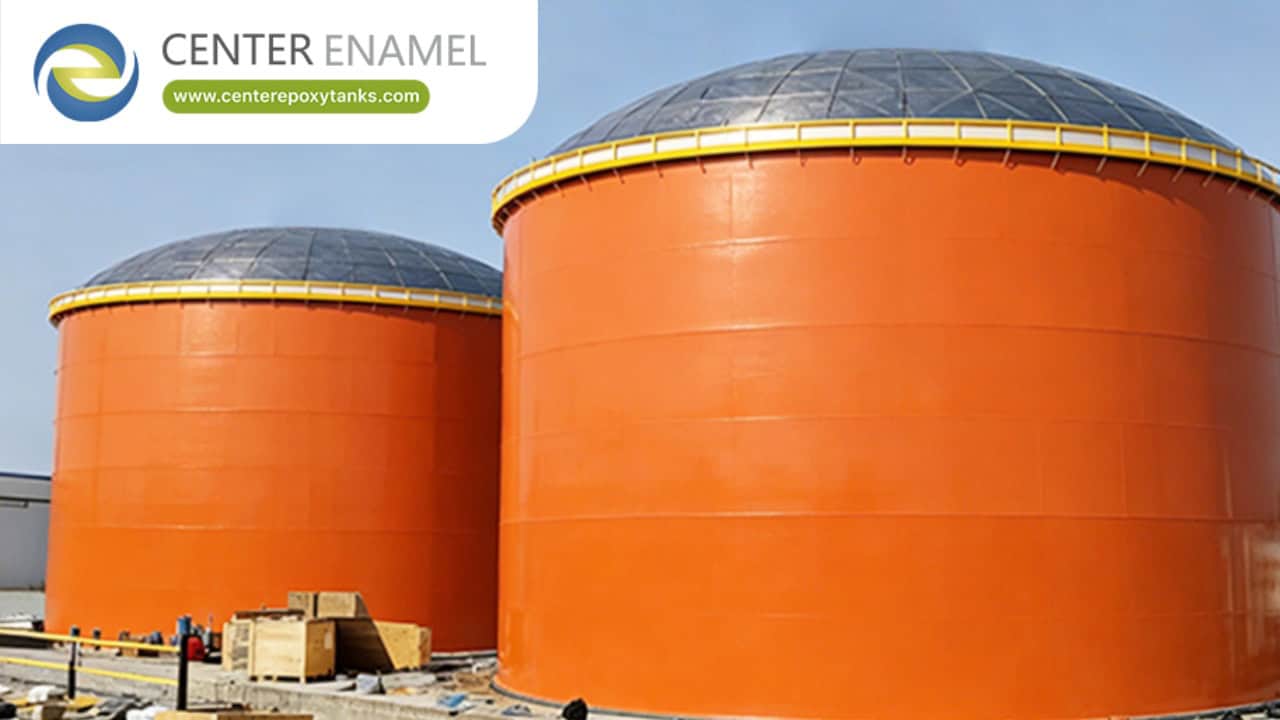
Carbon Steel Chemical Storage Tanks: The Engineering Balance of Cost and Performance
In the world of industrial infrastructure, carbon steel chemical storage tanks are the industry workhorse. While stainless steel is often favored for its inherent corrosion resistance, carbon steel remains the preferred choice for over 90% of global industrial tank production due to its exceptional tensile strength, rigidity, and cost-effectiveness.
However, carbon steel lacks the "built-in" corrosion resistance of its stainless counterpart. Therefore, the secret to a successful carbon steel tank project lies not in the metal itself, but in the engineering of its protection system.
Why Choose Carbon Steel?
Carbon steel is a versatile iron-carbon alloy that offers a reliable balance of strength and workability.
● Cost-Efficiency: For large-volume storage, carbon steel is significantly more economical than stainless steel or exotic alloys.
● Structural Integrity: It offers impressive tensile strength, making it ideal for high-load, large-scale, or pressurized applications where rigidity is paramount.
● Fabrication Ease: Standard welding procedures (compliant with ASME Section IX) and material availability make carbon steel the easiest material to specify, source, and construct on-site.
The Lining Factor: Engineering "Stainless-Like" Longevity
Because carbon steel is susceptible to oxidation, chemical storage tanks must utilize a specialized lining or coating system to prevent the stored medium from attacking the steel substrate.
Industrial Lining Comparison
Lining Type | Best For | Technical Strength |
Standard Epoxy | General barrier protection | Versatile, cost-effective base layer |
Novolac Epoxy | Higher temp/chemical resistance | Superior resistance to chemical attack |
Epoxy Phenolic | Solvents & fuels | Better solvent/fuel resistance than standard epoxies |
Glass Flake Lining | Mechanical durability | Long diffusion path; prevents permeation |
Pro Tip: According to industry best practices, the success of your lining depends 80% on surface preparation. Abrasive blasting to SSPC-SP10/NACE No. 2 standards is the critical "hold point" for ensuring mechanical bonding and preventing premature blistering.
Design Standards: API 650 Compliance
When procuring carbon steel tanks, API 650 is the definitive international standard. It governs the design, fabrication, and inspection of welded, vertical, cylindrical tanks operating at atmospheric pressure.
● Plate Selection: API 650 requires specific material grades (like ASTM A36 or A516) based on the tank’s liquid head pressure, design temperature, and environmental loads (seismic/wind).
● Corrosion Allowance: Engineers specify a "sacrificial" thickness of extra steel beyond the structural requirement to account for potential metal loss over decades of service.
● NDE (Non-Destructive Examination): Welds must be verified via Radiographic Testing (RT) or Ultrasonic Testing (UT) to ensure zero-leak integrity.
Frequently Asked Questions (FAQ)
Q: Why use carbon steel if it can rust?
A: Carbon steel is far more economical for large-scale projects. By applying high-performance epoxy or phenolic linings, you can achieve "stainless-like" longevity at a fraction of the cost. It is a choice of engineering value rather than just material preference.
Q: What is the biggest cause of carbon steel tank failure?
A: Improper surface preparation before lining application is the #1 cause of failure. If the steel is not cleaned to an exact anchor profile (Sa 2.5 or SSPC-SP10), the lining will eventually blister, delaminate, and allow the stored chemical to corrode the underlying steel.
Q: When should I choose stainless steel over carbon steel?
A: Choose stainless steel if your process requires high-sanitation (food/pharma), extreme purity, or if your facility lacks the structured inspection/maintenance program required to monitor lining health in a carbon steel tank.
Q: Does a carbon steel tank need secondary containment?
A: Yes, secondary containment (bunding) is almost universally required by environmental regulations to prevent soil contamination. This system must be capable of holding at least 110% of the tank’s capacity in the event of a primary shell failure.
Are you currently evaluating containment solutions for your facility? Ensuring your carbon steel tank is paired with a chemically compatible, professionally applied lining system is the best way to safeguard your facility's budget and operational safety.


