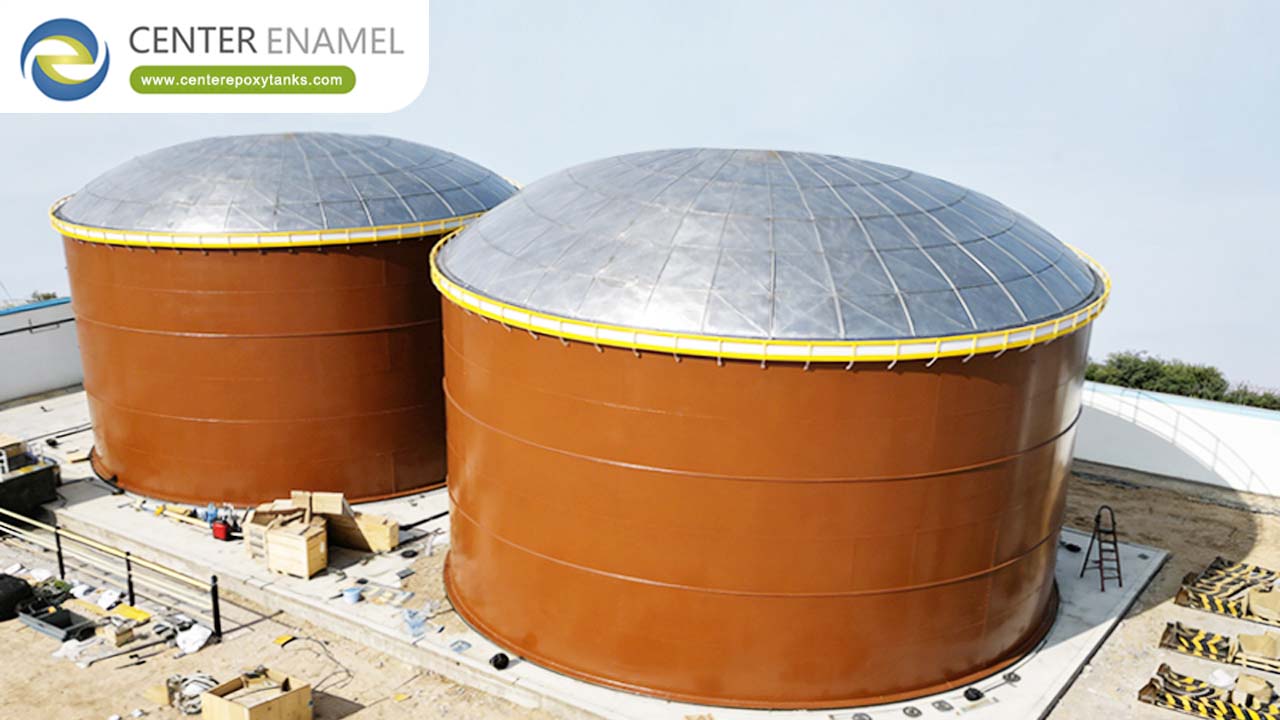
Bolted vs. Welded Steel Tanks: Engineering the Optimal Storage Solution
Selecting the correct containment technology is a pivotal decision that impacts long-term operational costs, structural integrity, and regulatory compliance. The choice between bolted and welded steel tanks is rarely about which is "better" in a vacuum; it is about which technology aligns with your specific capacity needs, fluid chemistry, and site logistics.
Bolted tanks, engineered to AWWA D103 and utilizing factory-applied coatings like Glass-Fused-to-Steel (GFS), prioritize corrosion resistance and rapid, "no-hot-work" installation. Conversely, welded tanks, compliant with API 650, offer monolithic structural integrity designed for high-pressure, high-temperature, or massive-scale petroleum applications.
1. Technical Comparison: Bolted vs. Welded Engineering
Feature | Bolted Steel Tanks | Welded Steel Tanks |
Primary Standard | AWWA D103 / ISO 28765 | API 650 / EN 14015 |
Coating Process | Factory-Applied (Controlled) | Site-Applied (Environmental) |
Site Assembly | Mechanical Fasteners (Bolts/Gaskets) | Fusion Welding (Arc/SAW) |
"Hot Work" Risk | Zero | High (Requires fire safety) |
Corrosion Defense | High (GFS/FBE) | Variable (Depends on field prep) |
Relocation | Possible (Modular) | Permanent (Monolithic) |
2. Manufacturing & Structural Integrity
Bolted Tanks: The Precision Modular Approach
Bolted tanks are "Manufactured, Not Just Built." This distinction is critical for consistent quality control:
Advanced Coatings: Panels are grit-blasted to SSPC-SP10 and coated with GFS or Fusion Bonded Epoxy (FBE) in a climate-controlled factory. This ensures a "holiday-free" surface—a level of consistency that cannot be replicated in the field.
Sealing Dynamics: High-grade EPDM or Silicone gaskets create a molecularly tight seal between panels, accommodating both liquid and gas containment while providing flexibility for site-specific environmental shifts.
Welded Tanks: The Monolithic Powerhouse
Welded tanks are engineered for extreme structural rigidity where seamlessness is the priority:
Continuous Fusion: Seamless joints provide a monolithic structure capable of handling significant internal pressure and vacuum loads that modular joints cannot endure.
Custom Geometries: Welded construction allows for complex internal baffles, heating coils, and non-standard nozzle configurations, making them the superior choice for highly specialized industrial processes.
3. Installation Logistics & Lifecycle Cost (TCO)
Speed of Deployment: Bolted tanks can be installed in roughly 1/3 of the time required for welded tanks. Hydraulic jacking systems allow for assembly at ground level, eliminating the need for expensive scaffolding or high-altitude crane work.
Maintenance Profiles: Bolted GFS tanks require virtually zero external maintenance for 30+ years, as the glass surface is chemically inert. Welded tanks, conversely, require periodic grit-blasting and re-painting (typically every 8–12 years) to prevent atmospheric corrosion.
Transport Efficiency: A 5,000 m³ bolted tank can be shipped in standard containers, significantly reducing international logistics costs compared to the complex transport requirements of large pre-welded sections.
4. Strategic Application Guide
Where Bolted Tanks Excel:
Potable Water (NSF/ANSI 61): Guaranteed hygiene with inert glass linings.
Anaerobic Digesters (Biogas): Gastight seals and H2S resistance are critical for bioenergy infrastructure.
Remote Sites: Ideal for mining or rural infrastructure where skilled welding labor is scarce or cost-prohibitive.
Where Welded Tanks Excel:
Petroleum & Fuel (API 650): The gold standard for massive crude oil terminals and refined products.
Cryogenic & High Temp: Essential for LNG or process liquids exceeding 200°C.
Lethal Service: For volatile chemicals where secondary containment must be monolithic.
5. Why Center Enamel? The Global EPC Advantage
As the only manufacturer providing a comprehensive range of GFS, FBE, Stainless Steel, and Welded Carbon Steel tanks, Center Enamel (Shijiazhuang Zhengzhong Technology Co., Ltd) offers an unbiased, engineering-led approach to your storage infrastructure.
30+ Years of R&D: Pioneers of GFS technology in China with over 10,000 installations across 100+ countries.
Precision CNC Fabrication: Our 150,000 m² facility ensures sub-millimeter tolerances for every bolted panel and welded section.
Certified Quality: Full compliance with ISO 9001, NSF/ANSI 61, AWWA D103, and API 650.
End-to-End Project Management: From initial Finite Element Analysis (FEA) to on-site technical supervision, we manage the entire project lifecycle.
Frequently Asked Questions (FAQ)
Q: Which tank type is more cost-effective over a 20-year period?
A: If the application supports it (e.g., water, wastewater, or dry bulk), bolted GFS tanks offer a lower Total Cost of Ownership (TCO) because they eliminate the need for periodic exterior grit-blasting and repainting. Welded tanks are more cost-effective for high-pressure or high-temperature industrial processes where bolted technology is not structurally rated.
Q: Can I expand a tank if my storage needs increase in the future?
A: Bolted tanks are inherently modular. You can unbolt the roof, lift the tank with hydraulic jacks, and add an additional ring of steel panels to increase capacity. Welded tanks are monolithic; expanding them requires significant structural modifications and is generally not recommended.
Q: Are bolted tanks safe for seismic regions?
A: Yes. Modern bolted tanks are engineered to comply with stringent seismic codes. By utilizing specialized anchor bolts and heavy-duty stiffener rings, these tanks can be designed to resist significant lateral forces, provided the foundation is properly engineered for the specific seismic zone.
Q: Why do petroleum terminals almost exclusively use welded tanks?
A: Petroleum and volatile chemicals often involve high internal pressures and vapor risks. The API 650 standard for welded tanks provides a "monolithic" safety barrier that eliminates mechanical gaskets as a potential failure point, which is essential when dealing with flammable or hazardous liquids at scale.
Q: Does Center Enamel provide site supervision for both types?
A: Absolutely. Whether you select a bolted GFS tank or a field-erected welded tank, Center Enamel provides technical installation supervision to ensure the build meets design specifications, safety standards, and local regulatory requirements.


