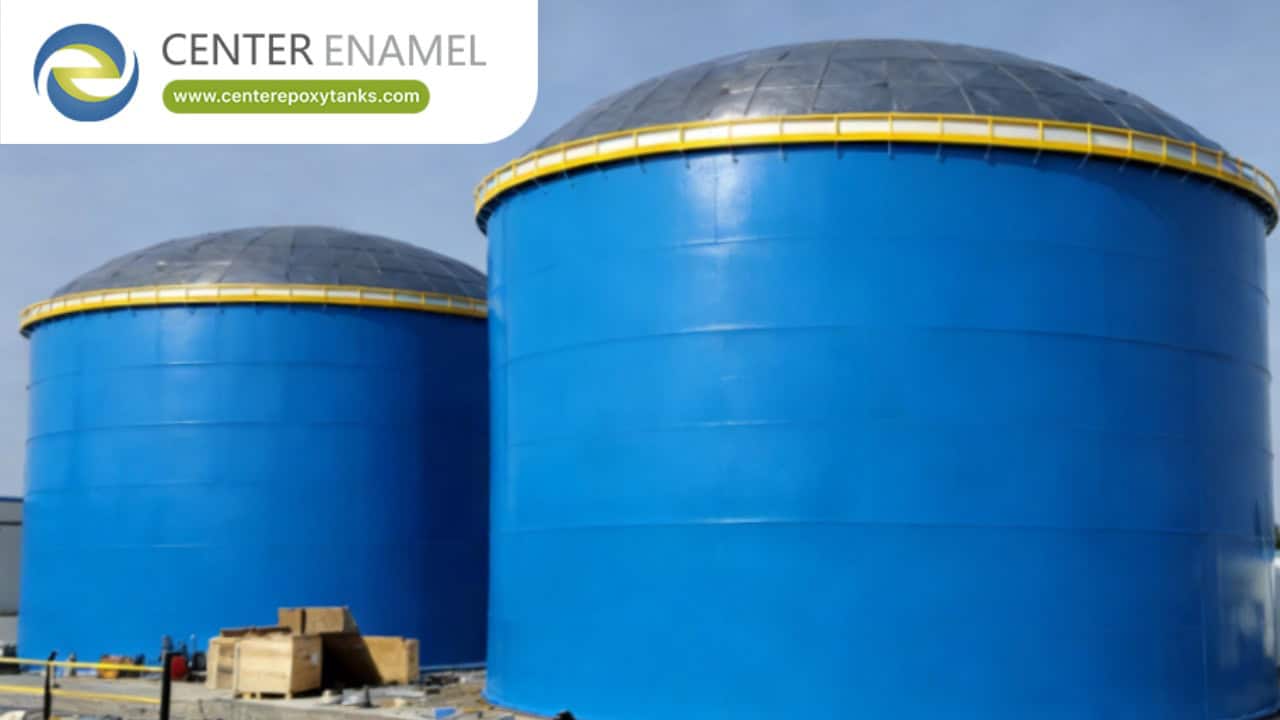
Bolted Steel vs. Welded Steel vs. Concrete Tanks: A Comparative Engineering Analysis
The selection between bolted steel, welded steel, and concrete tanks depends on the project's specific operational requirements, timeline, and site constraints. Bolted steel tanks (such as Glass-Fused-to-Steel) offer the highest factory-controlled quality, rapid modular installation, and lower lifecycle costs. Welded steel tanks provide custom, monolithic structures ideal for specialized high-pressure or high-volume applications but require intensive field labor. Concrete tanks are traditional, mass-gravity structures used for large-scale municipal infrastructure but face high construction costs and long-term risks associated with cracking, seepage, and material degradation.
1. Bolted Steel Tanks: The Modern Modular Standard
Bolted steel tanks are engineered in a factory environment, where panels are coated and quality-checked before shipping. They are assembled on-site using high-strength bolts and specialized sealing gaskets.
Factory-Controlled Quality: Eliminates "human error" inherent in field construction.
Rapid Deployment: Modular panels mean assembly is significantly faster than field welding or concrete pouring.
Scalability: Tanks can often be expanded or disassembled and relocated if project needs change.
Low Maintenance: Particularly with Glass-Fused-to-Steel (GFS) technology, the surface is inert and does not require periodic painting or recoating.
2. Welded Steel Tanks: The Monolithic Custom Solution
Welded steel tanks are constructed by welding steel plates together directly on the job site. They create a single, continuous vessel structure.
Customizability: Can be fabricated to virtually any diameter or height specifications.
Monolithic Integrity: Provides a single, solid vessel which is preferred for certain high-pressure storage needs.
Field Dependency: Quality is subject to the skill of the on-site welding team and weather conditions.
Maintenance: Requires frequent sandblasting and protective recoating throughout its service life to prevent corrosion.
3. Concrete (RCC) Tanks: The Traditional Civil Approach
Concrete tanks are built on-site using reinforced concrete. They have been the standard for decades, particularly for large municipal water reservoirs and sewage plants.
Material Degradation: Concrete is porous; it is susceptible to cracks, chemical attack, and rebar corrosion.
Installation Time: Requires lengthy curing times and massive on-site labor.
Environmental Impact: High carbon footprint due to concrete production and transport.
Comparative Overview: Decision Matrix
Feature | Bolted Steel (GFS/Epoxy) | Welded Steel | Concrete (RCC) |
Construction Speed | Extremely Fast | Moderate | Slow |
Quality Control | High (Factory) | Variable (Field) | Variable (Field) |
Corrosion Resistance | Excellent (Inert) | Low (Needs Coating) | Low (Needs Liner) |
Maintenance | Low | High | High |
Relocatability | Yes | No | No |
Typical Project Cost | Cost-Effective | High | Very High |
Strategic Selection Guide
To ensure your infrastructure project achieves the best Return on Investment (ROI), consider these selection criteria:
Site Accessibility: If you are building in a remote location or an area with limited heavy machinery access, Bolted Steel is the superior choice because the parts are modular and lightweight.
Chemical Profile: If the substance being stored is highly acidic or corrosive (e.g., biogas slurry, industrial wastewater), Glass-Fused-to-Steel (GFS) Bolted Tanks are the gold standard for long-term resistance.
Project Deadline: If you have an urgent commissioning date, Bolted Steel systems are the only option that offers predictable, factory-speed timelines.
Expansion Needs: If you anticipate that your storage requirements might change in the future, Bolted Steel provides the unique flexibility to disassemble or expand the tank, whereas welded or concrete tanks are permanent, static structures.
Consult an Expert
Choosing the right storage tank is a multi-decade decision. Whether you are expanding a municipal water system or designing a new industrial processing plant, aligning the material choice with your long-term maintenance and performance goals is critical.
Are you currently evaluating tank construction methods for a new infrastructure project?
[Contact our engineering team] to discuss your project requirements, request a structural load-bearing assessment, or receive a comparative cost-benefit analysis for your specific storage application.
Do you need a more detailed breakdown of the total lifecycle cost (TCO) comparing GFS bolted tanks vs. traditional concrete tanks for wastewater applications?


