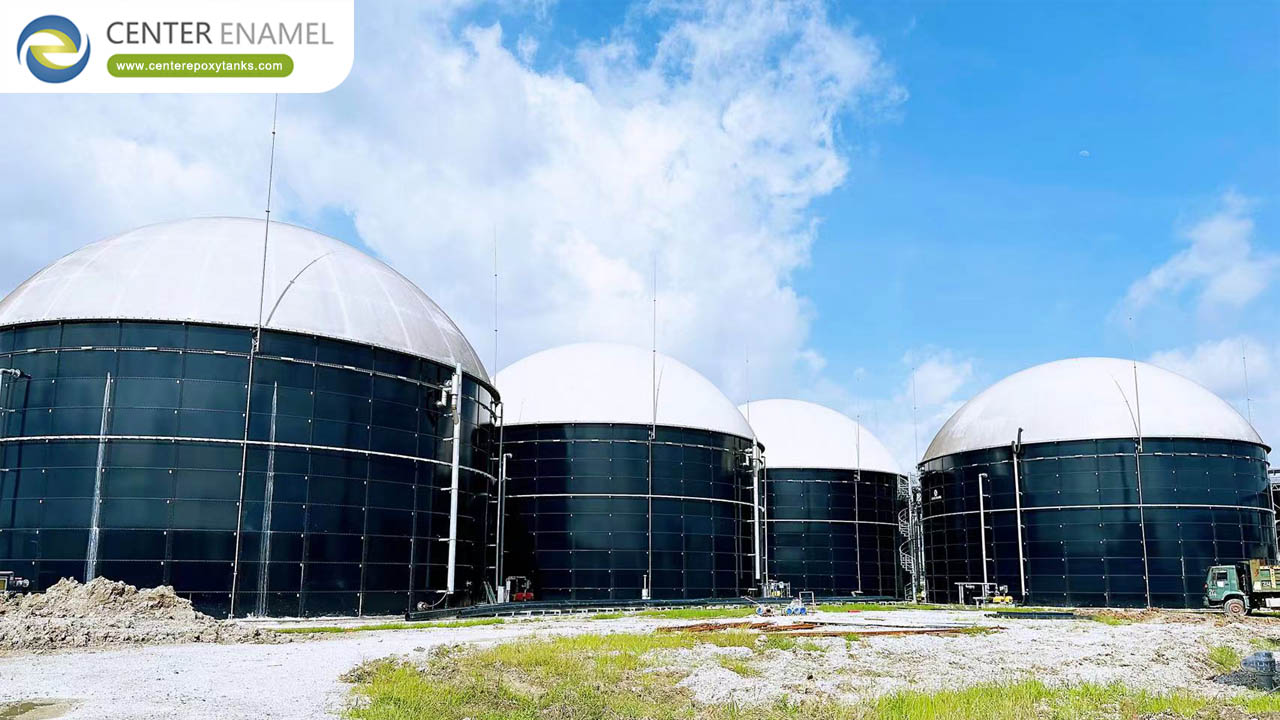
Membrane Roof for Anaerobic Digester: Engineering Principles, Types, and Operational Advantages
A membrane roof for an anaerobic digester is an advanced, high-tensile fabric covering system engineered to hermetically seal biological reaction tanks, capture volatile methane, eliminate fugitive odors, and provide integrated biogas storage. Unlike heavy, rigid concrete or steel slab covers that remain static and vulnerable to biogenic acid corrosion, flexible membrane roofs dynamically adapt to internal volumetric shifts, acting as the structural and operational "lung" of a modern renewable energy facility.
Constructed from heavy-duty, PVC- or EPDM-coated polyester fabrics treated with specialized UV-resistant and anti-fungal topcoats, these engineered roofs withstand corrosive internal elements—such as hydrogen sulfide (H2S) and moisture—while enduring severe external wind and snow loads.
Single vs. Double Membrane Roof Architectures
Facility engineers typically specify one of two primary membrane configurations based on gas buffering requirements and site economics:
1. Single Membrane Roofs
A single membrane roof consists of a reinforced, gas-tight synthetic fabric stretched across a central support column or a radial network of stainless steel tension straps.
Primary Function: Primarily utilized for basic odor control, emission containment, and low-pressure gas collection.
Operational Limitation: Because it lacks active pressure regulation, internal volume fluctuates freely with biological activity and weather, requiring downstream gas compressors if steady delivery pressure is required.
2. Double Membrane Roofs (Biogas Gasholders)
A double membrane roof features two distinct fabric layers. The inner membrane expands and contracts within the tank headspace to hold variable volumes of biogas. The outer membrane encapsulates the inner layer and is continuously inflated by an explosion-proof air support blower, creating a rigid aerodynamic dome.
Primary Function: The pressurized air cushion in the outer chamber pushes downward uniformly on the inner membrane, ensuring biogas is delivered to Combined Heat and Power (CHP) engines or upgrading skids at a constant, reliable pressure.
Key Engineering Benefits
100% Gas-Tight Integrity: High-frequency (HF) molecular welding of the fabric panels eliminates gas leakage, protecting the anaerobic micro-flora from oxygen intrusion while capturing high-purity methane.
Enhanced Thermal Insulation: In double membrane configurations, the trapped, pressurized air buffer functions as a thermal blanket, significantly reducing heat loss and stabilizing the mesophilic or thermophilic temperatures (35 ^circC to 55 ^circC) required inside the digester.
Seamless Tank Integration: Membrane roofs are custom-engineered to clamp directly onto the top flange of bolted Glass-Fused-to-Steel (GFS) tanks, concrete silos, and wastewater clarifiers using heavy-duty stainless steel tension profiles and EPDM sealing gaskets.
Data Table: Single vs. Double Membrane Digester Roofs
Technical Parameter | Single Membrane Roof | Double Membrane Roof (Gasholder) |
Primary Design Goal | Odor control, emission prevention, low-pressure sealing | Active gas storage and constant-pressure delivery |
Membrane Layers | Single reinforced fabric layer | Dual layers (Inner gas layer + Outer air support dome) |
Gas Pressure Regulation | Variable / Unpressurized baseline | Constant pressure (2 mbar to 20 mbar) |
Internal Support Structure | Central column and radial tension straps | Air-inflated outer shell (self-supporting) |
Thermal Insulation Value | Low to moderate | High (interstitial air buffer acts as insulation) |
Typical Application | Municipal clarifiers, agricultural slurry storage | Commercial CSTR anaerobic digesters, RNG plants |
Frequently Asked Questions (FAQ)
Q: Can a membrane roof handle heavy snow and high wind loads?
A: Yes. In double membrane systems, the continuously pressurized outer dome acts as a rigid structural shell that naturally sheds snow and deflects high-velocity winds. For single membrane roofs, a central column and radial tension strap grid provide the necessary structural slope and load distribution.
Q: How does a double membrane roof maintain a constant gas delivery pressure?
A: An explosion-proof centrifugal blower continuously injects ambient air into the interstitial space between the inner and outer membranes. This regulated air pressure pushes down on the inner gas chamber, forcing biogas out into the piping network at a steady, predictable pressure regardless of production spikes.
Q: What is the expected service lifespan of an anaerobic digester membrane roof?
A: A high-quality, professionally engineered membrane roof typically lasts between 15 and 20 years. The inner membrane is protected from ultraviolet (UV) radiation by the outer shell, extending its operational durability, while the outer membrane features specialized UV-blocking topcoats.
Q: Can membrane roofs be retrofitted onto existing concrete or steel digesters?
A: Absolutely. Membrane roofs are frequently used in retrofitting projects. Using custom-fabricated stainless steel anchoring brackets and chemical expansion bolts, they can be securely mounted onto existing concrete walls or steel tank rims with minimal downtime.


