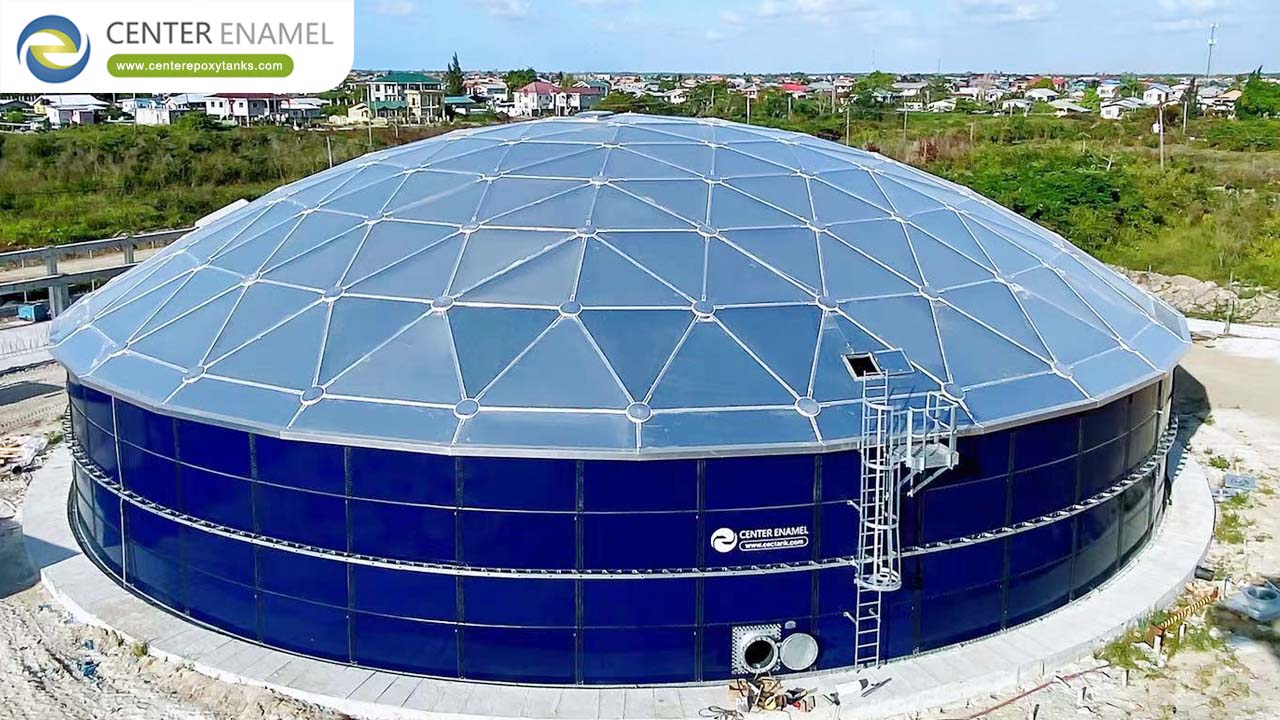
Aluminum Dome Roofs for Large Water Tanks: Engineering Clear-Span Longevity and Superior Water Security
In municipal water distribution, industrial manufacturing, and large-scale civil infrastructure, safeguarding massive volumes of stored water is a critical operational priority. Large-capacity water reservoirs—whether storing treated municipal drinking water, raw water supplies, or industrial process reserves—face severe environmental challenges. Traditional roofing materials like carbon steel and poured concrete are constantly vulnerable to moisture corrosion, chemical attack, solar evaporation, and biological contamination like algal blooms.
To eliminate these vulnerabilities, civil engineers and municipal planners increasingly specify aluminum dome roofs for large water tanks. Engineered as self-supporting, lightweight geodesic space frames, these advanced aluminum structures provide a permanent, maintenance-free, and weather-tight cover designed to protect multi-million-gallon water assets for decades.
Core Engineering Principles and Material Advantages
The structural and functional superiority of aluminum dome roofs stems from advanced geometry and marine-grade metallurgy:
Self-Supporting Clear-Span Geodesy: Utilizing a fully triangulated spatial framework, geodesic domes distribute structural dead and live loads uniformly along the perimeter tension ring. This completely eliminates the need for internal columns, center piers, or complex truss systems, maximizing 100% of the internal volume and preventing structural obstruction points.
Marine-Grade Aluminum Metallurgy: Fabricated from high-strength aluminum alloys (such as 6000-series grades), these domes are inherently corrosion-resistant. Unlike carbon steel, which oxidizes rapidly in moist tank headspaces, aluminum naturally forms an invisible, self-healing oxide film that resists humidity, chemical fumes, and weather degradation without requiring protective painting.
Lightweight Structural Profile: Because aluminum weighs approximately one-third as much as structural steel, the dome imposes minimal dead load on underlying tank walls and concrete foundations, significantly reducing seismic base shear forces and structural reinforcement costs.
Environmental Protection and Water Quality Assurance
Maintaining pure potable water requires a secure barrier against external contaminants. Aluminum geodesic domes solve multiple environmental challenges simultaneously:
Complete Algae and Debris Prevention: By establishing a sealed, light-tight, and weather-tight envelope, the dome blocks sunlight penetration and prevents wind-blown dust, leaves, and rainwater runoff from entering the water supply.
Solar Heat Reflection: Aluminum’s high reflectivity bounces solar radiation away from the tank, keeping stored water cooler and reducing the proliferation of waterborne bacteria.
Data Table: Comprehensive Comparison of Large Water Tank Roof Options
Technical Parameter | Aluminum Geodesic Dome Roofs | Traditional Carbon Steel Cone Roofs | Cast-in-Place Concrete Domes |
Corrosion Performance | Superior; natural oxide layer provides lifelong defense against moisture and humidity | Low; highly vulnerable to rust in aggressive tank headspaces | Moderate; prone to carbonation, cracking, and chemical spalling |
Internal Support Structure | None; self-supporting clear-span across massive diameters (100+ meters) | Frequently requires internal columns, trusses, or rafters | Requires massive internal shoring, center columns, or piers |
Maintenance Profile | Near-zero maintenance (no painting, sandblasting, or recoating needed) | High; requires regular inspection and repainting cycles | Moderate; requires joint sealant replacement and crack patching |
Expected Service Life | 40 to 50+ years | 15 to 25 years | 30 to 40 years |
Frequently Asked Questions (FAQ)
Q: What is an aluminum dome roof for large water tanks?
A: It is a self-supporting, lightweight geodesic space-frame structure constructed from marine-grade aluminum panels, engineered specifically to cover large-diameter municipal and industrial water storage reservoirs.
Q: Do aluminum dome roofs require internal support columns on massive water tanks?
A: No. The triangulated geodesic design distributes all structural dead loads and snow/wind loads directly to the perimeter tension ring, providing a completely clear-span interior across large diameters.
Q: How do aluminum domes withstand harsh weather and high wind loads?
A: Engineered to rigorous international standards (such as AWWA D108 and ASCE 7 guidelines), the triangulated geometry of a geodesic dome provides exceptional structural stability against high-velocity winds, seismic acceleration, and heavy snow loads.
Q: What is the maintenance schedule for an aluminum water tank dome?
A: The system is virtually maintenance-free. Because aluminum does not rust, peel, or degrade under UV exposure, routine upkeep is generally limited to periodic visual inspections of perimeter seals and gasket assemblies every few years.


