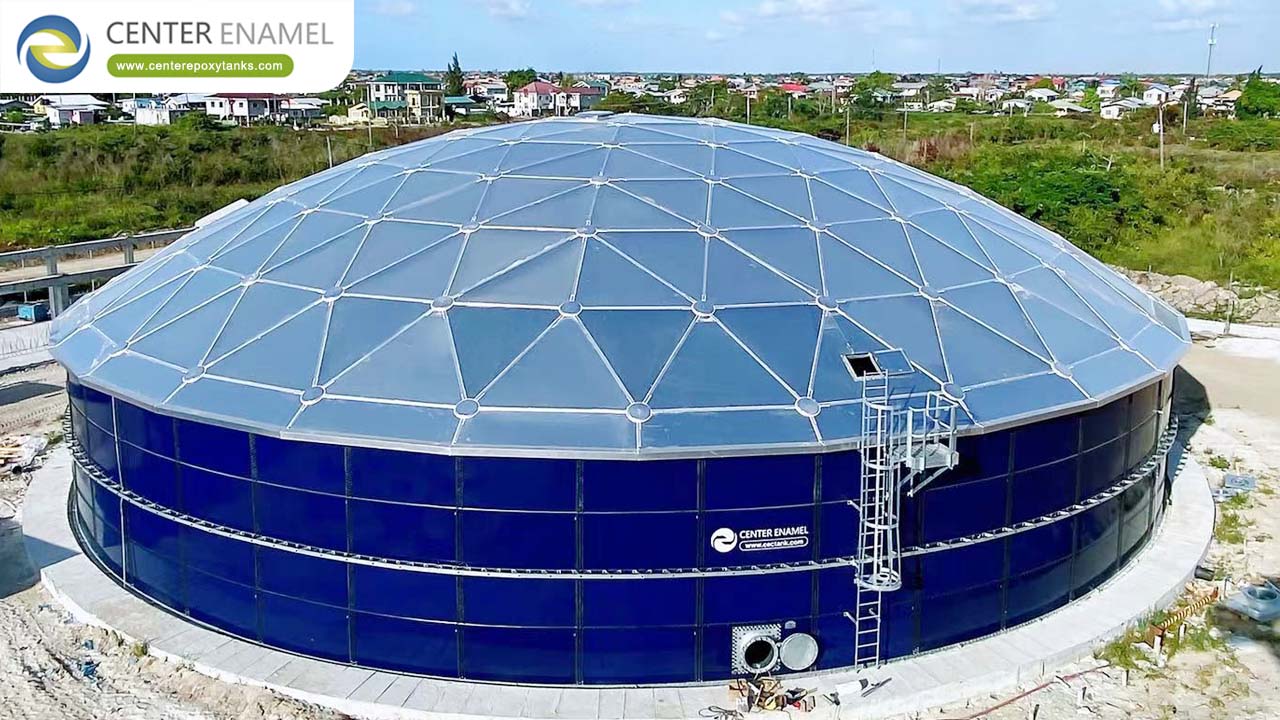
Benefits of Aluminum Dome Roofs: The Ultimate Storage Tank Upgrade
In industrial bulk storage—spanning municipal water treatment, wastewater processing, petroleum terminals, and chemical manufacturing—protecting stored media from environmental contamination is paramount. While traditional storage vessels relied heavily on welded carbon steel fixed roofs, industry standards have shifted rapidly toward advanced aluminum dome roofs.
Engineered using sophisticated geodesic geometry, aluminum dome roofs serve as high-performance, clear-span covers for aboveground storage tanks (ASTs). Understanding the distinct advantages of aluminum domes explains why they are rapidly becoming the preferred roofing solution for modern industrial infrastructure worldwide.
1. Exceptional Corrosion Resistance and Zero Maintenance
The primary metallurgical advantage of an aluminum dome roof lies in its chemical composition and natural protective properties:
·
Natural Passivation Layer: When exposed to oxygen, aluminum instantly forms a tight, self-healing microscopic aluminum-oxide skin that protects the underlying metal from moisture, hydrogen sulfide gases, and aggressive industrial atmospheres.
·
·
Elimination of Routine Painting: Unlike carbon steel roofs that require periodic sandblasting, priming, and repainting to prevent rust, aluminum domes are completely corrosion-resistant. This eliminates recurring maintenance downtime and slashes long-term operating costs.
·
2. Clear-Span Structural Engineering and Lightweighting
Aluminum dome roofs utilize a self-supporting geodesic space-frame design that transforms structural loads efficiently across the tank diameter:
·
No Internal Support Columns: Because the dome is completely self-supporting, it requires zero internal support poles or guide columns. This eliminates internal corrosion points, simplifies mixing operations, and prevents structural interference with internal floating roofs (IFRs).
·
·
Reduced Foundation and Shell Stress: Aluminum is exceptionally lightweight compared to steel. This drastically lowers the dead load imposed on the top shell courses of the tank and reduces overall foundation engineering requirements, particularly during retrofits of existing concrete or steel vessels.
·
3. Superior Environmental Containment and Vapor Control
When paired with internal floating roof (IFR) systems, aluminum domes provide ultimate protection against environmental emissions:
·
Weather and Debris Shielding: The sealed geodesic shell protects the internal contents and floating decks from rain, snow, UV radiation, and wind-blown debris, preventing biological growth and water contamination in municipal water reservoirs.
·
·
Volatile Emission Suppression: By blocking solar heat gain and eliminating wind shear across the liquid interface, aluminum domes minimize breathing losses and assist facilities in complying with stringent Volatile Organic Compound (VOC) regulations.
·
Data Table: Aluminum Dome Roofs vs. Carbon Steel Fixed Roofs
Evaluation Parameter | Aluminum Geodesic Dome Roofs | Traditional Carbon Steel Fixed Roofs |
Corrosion Resistance | Excellent (Natural aluminum-oxide passivation; zero rust) | Low to Moderate (Requires continuous paint and epoxy coatings) |
Internal Support Structure | Clear-span design (No internal columns required) | Frequently requires internal support rafters and columns |
Weight & Foundation Load | Extremely lightweight; low stress on tank walls and foundation | Heavy; imposes significant dead load on tank shell |
Maintenance Overhead | Virtually maintenance-free (No recoating cycles) | High (Requires periodic inspections, rust scraping, and repainting) |
Governing Standards | AWWA D108, API 650 (Annex H) | API 650, AWWA D100 |
Frequently Asked Questions (FAQ)
Q: What is an aluminum dome roof used for on storage tanks?
A: An aluminum dome roof is a self-supporting, clear-span cover installed on top of industrial storage tanks (such as water reservoirs, chemical tanks, and oil silos) to protect stored media from weather, prevent contamination, and suppress vapor emissions.
Q: Do aluminum dome roofs require internal support columns?
A: No. Aluminum geodesic domes feature an engineered clear-span design that distributes structural loads across the perimeter ring beam, requiring zero internal support poles or rafters.
Q: Why are aluminum domes more corrosion-resistant than steel roofs?
A: Aluminum naturally reacts with oxygen to form a continuous, self-healing oxide passivation layer that prevents rust and chemical degradation, eliminating the need for protective paint systems required by carbon steel.
Q: Can aluminum dome roofs be retrofitted onto existing steel tanks?
A: Yes. Because aluminum domes are exceptionally lightweight, they are frequently engineered and bolted onto existing carbon steel or concrete storage tanks to upgrade aging fixed roofs and improve environmental compliance.


