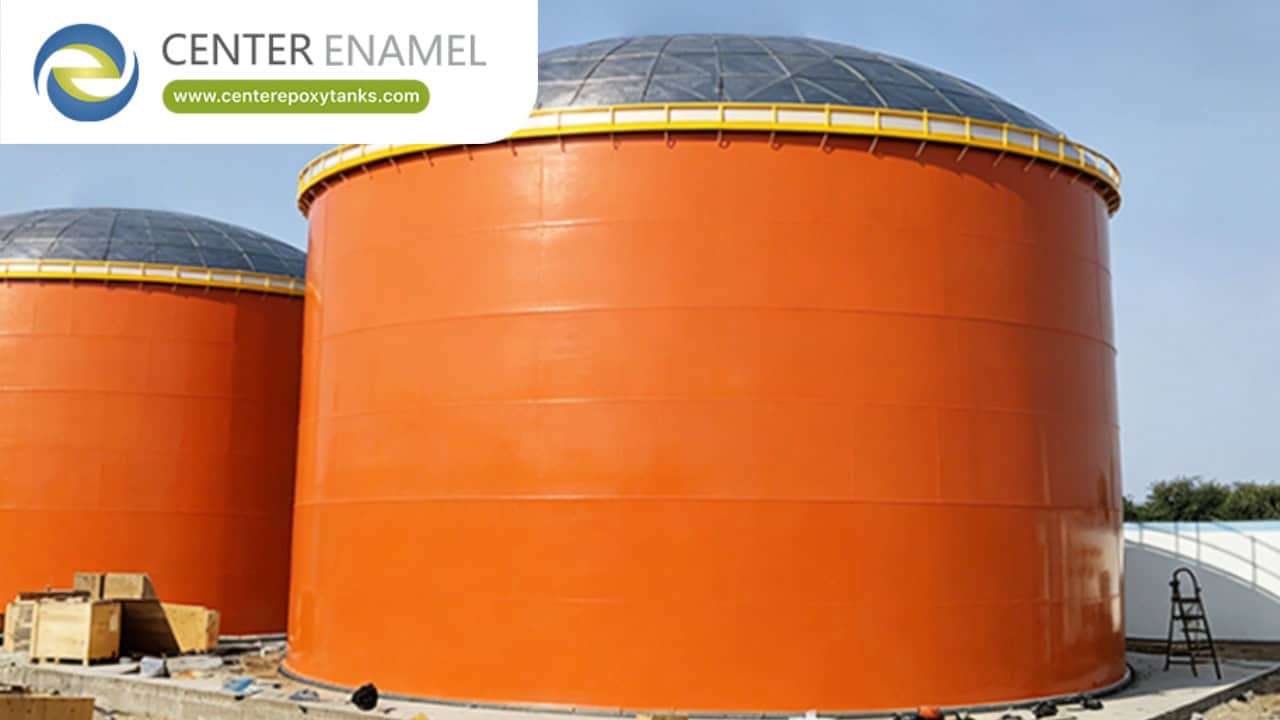
API 650 Storage Tanks: Design and Fabrication Standards for Welded Tanks
Any serious conversation about oil, fuel, or water storage eventually lands on the same document: API Standard 650, the internationally recognized benchmark for welded carbon steel storage tanks. Engineers quote it, inspectors audit against it, and procurement teams write it into contracts on every continent — because for eight decades it has translated metallurgy and welding science into tank safety.
API 650 is the American Petroleum Institute standard for welded, atmospheric-pressure, flat-bottomed storage tanks, covering materials, design, fabrication, erection, and testing requirements, with annexes extending its scope to internal pressures up to 2.5 psig (Annex F), internal floating roofs (Annex H), and aluminum dome roofs (Annex G). It governs tanks from a few hundred to over 100,000 m3 in oil, fuel, chemical, and water service.
1. What Does API 650 Cover?
The standard's scope defines the boundaries every specifier must first confirm.
· Service envelope: Atmospheric pressure tanks storing oil, fuel, produced water, and chemicals at internal pressures near ambient — higher pressures to 2.5 psig by Annex F, beyond which API 620 applies.
· Design rules: Shell thickness by the one-foot and variable-design-point methods, annular ring requirements, roof and wind girder design, and seismic loading per Annex E.
· Materials: Approved plate grades with toughness requirements set by design metal temperature — the coldest service the tank will see with liquid.
· Fabrication and erection: Welding procedures, joint efficiency, tolerances, and inspection obligations continuing through hydrostatic testing in Section 7.
2. How Is an API 650 Tank Actually Designed?
The design sequence moves from liquid head to weld details.
· Shell courses: Each course thickness is calculated for the hydrostatic head one foot above its lower edge — the one-foot method — with corrosion allowance added where service demands.
· Bottoms and foundations: Annular plates under the shell are thickness-rated to the product stress in the lowest course, with the tank sitting on a leveled, drained foundation.
· Roofs: Supported cone roofs under the main body rules, self-supporting cone and dome designs, and clear-span aluminum geodesic domes under Annex G; venting per API 2000.
· Welding and NDE: Joint efficiency — spot, spot-plus, or 100% radiographic testing — determines allowable stress; RT, UT, MT, and vacuum-box techniques verify weld integrity bottom to roof.
3. How Does API 650 Ensure Long-Term Integrity?
The standard reaches beyond fabrication day into the tank's operating life.
· Hydrostatic test: Filled to design level, the tank, its foundation settlement, and its welds prove themselves under the maximum credible liquid load before acceptance.
· Inspection linkage to API 653: In-service inspection, repair, and reconstruction follow API 653, which anchors its fitness-for-service rules to the original API 650 design basis.
· Annex-driven reliability features: Annex I undertank leak detection, Annex H internal floating roofs for vapor control, and Annex E seismic anchorage extend integrity into specific operating risks.
· Documentation: Material test reports, weld maps, NDE records, and as-built drawings form the permanent data set on which every future inspection relies.
Data Table: API 650 Scope at a Glance
Parameter | API 650 Requirement |
Pressure regime | Atmospheric; up to 2.5 psig per Annex F |
Temperature | Design metal temperature by material toughness rules |
Shell design | One-foot / variable point methods |
Weld verification | RT/UT levels tied to joint efficiency |
Testing | Hydrostatic fill test per Section 7 |
Floating roofs | Annex H (internal); EFR in main body |
Dome roofs | Annex G aluminum geodesic domes |
In-service care | Linked to API 653 inspection standard |
Frequently Asked Questions (FAQ)
Q1: What is an API 650 storage tank?
A welded, flat-bottomed, atmospheric-pressure storage tank designed, fabricated, erected, and tested to API Standard 650 — the petroleum industry's benchmark code. It covers material selection, shell thickness calculation, welding and NDE, roof and floating-roof provisions, and the hydrostatic acceptance test.
Q2: What is the difference between API 650 and API 620?
API 650 covers atmospheric tanks and internal pressures up to 2.5 psig with Annex F, while API 620 addresses tanks designed for pressures up to 15 psig, including low-temperature and cryogenic services such as LNG and refrigerated ammonia. Selection follows the design pressure and temperature, not tank size.
Q3: How is shell thickness calculated in API 650?
Using the one-foot method or the variable-design-point method: each shell course is designed for the hydrostatic pressure at one foot above its base, with plate grade, joint efficiency from weld NDE level, and corrosion allowance entering the calculation. The lowest course is typically the thickest and may require an annular ring at the bottom.
Q4: Does API 650 require radiographic testing of welds?
Yes, at levels tied to the design joint efficiency: spot radiography for basic designs, with extended or 100% RT when higher joint efficiencies or more severe services demand them. UT is permitted as an alternative under defined procedures, and vacuum-box testing checks bottom-plate welds.


