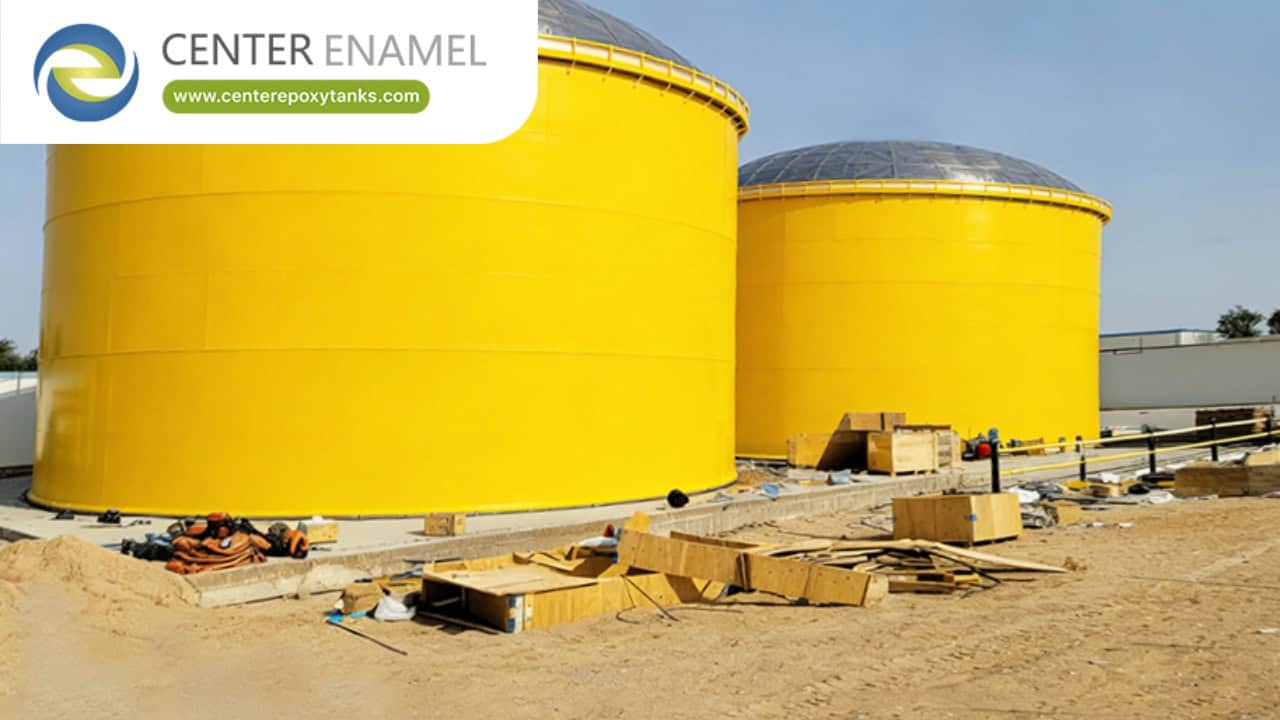
API 650 Fuel Storage Tanks: Compliance-Driven Design for Hydrocarbon Service
Fuel storage concentrates risk: the product is flammable, evaporative, and environmentally unforgiving. Regulators respond with layered requirements — API 650 for the tank itself, NFPA 30 for fire safety, EPA rules for containment — and a compliant fuel facility is one where those layers were designed together rather than patched on afterward.
API 650 fuel storage tanks are welded flat-bottom vessels engineered to API Standard 650 for diesel, fuel oil, gasoline, and blended products, combining the code's structural rules with fuel-specific provisions: floating roofs or vapor controls for emission compliance, NFPA 30 spacing and drainage, and secondary containment sized for the largest tank in the bund.
1. Which Fuel Services Fit API 650?
The standard's fuel range is broad, but each product adds its own requirements.
· Diesel and fuel oil: Low vapor pressure makes fixed-roof API 650 tanks with simple conservation vents the economical baseline for No. 2 diesel through heavy fuel oil, with heating coils entering as viscosity rises.
· Gasoline and light naphtha: High vapor pressure pushes design toward internal floating roofs (Annex H) or vapor-balanced fixed roofs to capture evaporative losses up to 99%.
· Blended and biodiesel products: Cold-flow and solvent characteristics of biodiesel blends raise material, gasket, and water-bottom management questions beyond straight diesel practice.
· Aviation and military fuels: Cleanliness-driven specs add internal lining, water drain, and filter-water separation provisions to the basic API 650 envelope.
2. What Fire and Environmental Rules Surround the Tank?
The tank never stands alone — code compliance is a facility-level result.
· NFPA 30 siting: Separation distances between tanks, property lines, and buildings follow the flammable-liquid tables, with dikes and drainage controlling spill paths.
· Secondary containment: Bunds sized for the largest tank's full volume plus allowances for rain and foam application, per SPCC-type rules where US-style programs apply.
· Emission controls: Floating roofs and rim-seal systems satisfy vapor regulations on stored products; vapor recovery connections replace emergency venting where required.
· Overfill and static protection: Level alarms, automatic shutoff, bonding and grounding, and submerged filling nozzles close the classic fuel-facility accident scenarios.
3. How Do Materials and Coatings Extend Fuel Tank Life?
Fuel and its water bottoms attack steel slowly but relentlessly.
· Shell materials: Standard API 650 plate grades serve diesel and fuel oil; low-temperature toughness rules apply where winter design temperatures fall.
· Internal linings: Epoxy phenolic and FBE linings isolate the bottom and lower courses from water bottoms and microbial corrosion — the highest-value coating dollars on a fuel tank.
· Roof corrosion management: Underside condensation and vapor-space corrosion make roof coating or lining renewal a scheduled maintenance reality for fixed-roof fuel tanks.
· Soil-side protection: Bottom-side corrosion is fought with prepared foundations, leak-detection Annex I provisions, and cathodic protection where soil conditions warrant.
Data Table: Fuel Type Impact on API 650 Tank Design
Fuel | Vapor Control | Heating | Lining Priority |
No. 2 diesel | Fixed roof adequate | None | Bottom courses |
Heavy fuel oil | Fixed roof | Steam/hot oil coils | Bottom + heated zones |
Gasoline | IFR (Annex H) up to 99% | None | Full internal lining |
Biodiesel blends | Fixed roof, water mgmt | Optional trace | Bottom courses |
Jet fuel | Fixed roof + IFR option | None | Full internal lining |
Frequently Asked Questions (FAQ)
Q1: Do fuel storage tanks need to be API 650 certified?
For facility permitting, insurance, and recognized fire codes in most markets, welded aboveground fuel storage above threshold volumes is specified to API 650. Smaller shop-built tanks may fall under UL 142 instead, while pressure-worthy fuels like LPG require ASME or API 2510 spheres rather than atmospheric API 650 design.
Q2: When does an API 650 fuel tank need a floating roof?
When stored product vapor pressure creates evaporative losses that emission regulations or economics cannot accept — typically gasoline and light distillates. An internal floating roof under Annex H cuts breathing losses by up to 99%, often combined with an aluminum dome or fixed roof above it.
Q3: What fire code requirements apply to API 650 fuel tanks?
NFPA 30 in US-practice markets sets tank-to-tank and tank-to-property separation, dike capacity, drainage, and venting; emergency venting capacity must prevent roof failure under fire exposure. Local codes and insurer standards such as FM may add spacing or drainage requirements on top.
Q4: How do you prevent internal corrosion in diesel tanks?
Manage water: drain bottoms regularly, use submerged filling to limit static and splash, and coat the bottom and first shell course with fuel-rated epoxy. Microbial growth at the fuel-water interface — not the diesel itself — drives most pitting, which is why lining plus housekeeping beats lining alone.


