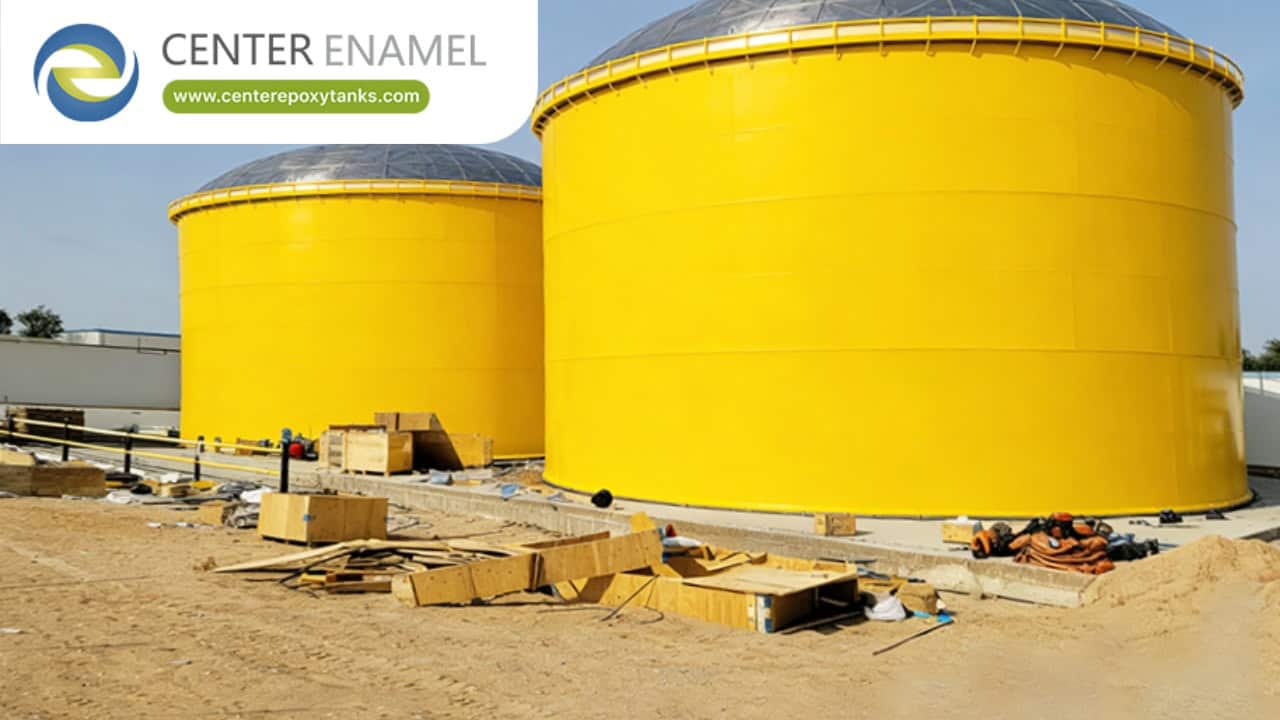
Ammonia Tanks: Design Standards for Anhydrous Ammonia and Refrigerated Storage
Ammonia is having a second career: beyond fertilizer, it is now the leading liquid hydrogen carrier for the energy transition — which means a wave of storage projects from ports to power plants. But ammonia is also toxic, and storing it safely means choosing deliberately between pressurized and refrigerated concepts and defending the steel against a subtle enemy: stress corrosion cracking.
Ammonia tanks store anhydrous NH3 either pressurized at ambient temperature in ASME VIII spheres and bullets at up to ~18 bar, or refrigerated at -33.4 deg C and near-atmospheric pressure in insulated vessels designed to API 620 Annex R — with post-weld heat treatment and material limits guarding against ammonia-induced stress corrosion cracking.
1. Pressurized or Refrigerated — Which Ammonia Storage Fits?
The choice follows inventory size, turnover, and siting.
· Pressurized bullets and spheres: Ambient-temperature storage at vapor pressure — around 8-18 bar depending on design temperature; standard for agricultural distribution below roughly 3,000 m3.
· Refrigerated storage: Insulated flat-bottom or sphere tanks at -33.4 deg C and near-atmospheric pressure; the economic and safety choice above about 15,000 m3.
· Hybrid terminals: Refrigerated main inventory feeding pressurized day tanks and truck-loading spheres, connected by compressors and vaporizers.
· Hydrogen-carrier projects: New ammonia import terminals pair large refrigerated tanks with cracking or direct-combustion offtake, reviving API 620 Annex R design demand.
2. What Makes Ammonia Different From LPG Storage?
Same thermodynamic family — materially different hazard profile.
· Toxicity drives siting: Ammonia's health hazard imposes dispersion modeling and larger buffer distances than comparable LPG inventories.
· Stress corrosion cracking: NH3 in contact with high-strength steel under tensile stress can crack — mitigated by PWHT, tensile limits, water dosing in closed systems, and inspection regimes.
· Low-temperature toughness: Refrigerated service demands impact-tested steels per Annex R; material selection echoes cryogenic practice at -33 deg C.
· Relief and absorption: Vent stacks and, in some designs, water scrubbers handle relief streams so toxic releases are controlled, not merely discharged.
3. How Are Ammonia Tanks Protected and Inspected?
Long-term integrity against SCC and corrosion is a managed program.
· PWHT discipline: Post-weld heat treatment of weld seams relieves residual stress — the single most effective SCC defense on refrigerated and pressurized vessels alike.
· Insulation and vapor barriers: Refrigerated tanks need continuous insulation with vapor-tight jackets; wet insulation corrodes and destroys thermal performance.
· Water management: Small water content in closed-loop ammonia actually inhibits SCC; open systems with oxygen ingress raise cracking risk and need monitoring.
· Periodic inspection: Internal inspection, thickness surveys, and surface NDE per applicable inspection codes track both general corrosion and SCC indicators.
Data Table: Ammonia Storage Options Compared
Criterion | Pressurized Bullets/Spheres | Refrigerated Tanks |
Temperature | Ambient | -33.4 deg C |
Pressure | ~8-18 bar | Near atmospheric |
Economic range | < 3,000 m3 per installation | 15,000-50,000+ m3 |
Design code | ASME Section VIII | API 620 Annex R |
Insulation | None | Perlite/composite + vapor barrier |
SCC defense | PWHT, tensile limits | PWHT, tensile limits, water mgmt |
Frequently Asked Questions (FAQ)
Q1: How is anhydrous ammonia stored?
Either pressurized at ambient temperature in ASME VIII spheres and bullets at roughly 8-18 bar, or refrigerated at -33.4 deg C and near-atmospheric pressure in insulated tanks designed to API 620 Annex R. Small agricultural installations use pressure vessels; terminals use refrigerated storage for economy and safety.
Q2: Why do ammonia tanks need post-weld heat treatment?
Because anhydrous ammonia can cause stress corrosion cracking in high-strength steels under residual welding stress. PWHT relieves those stresses and, combined with tensile-strength limits and controlled water content, forms the standard defense against ammonia-induced cracking.
Q3: Is ammonia storage similar to LPG storage?
Thermodynamically yes — both use pressurized or refrigerated concepts — but ammonia is toxic rather than merely flammable, which drives stricter siting, dispersion analysis, and relief handling. Ammonia also uniquely attacks stressed steel (SCC), adding PWHT and material limits absent from LPG practice.
Q4: Why is ammonia storage growing in the energy sector?
Ammonia carries hydrogen denser and cheaper than liquid hydrogen, and existing ammonia handling infrastructure is mature — making it the leading hydrogen carrier for shipping and power generation. The result is a wave of new refrigerated ammonia import terminals worldwide, designed to API 620 Annex R with full toxicity-driven safety cases.


