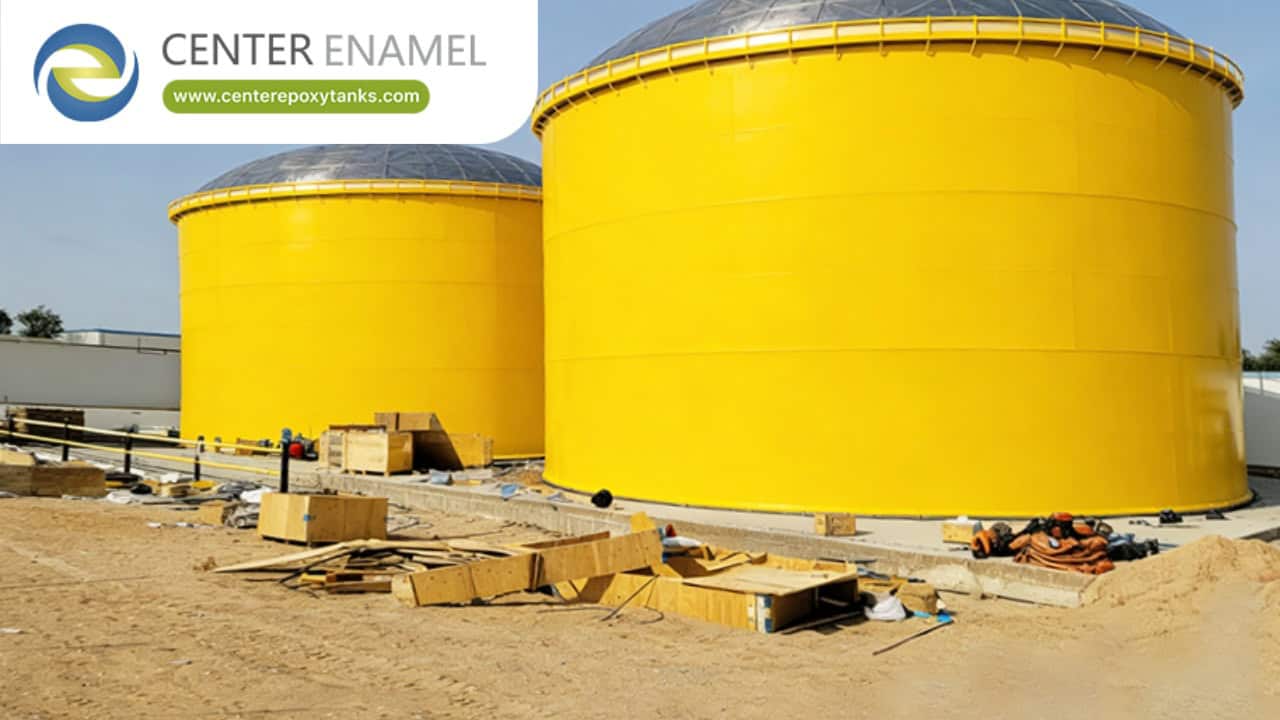
API 650 Internal Floating Roofs (IFR): Optimizing Emission Control and Product Integrity
In the petrochemical, bulk liquid storage, and refining industries, managing volatile organic compounds (VOCs) is a critical operational and environmental priority. While a fixed roof protects tank contents from environmental elements, storing highly volatile liquids—such as crude oil, jet fuel, and gasoline—requires an additional layer of engineering. This is where the API 650 Internal Floating Roof (IFR) becomes essential.
Governed strictly by API 650 Appendix H, an IFR floats directly on the liquid surface inside a fixed-roof tank. By rising and falling with the liquid level, it drastically minimizes the vapor space (headspace), effectively stopping evaporation at the source.
1. Core Structural Designs Under API 650 Appendix H
API 650 Appendix H classifies internal floating roofs into several distinct categories based on their design, buoyancy mechanisms, and contact type with the stored liquid.
Non-Contact (Skin and Pontoon) Floating Roofs
This classic design features a metallic skin (usually aluminum or stainless steel) supported by a framework of sealed structural pontoons.
● Mechanism: The pontoons provide the necessary buoyancy, keeping the deck skin elevated a few inches above the liquid surface.
● Advantage: Highly cost-effective, lightweight, and easy to assemble or retrofit inside existing tanks.
Full-Contact Floating Roofs
Unlike pontoon types, full-contact IFRs rest completely on the liquid surface, leaving zero vapor gap beneath the deck. These are typically constructed using aluminum honeycomb panels or composite sandwich structures.
● Mechanism: The entire surface area of the roof provides uniform buoyancy.
● Advantage: Provides maximum emission reduction because it eliminates the vapor space underneath the panels entirely. It also prevents the accumulation of explosive localized gas pockets.
Double-Deck Metallic Floating Roofs
Built primarily from welded carbon steel or stainless steel sheets, this design features an integrated top and bottom deck separated by internal bulkheads.
● Mechanism: The compartmented dead-air space provides exceptional buoyancy and structural rigidity.
● Advantage: Highly durable and capable of handling severe operational stresses, making it ideal for large-diameter tanks or highly aggressive chemical products.
2. Strategic Advantages of Installing an IFR
Integrating an API 650-compliant internal floating roof into your storage tank infrastructure delivers clear environmental, financial, and safety paybacks.
● Dramatic Emission Reduction: By suppressing vapor formation, an IFR can reduce VOC emissions by up to 95% to 98% compared to a standard fixed-roof tank without an IFR. This is essential for compliance with strict environmental regulations.
● Product Loss Prevention: Vapor loss equals financial loss. By preventing evaporation, facilities directly preserve inventory volume and maintain the precise chemical composition of the stored product.
● Mitigation of Fire and Explosion Hazards: By eliminating the volatile vapor headspace above the liquid, the risk of reaching an explosive air-hydrocarbon mixture concentration is fundamentally minimized.
● Protection from Weather Damage: Because the floating roof operates inside a fixed outer shell, it is fully shielded from wind uplift, heavy snow accumulation, and rainwater infiltration—common vulnerabilities for External Floating Roofs (EFRs).
Technical Comparison: Full-Contact vs. Non-Contact IFRs
Engineering Feature | Full-Contact IFR (Honeycomb/Panel) | Non-Contact IFR (Skin & Pontoon) |
Liquid Surface Contact | 100% Surface Contact | Elevated above liquid via pontoons |
Vapor Space Under Deck | Zero | Minimal (between liquid and skin) |
Emission Control Efficiency | Highest Efficiency | High Efficiency |
Structural Weight | Moderate | Very Lightweight |
Installation Complexity | Moderate | Low (Rapid Modular Assembly) |
Primary Material Preference | Aluminum / Stainless Steel | Aluminum / Stainless Steel |
3. System Synergy: Combining ADR and IFR
The most effective modern storage tank configuration combines an API 650 Internal Floating Roof (IFR) with an Aluminum Geodesic Dome Roof (ADR) as the fixed outer enclosure.
When an IFR suppresses the primary chemical vapors and a clear-span aluminum dome seals the tank shell without internal vertical columns, the system achieves maximum structural and environmental efficiency. Without internal columns obstructing movement, the IFR can glide smoothly along the tank shell walls, eliminating seal abrasion and reducing mechanical wear.
4. Key Design Considerations for Procurement Engineers
When specifying an IFR under API 650 Appendix H, verify the following engineering parameters:
1. Seal Selection: The peripheral rim seal is the most critical element for emission control. Options include mechanical shoe seals, liquid-filled resilient seals, or wiper seals. The material must be chemically compatible with the stored product.
2. Anti-Rotation Systems: IFRs must include anti-rotation cables or guide poles to prevent the roof from spinning as product is pumped in or out, which could damage internal piping or the rim seals.
3. Grounding and Venting: Proper electrical grounding (bonding cables) is mandatory to safely dissipate static electricity generated during fluid turbulence. Additionally, automatic breather vents must be engineered to open when the roof is low-legged during tank drainage.
Maximizing Asset Lifecycle Value
An API 650 Internal Floating Roof is a mandatory asset for sustainable, safe, and cost-efficient volatile liquid storage. By choosing the appropriate deck design—whether full-contact or pontoon-supported—and pairing it with an engineered fixed enclosure, operators can ensure compliance, safety, and inventory protection for decades.
As a global provider of integrated containment systems, Center Enamel delivers advanced storage solutions engineered to meet rigorous API 650 and environmental criteria across more than 100 countries.


