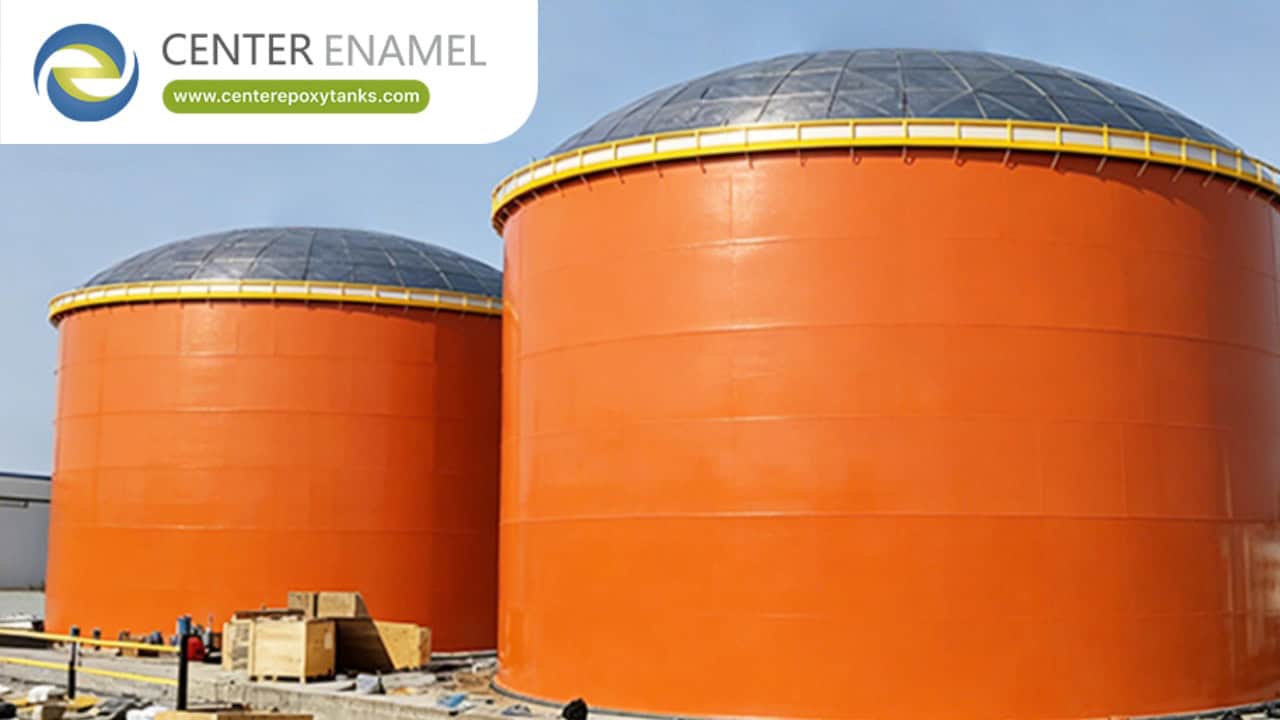
API 650 Aluminum Dome Roofs (ADR): The Definitive Engineering & Design Guide
In modern liquid and bulk storage infrastructure, the roof system serves as the primary barrier against atmospheric contamination, vapor loss, and structural degradation. For decades, traditional welded or bolted steel cone roofs were the default industry choice. However, strict environmental regulations, rising maintenance costs, and a demand for operational longevity have driven a major industry shift toward API 650 Aluminum Dome Roofs (ADR).
When engineered in compliance with API 650 Appendix G, an Aluminum Dome Roof provides a self-supporting, structurally superior, and virtually maintenance-free enclosure for both new tank installations and brownfield retrofits.
1. Core Engineering Standards: API 650 Appendix G
The American Petroleum Institute (API) establishes strict criteria under API 650 Appendix G for the design, fabrication, and erection of structurally supported aluminum dome roofs. To achieve compliance, an ADR must meet rigorous engineering thresholds:
● Material Selection: Structural components—including the primary spatial lattice struts and gusset hubs—must be extruded from high-strength, marine-grade aluminum alloys such as 6061-T6 or 6005A-T6. These alloys provide an exceptional strength-to-weight ratio and excellent resistance to atmospheric corrosion.
● Load-Bearing Configurations: The structure must be validated using advanced Finite Element Analysis (FEA) to withstand severe environmental stresses. This includes handling uniform and unbalanced snow loads, high-velocity wind pressures, and internal/external pressure variations.
● The Tension Ring Principle: The geodesic triangulation design distributes forces outward to a circumferential tension ring. This structural geometry ensures the horizontal thrust forces are safely contained, minimizing the lateral stress transferred to the host tank shell.
2. Key Advantages of API 650 ADR Systems
The rapid adoption of ADR technology across the petrochemical, municipal water, and wastewater treatment sectors is driven by several distinct operational advantages:
Clear-Span Architecture (Column-Free Interior)
Traditional steel roofs require internal vertical columns and support beams to span large tank diameters. An API 650 ADR utilizes a self-supporting geodesic configuration that provides a completely clear-span interior.
● Eliminates internal obstructions, maximizing the usable storage volume of the tank.
● Simplifies the design, installation, and operation of Internal Floating Roofs (IFRs).
● Removes internal column structures that typically act as friction points or capture corrosive sediments.
Inherent Corrosion Resistance
Unlike carbon steel, which continuously oxidizes when exposed to moisture, volatile organic compounds (VOCs), or industrial gases, aluminum naturally forms a stable, self-healing oxide layer.
● Zero Coating Maintenance: ADR systems do not require sandblasting, priming, painting, or sacrificial anodes over their lifespan.
● Headspace Durability: Highly resilient against aggressive chemical vapors and hydrogen sulfide ($H_2S$) gas commonly found in wastewater treatment and anaerobic digestion processes.
"Zero Hot-Work" Field Installation
Safety and minimizing operational downtime are critical factors when selecting a tank roof, particularly in active petrochemical facilities or wastewater plants.
● Mechanical Erection: All components of an aluminum dome roof are pre-fabricated, pre-punched, and pre-machined under strict factory quality controls.
● No Welding Required: The dome is assembled on-site using structural fasteners, gaskets, and interlocking batten bars. Eliminating hot-work permits simplifies risk assessments, significantly reduces installation timelines, and allows installation to proceed in active industrial zones without shutting down adjacent operations.
Technical Comparison: API 650 ADR vs. Traditional Welded Steel Roofs
Feature / Metric | API 650 Aluminum Dome Roof (ADR) | Traditional Welded Steel Roof |
Internal Supports | None (100% Clear-Span up to 100m+) | Required (Beams, rafters, and columns) |
Weight Profile | Lightweight (approx. 10–15 kg/m²) | Heavy (approx. 40–60 kg/m²) |
Corrosion Protection | Inherent passivity (No painting required) | Mandatory protective coatings (Epoxy/Polyurethane) |
Field Assembly | Modular mechanical fastening (Cold-work) | Extensive field welding and grinding (Hot-work) |
Foundation Impact | Minimizes vertical and lateral dead loads | Requires robust tank shell and foundation designs |
Expected Service Life | 30+ Years with minimal intervention | 20–25 Years (Highly dependent on recoating cycles) |
3. Industrial Applications and Integration
The structural versatility of API 650 ADR systems makes them highly compatible with various tank styles and industrial treatment processes:
● Petrochemical Storage: Installed over welded or bolted steel tanks to act as a weather cover over internal floating roofs, dramatically reducing evaporative emissions, water ingress, and volatile compound release.
● Municipal Potable Water: Deployed on massive containment systems—including large-scale installations exceeding 10,000 m³—to form a completely watertight, secure barrier against environmental pollutants, debris, and animal vectors.
● Anaerobic Biogas Digestion: Serving as gas-tight structural containment for advanced biological reactors—such as CSTR, UASB, and IC systems—where aggressive organic waste streams are actively processed into green energy.
Structural Resilience Against Extreme Weather
The geometric distribution of loads makes geodesic domes highly resilient during extreme environmental events. The spherical profile allows high wind currents to glide over the top, creating less aerodynamic lift and drag than flat or cone designs. Properly engineered ADR systems have demonstrated complete structural integrity when subjected to extreme conditions, including withstanding super-typhoon wind velocities.
4. Engineering Checklist Before Specifying an ADR
To ensure a seamless implementation, project engineers should verify the following design parameters with the manufacturer during the planning phase:
1. Galvanic Isolation: If mounting the aluminum dome to a carbon steel tank rim, ensure a robust isolation gasket (such as Teflon or EPDM) and stainless steel fasteners are utilized to completely prevent galvanic corrosion.
2. Sealing System Integrity: Prioritize batten bar locking mechanisms equipped with continuous, UV-resistant gaskets to maintain long-term watertightness and manage thermal expansion cycles.
3. Venting and Accessories: Ensure the design natively integrates code-compliant emergency pressure-relief vents, perimeter walkways, skylights, and access hatches without compromising the structural lattice integrity.
Maximizing Total Cost of Ownership (TCO)
While an API 650 Aluminum Dome Roof may represent a distinct initial capital investment compared to standard steel options, its lifecycle economics are clear. By eliminating ongoing coating maintenance, reducing vertical loads on tank foundations, ensuring safe cold-work field assembly, and delivering a functional service life exceeding three decades, an ADR offers a lower Total Cost of Ownership for critical infrastructure projects worldwide.


