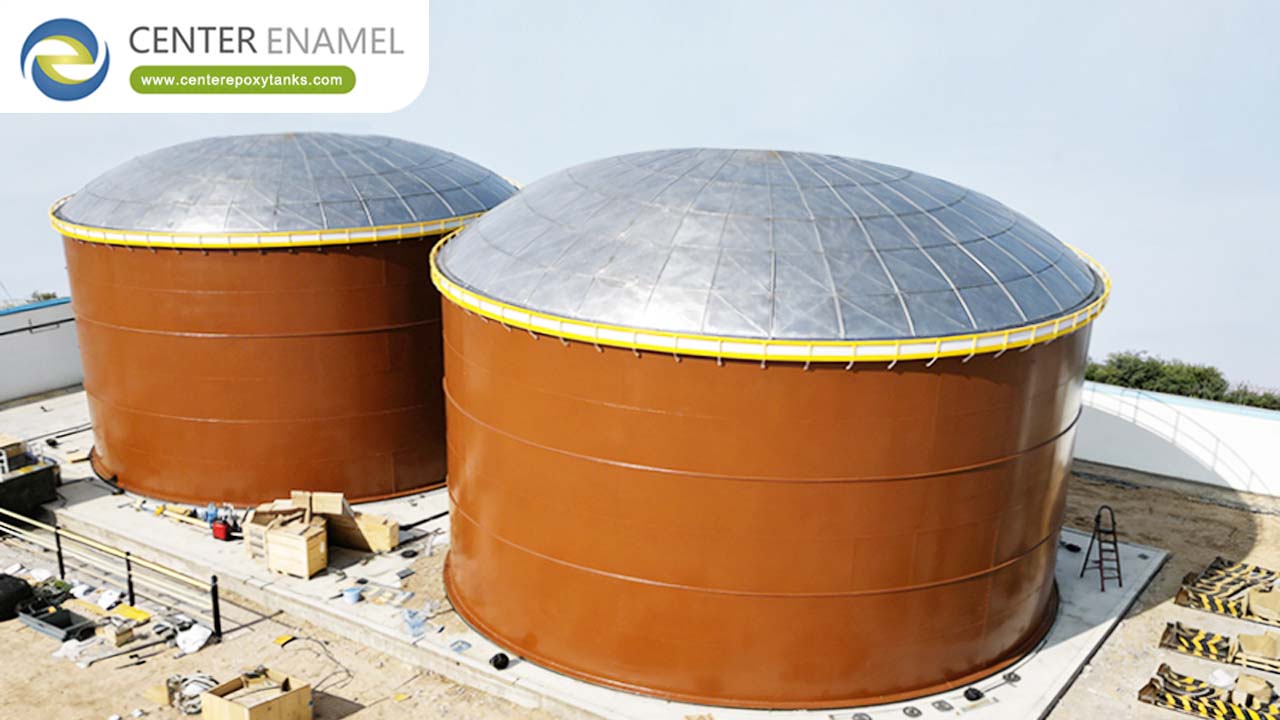
What to Consider Before Choosing an Aluminum Geodesic Dome Roof
Selecting the right roof system for large-scale industrial storage is a critical infrastructure decision. An aluminum geodesic dome roof is often the superior choice for petrochemical, water, and biogas storage, but a successful implementation requires careful planning.
As a global leader in the storage tank industry with installations in over 100 countries since 2008, Shijiazhuang Zhengzhong Technology Co., Ltd (Center Enamel) offers the following technical guide to help engineers and procurement managers evaluate their options.
1. Regulatory Standards and Code Compliance
Before selecting a provider, verify their adherence to international design standards. A roof that does not meet these codes may result in structural failure or regulatory rejection.
● API 650 Appendix G: The essential standard for aluminum dome roofs used in petrochemical and hydrocarbon storage.
● AWWA D108: The governing standard for aluminum structures in water and wastewater applications.
● Expert Insight: Always ensure your manufacturer provides stamped, site-specific engineering drawings that certify compliance with these standards based on your local building codes.
2. Structural Loading Requirements (FEA)
Every site is subject to unique environmental stresses. A "one-size-fits-all" dome will eventually fail. You must consider:
● Unbalanced Snow Loads: Can the dome structure handle localized accumulation on one side?
● Wind & Seismic Factors: The structural lattice must be validated using Finite Element Analysis (FEA) to ensure it can withstand the specific wind speeds and seismic acceleration of your project location.
● Load Distribution: Aluminum domes are preferred for their clear-span capability, eliminating the need for internal columns, but the perimeter tension ring must be robust enough to manage the thrust loads exerted on the tank shell.
3. Corrosion Resistance and Material Specification
Ensure the aluminum alloy is specified for the intended environment.
● Alloy Selection: High-performance domes typically use marine-grade alloys (e.g., 6061-T6 or 6005A-T6) which provide excellent strength-to-weight ratios.
● Galvanic Protection: If the roof is being installed on a carbon steel tank, ensure the design includes proper isolation to prevent galvanic corrosion between the aluminum dome and the steel shell.
4. "Zero Hot-Work" Site Safety
If you are retrofitting an active facility, the installation method is as important as the design.
● Cold-Work Advantage: Aluminum dome roofs are mechanically assembled with bolts and gaskets.
● Safety Priority: Prioritize manufacturers who offer modular, "zero hot-work" assembly. This eliminates the need for welding permits, significantly reducing fire risk in sensitive industrial zones like refineries or wastewater plants.
5. Logistical and Installation Efficiency
Consider how the material reaches your site.
● Flat-Pack Logistics: For global projects, look for designs that allow for flat-pack containerized shipping. This drastically reduces ocean freight costs and simplifies transport to remote project sites—a core competency for global manufacturers like Center Enamel.
Quick Comparison: What to Evaluate
Factor | What to Look For |
Standards | API 650 Appendix G or AWWA D108 compliance. |
Analysis | FEA-validated for local wind/snow/seismic loads. |
Assembly | Zero hot-work, bolt-together modular system. |
Material | Marine-grade alloys with isolated fasteners. |
Track Record | Proven experience in diverse industrial environments. |
Partnering with Expertise
Choosing an aluminum geodesic dome roof is an investment in 30+ years of structural reliability. By focusing on regulatory compliance, site-specific structural analysis, and the logistical advantages of modular assembly, you can ensure your project meets both safety and efficiency goals.
Center Enamel provides full-scale engineering and manufacturing support for API 650-compliant aluminum geodesic dome roofs. Contact our engineering team today to review your project’s structural specifications and receive a customized technical consultation.


