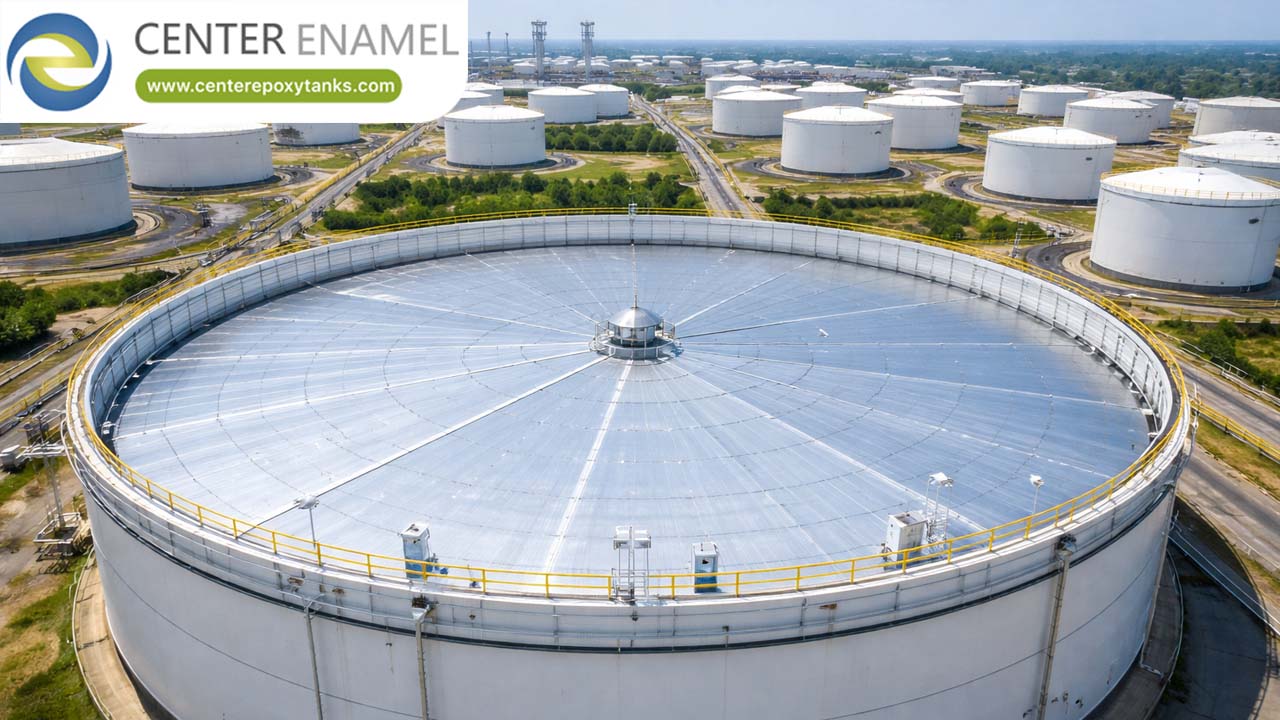
Anatomy of an Internal Floating Roof: Component Engineering Guide
An Internal Floating Roof (IFR) is an engineered floating deck system comprised of several critical components designed to operate in unison to suppress VOC emissions and prevent product evaporation. The primary components include the Roof Deck (providing buoyancy), the Rim Seal System (creating the vapor-tight barrier at the tank wall), Guide Poles/Anti-Rotation Systems (maintaining vertical stability), and Inspection Manways/Bleeder Vents (ensuring operational safety and accessibility). Each component must be engineered to withstand the specific chemical environment of the stored liquid and adhere to international standards, primarily API 650 (Appendix C), to ensure structural longevity and emission compliance.
Component Breakdown: The Anatomy of an IFR
To understand how an IFR functions, it is essential to break it down into its core structural and mechanical elements:
● The Roof Deck (Primary Structure):
● The deck is the foundation of the IFR. It is typically constructed as a pontoon-style deck or a full-contact honeycomb panel system. Its purpose is to provide buoyancy and distribute weight evenly across the liquid surface. High-quality decks are fabricated from high-grade aluminum or stainless steel to resist corrosion and ensure long-term structural integrity.
● Rim Seal System (The Emission Barrier):
● This is the most crucial component for environmental compliance. The seal bridges the gap between the deck perimeter and the tank shell.
○ Primary Seal: Provides the initial vapor containment.
○ Secondary Seal (Wiper): A secondary barrier that "wipes" the tank wall during vertical movement, drastically reducing vapor leakage.
● Guide Poles & Anti-Rotation System:
● As the deck rises and falls, it must remain perfectly level. Guide poles or cable systems prevent the deck from rotating or tilting. These poles also house sampling equipment or level-measuring gauges, integrating structural stability with operational monitoring.
● Bleeder Vents:
● During the initial filling of the tank, air must be displaced, and during emptying, air must be drawn in. Bleeder vents automatically open and close to equalize pressure, preventing the roof from collapsing or trapping pockets of gas during operation.
● Inspection Manways:
● These allow maintenance crews to access the top of the floating roof for inspection of the seals and deck structure without compromising the entire tank environment.
Functional Overview Table
Component | Engineering Function | Impact on Performance |
Deck Structure | Buoyancy & Floatation | Prevents sinking; ensures level movement. |
Rim Seal | Vapor Containment | Direct impact on VOC emission levels. |
Guide Poles | Stability & Alignment | Prevents seal damage; ensures smooth travel. |
Bleeder Vents | Pressure Equalization | Prevents structural damage during filling/emptying. |
Manways | Maintenance Access | Critical for long-term inspection & safety. |
Why Component Quality Dictates Compliance
In the industrial storage sector, an IFR is not just a "floating cover"—it is a precision-engineered safety device. Using low-grade materials for these components can lead to several failure modes:
1. Seal Degradation: Poorly designed seals allow VOCs to escape, leading to environmental fines and loss of product value.
2. Deck Corrosion: If the deck material is not chemically matched to the stored product, corrosion can lead to deck failure (sinking).
3. Mechanical Binding: If the guide system is not aligned to API 650 tolerances, the roof may "bind" or tilt, causing the seal to lose contact with the tank wall.
Frequently Asked Questions (FAQ)
Q: Can I replace specific components of an IFR without replacing the whole roof?
A: Yes. Modern IFR systems are modular. Rim seals, bleeder vents, and guide pole gaskets are designed as wear-and-tear components that can be replaced during scheduled maintenance to ensure the tank remains in regulatory compliance.
Q: What material is best for the Rim Seal?
A: This depends on the chemical being stored. For standard hydrocarbons, synthetic elastomers (like Viton or polyurethane) are common. For aggressive chemicals, specialized, chemically inert materials must be used. Always consult your manufacturer’s chemical compatibility chart.
Q: Does the component selection affect API 650 compliance?
A: Yes. API 650 Appendix C mandates specific standards for deck deflection, load-bearing, and seal performance. Using "off-spec" or generic components can invalidate your tank's certification.
Engineering Solutions for Your Storage Infrastructure
Understanding the components of your IFR system is the first step in effective asset management. Whether you are designing a new tank project or retrofitting an existing vessel for modern emission compliance, selecting high-integrity components is key to your operational success.
Are you planning a maintenance project or an upgrade for your internal floating roof?
[Contact our engineering team] to request a component compatibility assessment, review our seal technology options, or obtain a proposal for a comprehensive IFR retrofitting kit tailored to your current tank dimensions.
Would you like a detailed technical brief on the difference between mechanical shoe seals versus liquid-mounted seals for high-volatility product storage?


