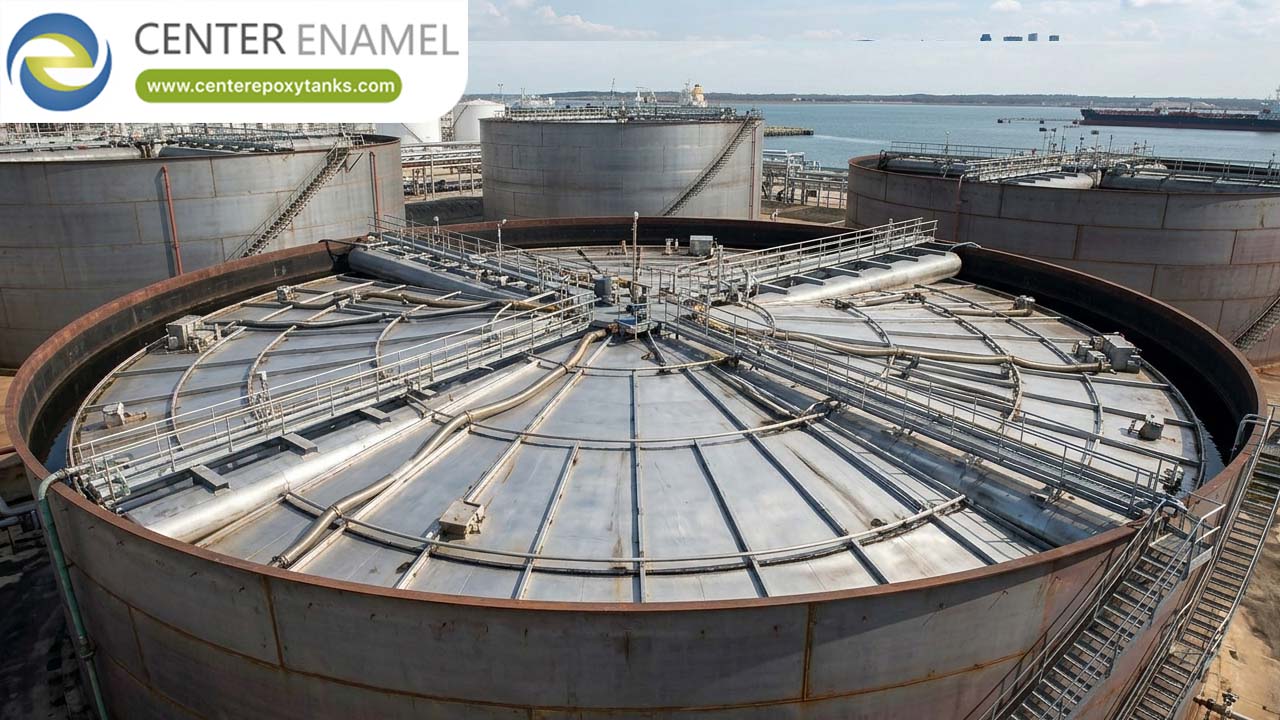
Anatomy of an Aluminum Dome Roof: Engineering & Components
An Aluminum Dome Roof is a precision-engineered structural assembly comprising four primary systems: the Geodesic Framework (a load-bearing triangular truss system), the Aluminum Panel System (the weather-tight skin), the Base/Tension Ring (the foundation interface), and the Sealing/Accessory System (gaskets, vents, and hatches). These components work in unison to create a self-supporting, corrosion-resistant, and maintenance-free cover for storage tanks. By utilizing a geodesic geometry—a network of triangles—these components distribute stress evenly, allowing for large-diameter spans without the need for internal support columns, making them the industry standard for environmental and emission control.
Component Breakdown: The Structural Anatomy
To understand the durability and efficiency of an aluminum dome roof, one must analyze its constituent systems:
1. The Geodesic Framework (Beams/Struts)
● Function: The skeleton of the structure.
● Engineering Detail: Made from high-strength, architectural-grade aluminum alloy. These structural members are arranged in a triangular lattice. The precision of these beams determines the dome's structural integrity, wind load capacity, and snow load handling.
2. Node/Hub Connectors
● Function: The junction points where structural beams intersect.
● Engineering Detail: These are the "heart" of the geodesic geometry. Each node must be precision-engineered to lock the beams into place. High-quality nodes ensure the structural load is transmitted efficiently across the entire network, preventing localized failure.
3. Aluminum Panel System (Cladding)
● Function: The external skin that protects against the elements (rain, UV, debris).
● Engineering Detail: These panels are typically made of high-grade aluminum. They are installed to overlap or lock into the framework. This provides a non-corrosive, weather-tight barrier that requires zero painting or surface treatment over the life of the asset.
4. Tension/Base Ring (Foundation Interface)
● Function: The connection point between the dome and the tank wall.
● Engineering Detail: This ring is engineered to transfer the load of the dome into the tank structure. It must be anchored securely and often includes integrated gasketing to ensure an airtight seal between the dome and the tank, preventing odor escape or vapor leakage.
5. Sealing & Gasketing Systems
● Function: Ensuring the dome is environmentally sealed.
● Engineering Detail: These components are vital for odor control and VOC containment. High-performance, chemical-resistant gaskets are placed at all panel joints and the base ring interface to ensure a "weather-tight" and "gas-tight" environment.
6. Operational Accessories
● Function: Facilities for maintenance and monitoring.
● Engineering Detail:
○ Ventilation Systems: Gravity vents or motorized fans for headspace management.
○ Hatches/Manways: Access points for inspection and maintenance personnel.
○ Observation Windows: Integrated sight ports for process monitoring.
Component Performance Matrix
Component | Engineering Role | Key Performance Attribute |
Geodesic Beams | Structural Load Distribution | Yield Strength & Alloy Grade |
Panel System | Weather Protection | Corrosion Resistance & UV Stability |
Node Connectors | Structural Integrity | Precision & Tolerance |
Base Ring | Load Transfer to Tank | Airtight Seal Integrity |
Seals/Gaskets | Emission/Odor Control | Chemical Inertness |
Engineering Procurement Considerations
When procuring an aluminum dome, engineers should assess the quality of these components against the following benchmarks:
● Load Compliance: Are the beam gauge and panel thickness engineered for your local wind and snow load requirements? (Essential for structural safety).
● Alloy Specification: Ensure the use of marine-grade or architectural-grade aluminum (e.g., 6061 or 6063 series) to guarantee the 30+ year lifespan against corrosion.
● Seal Longevity: For VOC-heavy applications, verify that the gasket material is rated for the specific vapors being stored, as standard rubber may degrade over time.
Frequently Asked Questions (FAQ)
Q: Can components of an aluminum dome be replaced individually?
A: Yes. The modular design of aluminum dome roofs means that individual panels, gaskets, or beams can be replaced during maintenance without compromising the integrity of the entire structure.
Q: Why are internal support columns not needed?
A: The geodesic design creates a self-supporting structure. The "triangulation" of the beams transfers all loads to the perimeter of the tank, effectively "locking" the structure in place and eliminating the need for internal vertical support.
Q: Do I need to coat the aluminum components?
A: No. High-grade aluminum naturally forms an oxide layer that prevents corrosion. Coating is only necessary if your process involves specific chemical conditions that might attack the aluminum alloy itself.
Partnering for Secure & Durable Infrastructure
Understanding the components of your aluminum dome roof allows for better asset management and more accurate long-term maintenance planning. This structural precision is what provides the peace of mind that your storage tank is safe, sealed, and environmentally compliant.
Are you planning a new tank project or retrofitting an existing vessel with a dome cover?
[Contact our engineering team] to discuss your specific load requirements, span diameter, and environmental conditions. We can provide a structural feasibility assessment and a comparative proposal tailored to your application.
Would you like a technical brief on the difference between "battened" versus "panel-locking" seam designs for aluminum dome weather-tightness?


