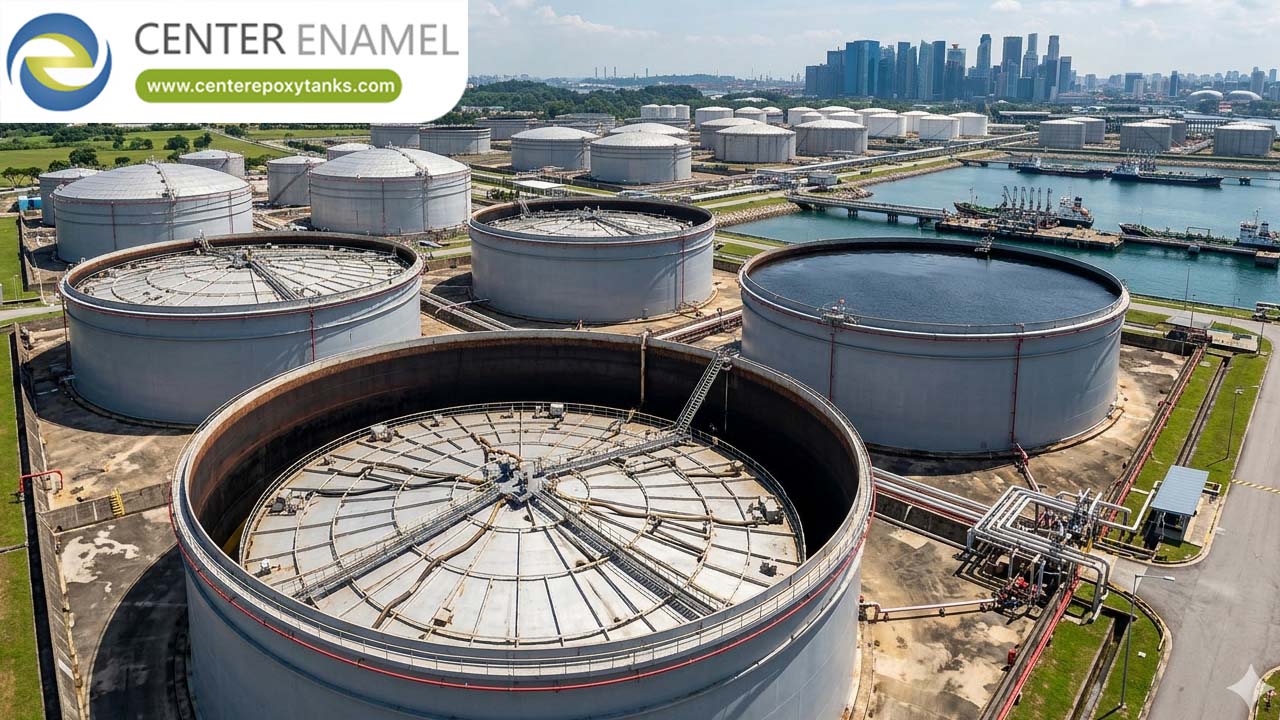
Pontoon Type Internal Floating Roof (IFR): Design, Efficiency, & Safety Guide
A Pontoon Type Internal Floating Roof (IFR) is an engineered floating deck system comprised of a central deck area supported by buoyancy chambers (pontoons) located around the roof’s perimeter. This design is the most widely utilized IFR configuration in the industrial sector. Its primary function is to float directly on the stored liquid surface, creating a barrier that minimizes the "vapor headspace" where Volatile Organic Compounds (VOCs) would otherwise accumulate. By balancing structural buoyancy with a cost-effective design, pontoon-type roofs provide a reliable, API 650-compliant solution for reducing product evaporation and meeting stringent environmental air-quality standards in chemical, fuel, and hydrocarbon storage.
The Engineering Mechanics: How It Works
The effectiveness of a pontoon-type IFR relies on the distribution of buoyancy and the sealing of the roof perimeter:
● Peripheral Pontoons: Unlike full-contact decks, this design uses buoyant chambers located at the outer edge of the deck. These pontoons provide the lift required to keep the roof floating steadily on the liquid surface.
● Central Deck: The inner area (within the ring of pontoons) is a lightweight deck that covers the product. While there is a slight gap between this deck and the liquid surface (unlike a full-contact roof), it remains highly effective for most standard industrial products.
● Rim Seal System: The critical component for emission control. The rim seal bridges the gap between the pontoon ring and the tank wall. A dual-seal setup—consisting of a Primary Mechanical Shoe Seal and a Secondary Wiper Seal—is the industry standard for achieving maximum VOC reduction.
● Vertical Tracking: As the tank fills or discharges, the pontoon structure keeps the roof level, preventing binding against the tank shell and ensuring the rim seals maintain consistent pressure.
Comparative Overview: Pontoon-Type vs. Full-Contact
Feature | Pontoon-Type IFR | Full-Contact IFR |
Vapor Space | Minimal (Small gap near pontoons) | Zero |
Cost | Cost-Effective | Higher |
Buoyancy Design | Annular Pontoons | Honeycomb/Sandwich Panels |
Weight/Load | Lower | Higher |
Maintenance | Standard Inspection | Specialized Cell Inspection |
Best Application | General Hydrocarbons & Fuels | High-Volatility Chemicals |
Engineering Standards & Procurement Benchmarks
When specifying a pontoon-type IFR for your project, ensure that the engineering team prioritizes these benchmarks:
1. API 650 (Appendix C) Compliance: The design and fabrication must strictly adhere to this standard, which governs deflection tolerances, buoyancy requirements, and seal performance.
2. Seal Technology: For strict environmental compliance (e.g., $VOC$ reduction mandates), specify a primary and secondary seal configuration. The seal material must be chemically compatible with your specific stored product (e.g., fuel vs. solvent).
3. Material Selection: The pontoon and deck material (typically aluminum or stainless steel) must be selected based on the corrosivity of the product. Aluminum is ideal for general fuels, while stainless steel is required for aggressive chemical environments.
4. Bleeder Vent Capacity: Ensure the bleeder vents (vacuum breakers) are correctly sized for your tank’s filling/discharge rate to prevent damage to the deck during operation.
Frequently Asked Questions (FAQ)
Q: Is a pontoon-type IFR less effective than a full-contact roof?
A: "Less effective" is relative. For the vast majority of hydrocarbon storage, a pontoon-type IFR provides the necessary VOC suppression at a much lower cost. A full-contact roof is only necessary when storing highly volatile chemicals that require the absolute elimination of every possible vapor pocket.
Q: What happens if a pontoon develops a leak?
A: Modern pontoon designs are compartmentalized. If one section is breached, the remaining pontoons are engineered to provide enough buoyancy to keep the roof afloat, giving maintenance teams time to schedule a repair without an emergency shutdown.
Q: Can I retrofit this onto an existing tank?
A: Yes. Pontoon-type IFRs are modular and are frequently used in retrofitting projects to bring aging tanks into compliance with modern environmental regulations.
Optimizing Your Infrastructure for Reliable Storage
The pontoon-type internal floating roof remains the workhorse of the industry because it perfectly balances structural performance, cost-efficiency, and emission control. Whether you are building a new facility or upgrading an existing asset, this system offers a proven path to environmental compliance and product conservation.
Are you evaluating storage solutions for an upcoming project?
[Contact our engineering team] to discuss your specific product data, tank dimensions, and emission control goals. We can provide a structural load assessment and a design proposal tailored to your application.
Would you like a detailed technical brief on the difference between mechanical shoe seals versus liquid-mounted seals for high-volatility product storage?


