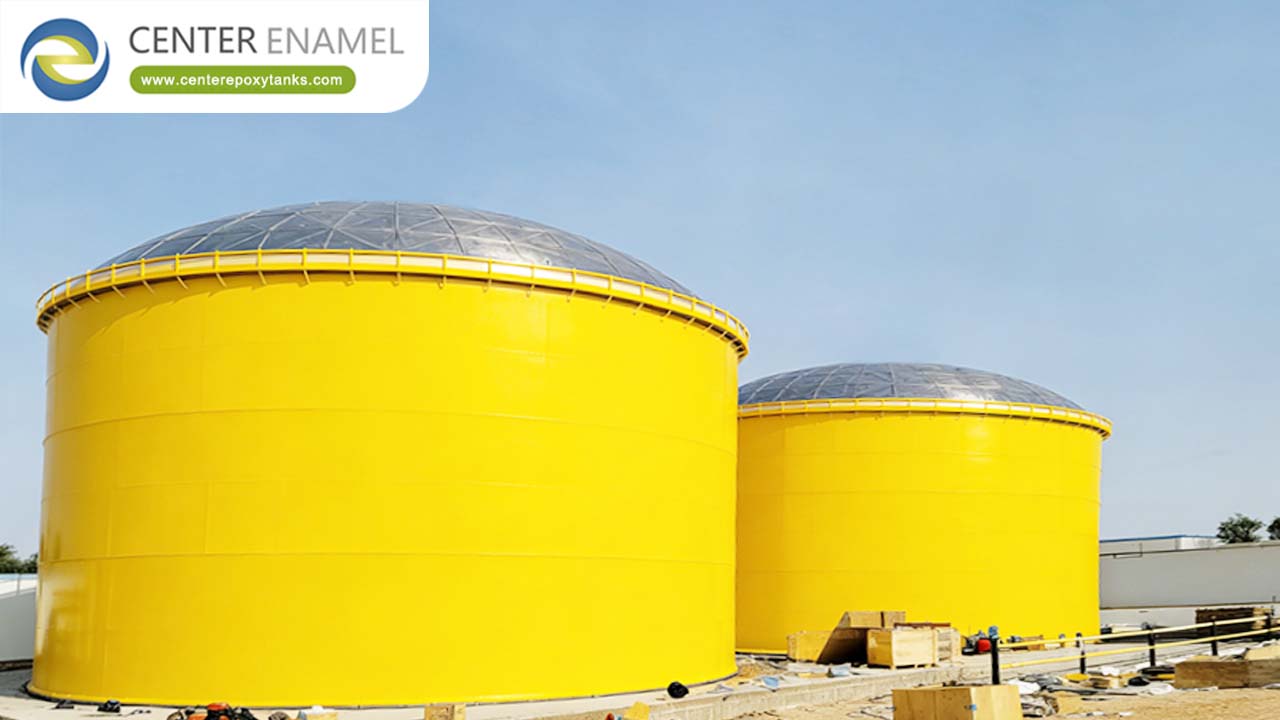
Aluminum Geodesic Dome Roofs: A Critical Evaluation of Pros and Cons
As the industrial sector shifts toward modular and low-maintenance infrastructure, Aluminum Geodesic Dome Roofs have emerged as the preferred alternative to traditional fixed-steel roofs. For facility managers, EPC contractors, and engineers, understanding the balance between capital investment and lifecycle performance is essential.
Since 2008, Shijiazhuang Zhengzhong Technology Co., Ltd (Center Enamel) has been at the forefront of the bolted tank and modular roofing industry, delivering custom-engineered storage systems to over 100 countries. This guide provides a balanced overview of the pros and cons of implementing Aluminum Geodesic Dome Roofs.
The Pros: Why the Industry Prefers Aluminum Domes
1. Superior Corrosion Resistance and Longevity
Aluminum alloys naturally form a protective, self-healing oxide layer when exposed to air. This makes these domes immune to the aggressive oxidation that compromises carbon steel in humid or chemical-rich environments. For many applications, this eliminates the need for periodic sandblasting and repainting.
2. "Zero Hot-Work" Installation
Safety is a primary operational driver. Aluminum dome roofs are assembled using mechanical fasteners, gaskets, and sealants. This "cold-work" process eliminates the need for on-site welding or grinding, significantly reducing fire risks. This makes them the ideal choice for retrofitting tanks in active refineries or chemical processing plants where fire permits are difficult or impossible to obtain.
3. Clear-Span Structural Efficiency
Engineered using geodesic triangulation, these roofs provide a self-supporting, "clear-span" structure. They do not require internal vertical support columns. This design increases the tank's effective volume, simplifies internal maintenance, and removes friction points that can damage internal floating roofs or mixers.
4. Logistical and Economic Optimization
Aluminum domes are lightweight, which reduces the structural load transferred to the tank shell and foundation. Furthermore, they are shipped as modular, flat-packed kits in standard containers, which lowers international freight costs and simplifies transport to remote project sites.
The Cons: Considerations for Planning
1. Higher Initial Capital Expenditure
Compared to simple, fixed carbon steel roof designs, high-grade aluminum geodesic domes often carry a higher upfront material cost. However, when calculating the Total Cost of Ownership (TCO) over a 30-year lifecycle—factoring in reduced maintenance, painting, and inspection costs—they frequently prove more economical.
2. Engineering and Design Complexity
These roofs require precise engineering using Finite Element Analysis (FEA) to manage wind, snow, and seismic loads. They are not "off-the-shelf" products; each dome must be custom-engineered to match the specific tank diameter and local environmental codes, such as API 650 Appendix G or AWWA D108.
3. Material Softness Compared to Steel
While aluminum is highly durable, it is physically softer than heavy-gauge carbon steel. If an installation site involves a high risk of heavy debris or localized mechanical impact (e.g., severe industrial accidents), a heavy steel roof might offer better impact resistance. However, under normal operating conditions, this is rarely a functional disadvantage.
Comparison Summary Table
Evaluation Criterion | Aluminum Geodesic Dome | Traditional Carbon Steel Roof |
Maintenance | Virtually none (Non-corrosive) | Periodic blasting/painting required |
Installation | Cold-work (Safe/Fast) | Hot-work (Welding intensive) |
Internal Span | Clear-span (No columns) | Column-supported |
Weight | Lightweight (Low foundation load) | Heavy (High foundation load) |
Upfront Cost | Higher | Lower |
Service Life | 30+ Years | 20–25 Years (maintenance dependent) |
Balancing Investment and Performance
The transition to Aluminum Geodesic Dome Roofs is driven by the demand for long-term reliability and operational safety. While the initial capital investment is higher than traditional steel, the elimination of "hot-work" requirements, the reduction in foundation structural loads, and the near-zero maintenance profile make them a strategically superior choice for long-term industrial infrastructure.
Center Enamel continues to support global projects with high-performance storage solutions, ensuring that every dome roof is designed for optimal performance and structural compliance.
Are you planning your next infrastructure project? Contact our engineering team today for a comprehensive evaluation of whether an Aluminum Geodesic Dome Roof fits your specific operational requirements.


