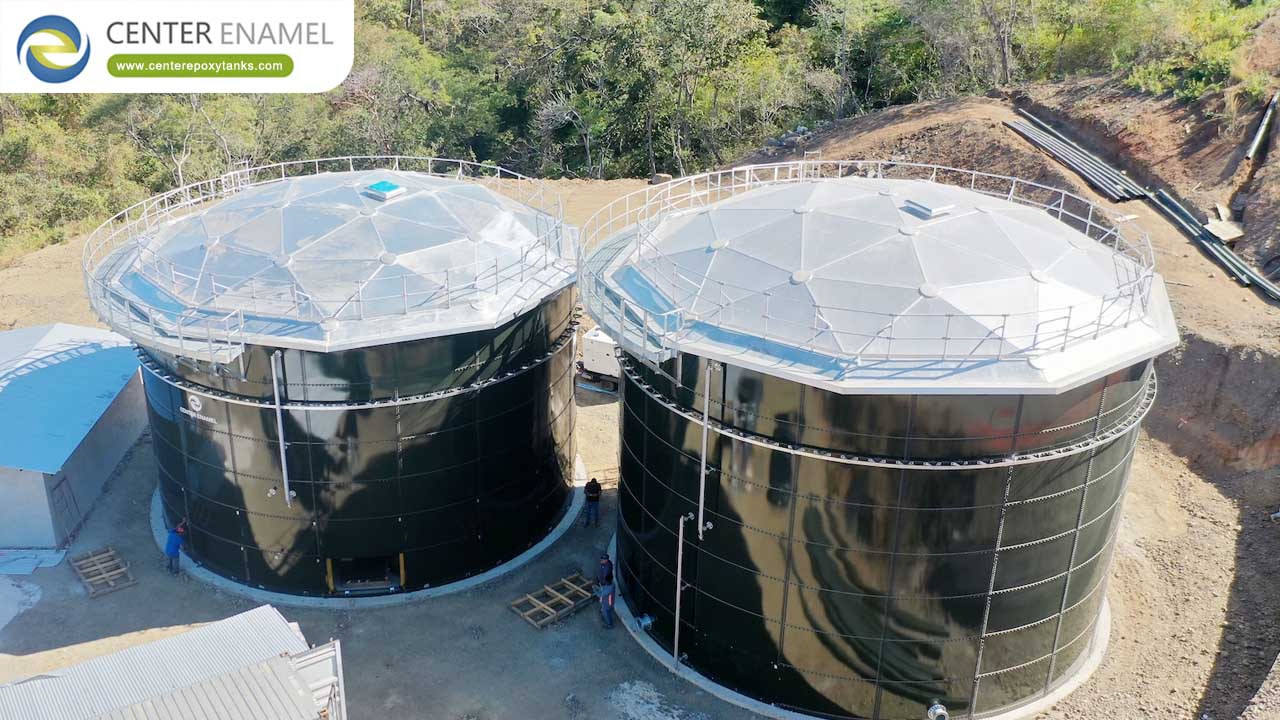
Aluminum Geodesic Dome Roofs vs. Traditional Steel Roofs: A Comprehensive Comparison
For industrial infrastructure, the tank roof is the primary defense against environmental elements and product contamination. As storage technology evolves, facility engineers and project managers are increasingly tasked with comparing the two dominant roofing solutions: Aluminum Geodesic Dome Roofs and Traditional Fixed Steel Roofs.
Understanding the engineering, operational, and financial differences between these two systems is critical for ensuring a 30+ year service life for storage assets. As a global leader in industrial containment solutions, Shijiazhuang Zhengzhong Technology Co., Ltd (Center Enamel) evaluates these technologies based on their impact on asset longevity and operational safety.
1. Material Chemistry and Corrosion Resistance
The most distinct difference between these two systems lies in how they interact with the atmosphere and the stored product.
● Aluminum Geodesic Domes: These roofs utilize marine-grade aluminum alloys. Upon exposure to oxygen, aluminum forms a thin, dense, and self-healing oxide layer that prevents further corrosion. This makes them ideal for environments where high humidity, sulfur, or salt exposure is present, as they do not require periodic painting or coating.
● Traditional Steel Roofs: Steel roofs rely entirely on protective coatings (paint, epoxy, or galvanization) to prevent oxidation. If the coating is scratched or ages, the underlying steel is immediately vulnerable to rust. This necessitates a cycle of sandblasting, inspection, and recoating over the asset's lifespan.
2. Structural Design and Load Management
The internal architecture of the roof significantly impacts tank capacity and maintenance convenience.
● Geodesic Geometry (Clear-Span): The geodesic dome design uses triangulation to create a self-supporting structure. This allows for a "clear-span" interior, meaning there are no internal support columns. This design increases usable capacity, simplifies cleaning, and eliminates friction points for internal floating roofs.
● Traditional Steel Design: Steel roofs typically require internal support beams and vertical columns to maintain structural integrity, especially as tank diameters increase. These columns can become sites for corrosion and limit the movement of internal equipment.
3. Installation Safety: Cold-Work vs. Hot-Work
Safety protocols in refineries and chemical plants are stringent, often making the installation process the deciding factor in roof selection.
● Aluminum (Cold-Work): Aluminum dome installation is a "cold-work" process. Components are assembled using mechanical fasteners, gaskets, and sealants. No welding or grinding is required on-site, which eliminates the risk of fire or explosion.
● Steel (Hot-Work): Traditional steel roofs generally require significant on-site welding to connect structural plates and beams. This necessitates extensive fire watches, hot-work permits, and, in some cases, the total shutdown of adjacent active units.
4. Total Cost of Ownership (TCO)
While initial capital expenditure is a factor, the TCO difference is often stark when considering the full service life.
● Aluminum Domes: While the upfront material cost may be higher, the operational expenditure (OPEX) is extremely low. The absence of painting, coating, or column repair results in significant long-term savings.
● Steel Roofs: While steel may have a lower initial procurement cost, the long-term maintenance burden—including labor, materials, and potential tank downtime for recoating—often results in a higher TCO over the lifetime of the tank.
Comparative Matrix: Roof System Overview
Feature | Aluminum Geodesic Dome | Traditional Fixed Steel Roof |
Corrosion Resistance | Excellent (Self-Passivating) | Moderate (Requires Coating) |
Internal Supports | None (Clear-Span) | Required (Columns/Beams) |
Installation | Cold-Work (Safe/Fast) | Hot-Work (Welding-Intensive) |
Weight | Lightweight (Low Foundation Load) | Heavy (High Foundation Load) |
Maintenance | Virtually None | Periodic Blasting/Painting |
Standardization | API 650 Appendix G | API 650 Standard |
Strategic Infrastructure Selection
The industry shift toward Aluminum Geodesic Dome Roofs is a calculated move to prioritize safety, eliminate maintenance bottlenecks, and ensure structural compliance with standards like API 650 Appendix G. While traditional steel roofs have served the industry for decades, the logistical, safety, and long-term financial advantages of aluminum geodesic domes provide a superior pathway for modern storage infrastructure.
Center Enamel specializes in API 650-compliant aluminum geodesic dome roof design, fabrication, and installation, supporting global infrastructure projects with proven, high-performance storage technology. Contact our engineering team to consult on the best roof solution for your specific application.


