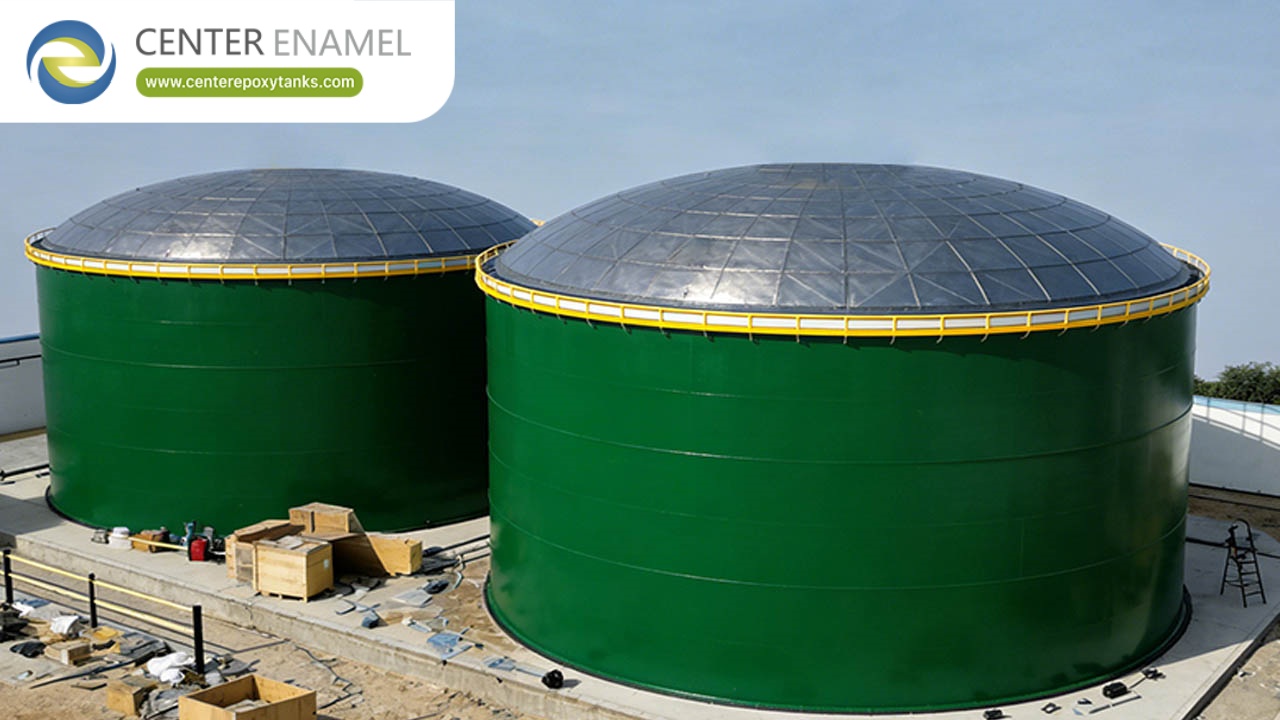
Aluminum Dome vs Fixed Cone Roof: Structural and Lifecycle Comparison
A geodesic aluminum dome beats a fixed steel cone roof where the tank needs a large clear span without internal columns, where the atmosphere is corrosive, or where a bolted retrofit over a live tank is preferred. The cone roof still wins on very small diameters, where internal equipment and simple walkways are easier to support, and where first cost dominates the decision. The structural difference is that the dome carries load by triangulation across a self-supporting shell, while the cone relies on rafters and usually internal columns. Over the service life the aluminum cover avoids the carbon steel recoating cycle, which changes the total cost comparison. Neither is universally right; the choice should follow diameter, environment, access needs and lifecycle cost rather than a vendor's preferred answer. A defensible selection table is the output a buyer should require, not a feature list that assumes one roof is the default for every tank.
The structural difference that matters
The difference that matters is how each roof carries load. A geodesic dome resolves wind, snow and self-weight into axial forces along a network of short aluminum struts, so the shell is largely self-supporting and column-free. A fixed cone roof carries load down rafters to a ring and, on larger diameters, down internal columns to the tank floor. That single distinction changes the tank interior, the foundation thrust, and the maintenance access. It also changes the failure modes: the dome is sensitive to omitted appurtenance loads and node capacity, while the cone is sensitive to rafter and column sizing. A buyer comparing the two should ask for the load path drawing for each, because the comparison is about structure, not about which material sounds more modern.
Load paths: self-supporting versus column-and-rafter
Under the dome the load transfers through struts and nodes to the tank shell and ring beam, with no internal column to interrupt operations. Under the cone the load transfers through rafters and often through columns that occupy the tank volume and obstruct mixers, heaters, floating decks and cleaning. The dome's clear span is therefore a structural and operational advantage on wide tanks, while the cone's column-and-rafter path is simpler and familiar on small tanks. The submittal for either should show the load combinations and the transfer to the shell; a cone-roof checklist will not capture the dome's strut and node limits, so the reviewer must ask for the dome calculation explicitly rather than reuse a standard cone review form.
Corrosion and recoating over the service life
Aluminum does not rust, so a geodesic dome avoids the periodic blasting and recoating cycle that carbon steel cone roofs require in corrosive or coastal service. Over a multi-decade life that repainting avoidance is a real operating saving and a safety benefit, because roof recoating is a confined, hazardous job. The trade-off is that aluminum costs more up front and is less tolerant of dissimilar-metal contact if the detailing is poor. A cone roof in a benign, indoor or short-life duty may never need the recoating that justifies the aluminum premium. The corrosion comparison should be made against the actual site atmosphere and the tank's expected life, not as a universal statement that one roof is maintenance-free.
When a cone roof is still the right call
The cone roof remains the better call on small diameters where the dome's clear-span advantage is marginal and its fabrication premium is not recovered. It is also simpler where the roof must carry heavy internal equipment on columns, where the tank is short-lived or indoor, or where the buyer prefers a wholly welded, conventional arrangement familiar to local inspectors. On very large tanks the cone needs substantial columns and rafters that the dome avoids, so the crossover diameter is where the comparison should focus. Stating the conditions under which the cone wins prevents the buyer from paying for a dome on a tank where a cone is the rational, lower-cost cover for the actual duty.
Total cost of ownership, not first cost
The comparison should be made on lifecycle cost, not the initial quote. The dome's higher first cost is offset by avoided recoating, by easier access that shortens turnarounds, and by the column-free space that can improve operations. The cone's lower first cost is offset by the painting cycle and by any operational friction from internal columns. The crossover depends on diameter, atmosphere, tank life and labor cost for roof work. A buyer should ask each supplier for the same duty basis so the numbers are comparable, and should record the recoating assumption explicitly, because hiding it is what makes a cone quote look cheaper than it will prove to be.
Fabrication, transport and installation
The dome arrives as bolted aluminum modules that are light and demountable, which can simplify transport to remote sites and reduce hot work during erection. The cone roof is usually fabricated and welded on site from steel, which is familiar but heavier and more welding-intensive. For a tank that must stay partly in service, the dome's bolted envelope can lower the outage, though that depends on the product and safety case. The buyer should compare the erection plans side by side, including the outage estimate, because the installation difference is part of the real cost and risk, not a secondary detail that the cover material alone decides.
Code references for each roof form
Both roofs are named by standards without certifying any supply. The dome is referenced by API 650 Appendix G and AWWA D108, with the aluminum design basis in ADM 2015 and the loads in ASCE 7. The cone roof is the conventional fixed roof within API 650's main body and AWWA D100 for water tanks. A submittal that names either standard is stating a design basis, not demonstrating compliance; the actual calculation, edition and engineer acceptance still apply. A buyer should record the edition for each option so the comparison is between two documented designs rather than between a code name and a brochure claim.
A selection checklist for the two
The selection should follow a short checklist: state the tank diameter, the atmosphere and tank life, the internal equipment and its loads, whether the tank stays in service during install, and the recoating assumption. Then ask each supplier for the code basis and edition, the alloy or steel specification, the jointing method and a load calculation. Score the two on clear span, corrosion avoidance, installation outage and documented lifecycle cost for the same duty. Writing those lines turns the dome-versus-cone question into a defensible decision rather than a vendor's preferred answer, and it keeps the comparison anchored to the actual tank instead of a generic roofing debate.
Dome versus cone selection framework
Score both roofs on the same duty before choosing.
Decision factor | Geodesic aluminum dome | Fixed steel cone roof | What to verify |
Diameter above about 20 m | Column-free clear span | Needs columns and rafters | Load path drawing |
Corrosive or coastal atmosphere | No recoating cycle | Periodic blast and paint | Site corrosion survey |
Very small diameter | Premium not recovered | Lower first cost | Lifecycle cost for duty |
Heavy internal equipment | Appurtenance loads explicit | Columns carry it simply | Equipment load schedule |
Comparison verification checklist
These records keep the comparison honest and like-for-like.
Item | Why it matters | Record to request |
Same duty basis for both | Makes quotes comparable | Single enquiry specification |
Recoating assumption | Drives lifecycle cost | Painting cycle statement |
Code edition for each | Names the method used | Calculation with edition cited |
Installation outage | Part of real cost and risk | Erection plan per option |
Project Case Study
The batch allocation register assigns CE-R290 (match grade B) to this page as its single formal project reference. The source row records a Glass-Fused-to-Steel (GFS) Bolted Tank supply for a tank in Malaysia, with completion recorded as 2023-08. The row lists 4 tank(s) and a recorded capacity of 13907; roof type is recorded as Aluminum Dome and supply scope as Tank Only. These values are transcribed from the supplied project case library and are not supplemented with inferred dimensions, per-tank volumes or outcomes.
Evidence boundary. Row CE-R290 records a GFS tank (13,907 m3, 4 tanks, completion 2023-08) with scope Tank Only in Malaysia. Used to discuss roof-vs-tank scope separation in the comparison; the dome is not separately dimensioned in the row.
Recorded data gaps for this row: None recorded. The case row does not include certificate numbers, test reports, commissioning results, contract values or client names, so none are claimed here. This Project ID is the formal case for this page only; it is not used as project evidence, an anchor-text summary or an image caption on any other article in this batch.
Frequently Asked Questions
Q1. On which duties does the dome beat the cone roof?
The dome wins where the tank needs a large clear span without columns, where the atmosphere is corrosive, or where a bolted retrofit over a live tank is preferred. It also avoids the steel recoating cycle over a long life. The cone wins on very small diameters, where heavy internal equipment sits on columns, and where first cost dominates a short-life or indoor tank.
Q2. Which document proves a dome meets API 650 Appendix G?
No page proves it. The submittal should name the API 650 edition, show the Appendix G dome calculation, list the load combinations and carry the engineer's acceptance. The cone roof is the conventional fixed roof within API 650's main body; for both, naming a standard is a designation, not compliance. Request the calculation and edition for each option.
Q3. Can the cone roof be accepted without a load calculation?
It should not be. Both roofs need a calculation for the actual wind, snow and seismic loads and the transfer to the shell. The cone's familiarity does not remove that requirement, and the dome needs its strut and node check on top. Treat the calculation as a hold point before any purchase order.
Q4. Why is the recoating assumption a hold point in the comparison?
The aluminum dome avoids the carbon-steel painting cycle that drives much of a cone roof's lifecycle cost in corrosive service. If the recoating assumption is hidden, a cone quote looks cheaper than it will prove to be. Stating the painting cycle for the actual atmosphere keeps the lifecycle comparison honest and like-for-like.
Q5. How does a clear span change the evidence a buyer must request?
A clear span removes internal columns, so the dome evidence shifts from column sizing to strut forces, node capacity and ring-beam thrust. A cone-roof review checklist will not cover those, so the buyer should ask for the dome calculation explicitly and not reuse a standard cone form for the comparison.
Q6. What is deliberately out of scope on this comparison page?
This page compares geometry, loads, corrosion and lifecycle of two fixed roofs. It does not cover concrete domes in detail, quote prices, certify compliance, or perform a design for a named tank. A worked design and pricing belong to the project submittal, not to this comparison page.
Q7. Which source supports the alloy and code references?
The alloy and code references reflect API 650 Appendix G, AWWA D108, ADM 2015 and ASCE 7 as observed at snippet level in the 2026-11-14 SERP sample and supplier technical guidance. The designations are referenced here; the specific editions and any project calculation are not provided by this page.
Q8. How should the dome-versus-cone decision be written into an RFQ?
State diameter, atmosphere, tank life, internal equipment and its loads, and the in-service install state. Ask both suppliers for the code basis and edition, the material specification, the jointing method and a load calculation on the same duty basis. Those lines turn the choice into a scored decision rather than a vendor preference.
Conclusion
The geodesic aluminum dome and the fixed steel cone roof are not in a race where one always wins; they serve different duties. The dome earns its place on wide, corrosive or live-retrofit tanks where clear span and recoating avoidance matter, while the cone stays the rational choice on small diameters, heavy internal equipment and first-cost-led short-life tanks. The comparison should be made on lifecycle cost and a documented load path for each, under the cited standard edition, rather than on which roof sounds more modern. A buyer who leaves this page should be able to score both options on the same duty and produce a defensible selection record.
Talk to an Engineer
To compare the two roofs properly, send the tank diameter, site atmosphere and expected life, any internal equipment with its loads, and whether the tank must remain in service during install. Ask each supplier for the code basis and edition, the material specification, the jointing method and a load calculation on the same duty basis, and state the recoating assumption explicitly. With those inputs both roofs can be scored on clear span, corrosion avoidance, installation outage and documented lifecycle cost, so the choice is a defensible record for the actual tank rather than a default preference handed over by a single vendor's brochure.
About Center Enamel
Shijiazhuang Zhengzhong Technology Co., Ltd (Center Enamel) has designed and fabricated bolted storage tanks since its registration in 2008; the founding team's enamelling work dates to 1989. The product range covers Glass-Fused-to-Steel (GFS), Fusion Bonded Epoxy (FBE), stainless steel and hot-dip galvanized tanks, and aluminum geodesic dome roofs. Certifications and standard references in the supplied fact base are scoped per product line, not held as a blanket claim for every product. No performance, service life or project outcome beyond the cited sources is claimed here.


