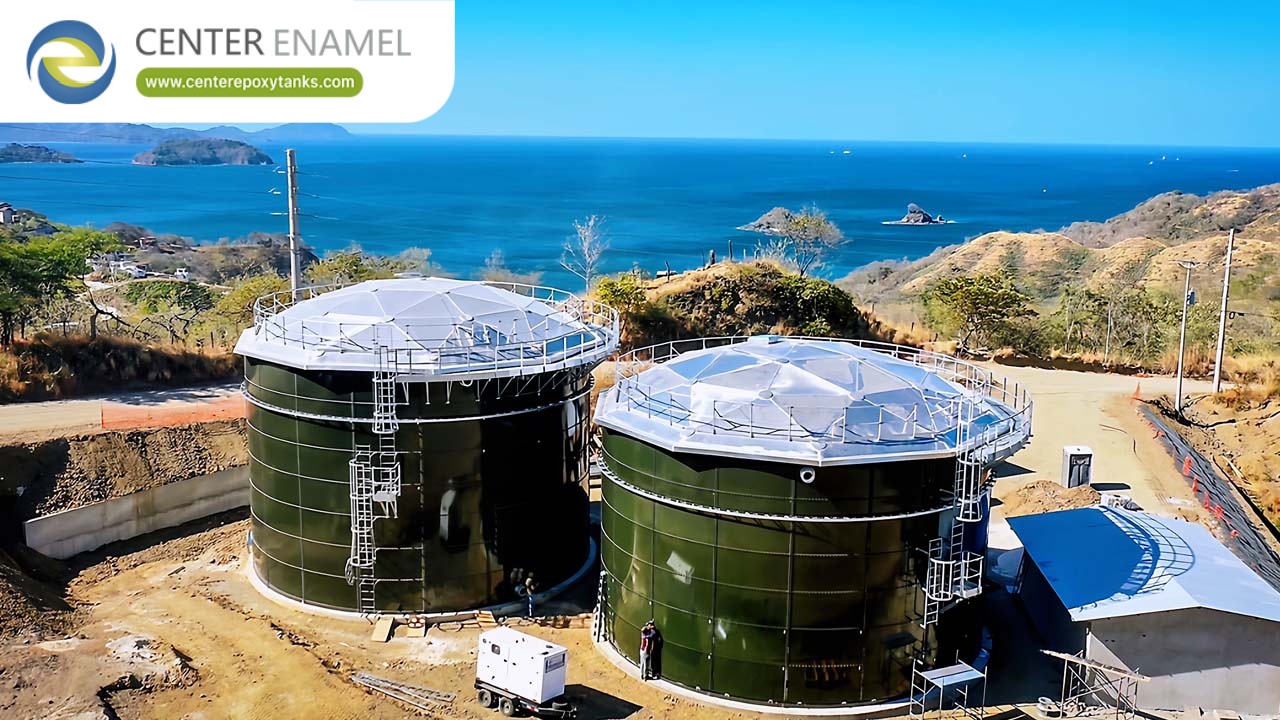
Aluminum Dome Tank Installation: Erection Sequence, Lifting and Commissioning
An aluminum geodesic dome is installed as a kit of factory-fabricated, bolted panels rather than a welded steel roof, which is why most jobs are planned as no-hot-work erection. On a new tank the dome is usually assembled on the ground and lifted into place or built as the shell rises; on an existing tank it is normally lowered panel by panel through the roof opening or set over the shell once the old roof is removed. The installation plan must state the panel handling method, the lifting or lowering scheme, the torque sequence, the appurtenance interface and the commissioning hold points. This page covers erection sequence, lifting and commissioning for the documented aluminum geodesic dome product line; the structural design and load cases are covered separately by the design page. It does not quote an installation price, because that depends on diameter, access, crane or rigging availability and local labor. A reader should leave able to write an installation scope and read a contractor method statement critically before awarding the work.
What the installation plan must state
The installation plan, often called the method statement or ITP, must name the panel handling method, the lift or lower scheme, the bolting and torque sequence, the weather and wind limits, and the acceptance hold points. It should also state who verifies each stage and what record is produced. A vague plan that only promises a dome on a date hides the sequences that actually decide whether the roof is square, watertight and within its load path. The buyer should require the contractor to submit this before any panel arrives on site so the access, crane and crew can be checked against the real geometry.
Panel handling and the no-hot-work rule
Factory-fabricated aluminum panels arrive pre-cut, drilled and often pre-coated, which is what lets the dome go up with bolted connections instead of field welding. The no-hot-work advantage matters most over live or hazardous tanks, where welding on the roof would force a full gas-free certification. Panels are light relative to steel, but they are large and easily distorted, so handling plans must protect the edges and the gasket surfaces. The crew should stage panels close to the lift point and keep them off the ground where abrasion can score the sealing face before the dome is ever closed.
Lifting the dome over or lowering it inside
Two erection routes dominate. A lift-over scheme assembles the dome on the ground beside the tank and lifts the whole or sectioned shell into place with a crane, which suits new construction and open sites. A lower-inside scheme builds the dome from a central mast or internal scaffold after panels are passed through the roof opening, which suits retrofits where a crane cannot reach or the tank must stay in place. The choice turns on diameter, the tank's location, headroom and the old-roof removal sequence, and the plan should justify the route rather than default to the contractor's cheapest available crane.
Appurtenance interface coordination
The dome is not the only thing on the roof. Walkways, nozzles, platforms, vents, mixers and suspended equipment all land on the shell and must be coordinated with the panel layout before erection. If these are omitted from the plan, the panels arrive and the appurtenances cannot be seated without cutting, which breaks the sealing and the no-hot-work logic at once. The submittal should list every appurtenance with its location and load so the erection sequence seats them in the correct panel and the connection is accepted as designed rather than field-improvised on the day.
Torque sequence and the connection acceptance
Bolted connections carry the triangulated load, so the torque sequence and the gasket compression are acceptance items, not bookkeeping. The plan should state the target torque, the pattern used to draw the joints down evenly, and how the silicone or gasket seal is verified between panels. A dome that is torqued out of sequence can rack, leaving gaps that show up only as leaks under the first rain or the first fill. The receiver should witness or record the torque and the seal continuity as a hold point before the roof is declared closed.
Erection over an existing tank in service
Retrofitting a dome over an existing fixed-roof or open tank is where most schedule risk lives. The old roof must be removed or isolated, the shell rim must be surveyed for out-of-round and settlement, and the tank may need to be taken out of service or kept on a controlled fill during the work. The method statement should state the tank status, the isolation and ventilation basis, and how personnel access is maintained as the opening grows. Treating a retrofit as a new-build lift ignores the live product and the existing geometry and is a common source of both delay and rework on dome projects.
Commissioning and the hold-point checks
Commissioning confirms the roof is closed, aligned and within its limits before the tank returns to duty. The checks should include panel alignment and squareness, seal continuity across every joint, the appurtenance seats, and a water or air test of the joints where the specification calls for one. For a tank that will hold product, the fill should be staged so any leak at a seam is found before the dome is loaded. These checks are the hold points that protect the warranty and the operator, and they should be witnessed and recorded rather than signed off from a generic checklist.
What the handover package should contain
The handover should give the operator the as-built panel layout, the torque and seal records, the appurtenance interface drawings, the commissioning results, and the maintenance and access notes for the roof's life. Without these, a later inspection cannot tell which joints were verified and which were assumed. The buyer should name the handover contents in the contract so the records arrive with the roof instead of being reconstructed years later from memory. A clean handover is what turns an erected dome into a maintainable asset.
Dome erection route selection
Use this to choose lift-over versus lower-inside before the method statement is written.
Factor | Favors lift-over | Favors lower-inside |
Site access | Open ground, crane reach | Confined or live site |
Tank status | New build, empty | Retrofit, tank stays |
Diameter | Any, whole-shell lift | Large, mast-build |
Risk driver | Crane and weather | Old-roof removal, access |
Pre-commissioning verification checklist
These are the points a receiver should witness before the roof is accepted.
Check | What to confirm | Record to keep |
Alignment | Panels square, no rack | As-built layout |
Seal continuity | Every joint sealed | Torque and seal log |
Appurtenances | All seated as drawn | Interface drawings |
Test | Water or air per spec | Commissioning result |
Frequently Asked Questions
Q1. Is an aluminum dome installed without hot work?
In most cases yes. The dome arrives as bolted, factory-fabricated panels, so the roof is assembled with connections rather than field welding. This is the main reason domes are attractive over live or hazardous tanks, where welding would force a full gas-free certification. The method statement should confirm the no-hot-work scope and any rare exception, because a single field weld removes the very advantage that justified the aluminum roof.
Q2. Lift-over or lower-inside: which is better?
Neither is universally better; the route follows the site. Lift-over assembles the dome beside the tank and cranes it into place, which suits new builds and open sites. Lower-inside builds from a central mast or scaffold after panels pass through the roof opening, which suits retrofits and confined sites. The plan should justify the route from diameter, access, headroom and the old-roof sequence rather than default to the cheapest crane.
Q3. What must the installation plan state before panels arrive?
It should name the panel handling method, the lift or lower scheme, the torque sequence, the wind and weather limits, the appurtenance interface and the acceptance hold points, plus who verifies each stage. A plan that only promises a date hides the sequences that decide whether the roof is square, sealed and within its load path. Require it submitted and reviewed first.
Q4. Why does the appurtenance interface matter so much?
Walkways, nozzles, platforms, vents and suspended equipment all land on the shell and must align with the panel layout. If they are left out of the plan, panels arrive and cannot be seated without cutting, which breaks the seal and the no-hot-work logic at once. The submittal should list every appurtenance with its location and load so erection seats them as designed.
Q5. What is checked at commissioning?
Commissioning confirms panel alignment and squareness, seal continuity across every joint, the appurtenance seats, and a water or air test where the specification calls for one. The fill should be staged so any seam leak is found before the dome is loaded. These are hold points that should be witnessed and recorded, not signed from a generic checklist.
Q6. Does the dome need a foundation or shell modification?
Usually the dome seats on the existing or new tank shell rim, so the shell must be surveyed for out-of-round and settlement before erection. A rim that is out of tolerance will not accept the panels squarely and will force field adjustment. The method statement should state the survey and the allowance for shell variation, because the roof inherits whatever the rim does.
Q7. What records should the handover include?
The as-built panel layout, the torque and seal records, the appurtenance interface drawings, the commissioning results, and the maintenance and access notes. Without these a later inspection cannot tell which joints were verified. Name the handover contents in the contract so the records arrive with the roof instead of being reconstructed years later.
Q8. What is deliberately out of scope on this installation page?
This page covers erection sequence, lifting and commissioning. It does not provide a structural design for a named tank, quote an installation price, certify compliance, or replace the contractor's engineered method statement. The design and load cases belong to the design page and the project submittal, not to an installation overview.
Conclusion
An aluminum geodesic dome is installed as a bolted panel kit, which is why the work is normally planned as no-hot-work erection and why the method statement decides the outcome more than the alloy does. The two routes - lift-over for open new sites and lower-inside for retrofits - follow access, diameter and the old-roof sequence rather than preference, and the appurtenance interface must be fixed before panels arrive or the seal and the no-hot-work logic both break at once. Commissioning then confirms alignment, seal continuity and the test result as witnessed hold points, and a clean handover record is what makes the roof maintainable later. This page treats the dome as the documented aluminum product line it is and points the design and load cases to the design page rather than repeating them here.
Talk to an Engineer
To scope an aluminum dome installation, send the tank diameter, the shell rim condition survey, whether the tank is new or being retrofitted, and the complete list of roof appurtenances with their locations and loads. Ask each contractor for the method statement, the lift or lower scheme, the torque and seal sequence, the wind and weather limits, and the commissioning hold points before any panel is ordered. Note that the structural design and the load cases are a separate submittal reviewed by the design page's criteria, so request those together. With the plan, the appurtenance interface and the commissioning records named up front, the dome can be erected as a verifiable sequence rather than accepted on a date with the real checks assumed away.
About Center Enamel
Shijiazhuang Zhengzhong Technology Co., Ltd (Center Enamel) has designed and fabricated bolted storage tanks since its registration in 2008; the founding team's enamelling work dates to 1989. The product range covers Glass-Fused-to-Steel (GFS), Fusion Bonded Epoxy (FBE), stainless steel and hot-dip galvanized tanks, and aluminum geodesic dome roofs. Certifications and standard references in the supplied fact base are scoped per product line, not held as a blanket claim for every product. No performance, service life or project outcome beyond the cited sources is claimed here.


