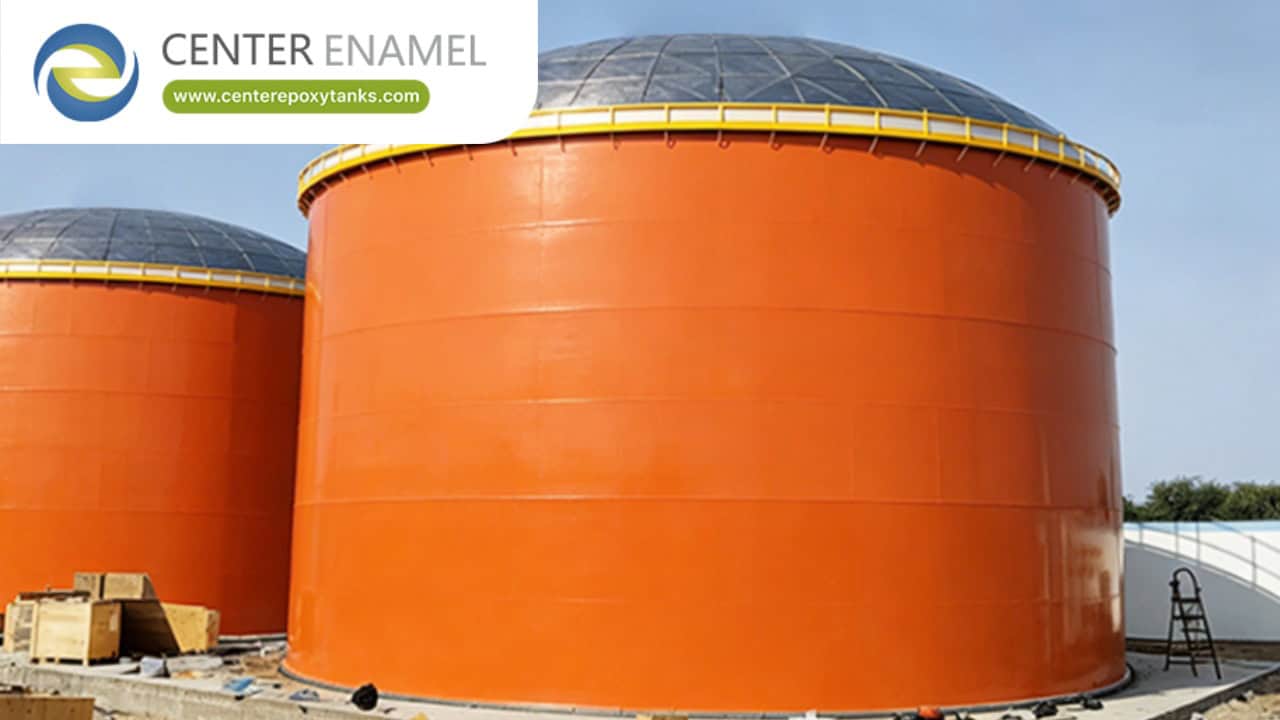
Aluminum Dome Roofs For Water Storage Tanks: Potable Deep-Dive And NSF/WRAS
Potable water tanks need a cover that keeps the water clean and complies with drinking-water standards. This article goes deeper than a general water overview: NSF/ANSI 61 and WRAS compliance, first-flush management, and verified delivered projects with aluminum domes.
Why potable water needs a sealed cover
An open or weakly-covered tank admits debris, light (algae) and animals. A geodesic dome fully encloses the water, blocking those vectors and keeping the stored supply clean without chemical dosing for algae control.
NSF/ANSI 61 and WRAS
For drinking water the dome's materials in contact with the vapor space, and any seal or coating, must meet NSF/ANSI 61 (US) or WRAS (UK) approvals where the market requires. The compliance statement should name the standard and the approved components.
First-flush and access
Roof runoff and access are managed so the first flush does not enter the tank. Manways and hatches are positioned for safe access without contaminating the water. The clear span aids interior inspection.
Verified delivered projects
Unlike the petroleum and chemical articles in this batch, potable water has real delivered references: aluminum domes have been supplied on drinking-water tanks in Indonesia (1 x 42.04 m diameter x 15.2 m, 21,099 m3, 2025), Malaysia (4 x 17.58 m x 21 m, 20,380 m3, 2025), Panama (3 x 15.29 m x 9 m, 4,956 m3, 2025) and Mexico (1 x 27.52 m x 10.2 m, 6,060 m3, 2026), all GFS bolted tanks.
Potable compliance table
Requirement | Dome role | Evidence |
Contamination control | Full enclosure | Sealed cover |
Material approval | NSF/WRAS parts | Compliance statement |
Access hygiene | Positioned hatches | Design detail |
Verification | Delivered projects | Case library |
How this differs from wastewater
Wastewater (separate article) centers H2S and odor; potable centers cleanliness and approvals. Both use the same dome type, but the compliance emphasis diverges.
Inspection for potable
Potable inspection emphasizes seal integrity (no path to water), approved-material records, and hatch hygiene. The dome's simplicity helps frequent checks.
Internal link note
This article deepens the potable-water angle; the general aluminum-dome overview and the wastewater article cover adjacent intents and should be linked rather than duplicated.
Specification inputs
Provide the approval market (NSF/WRAS/other), tank size and access needs; the dome is specified for drinking-water compliance.
Summary
For potable water the dome is a clean, approved, fully enclosing cover with real delivered references — the strongest-evidenced application in this batch.
NSF/WRAS documentation
For drinking water the approved-material statement names the standard (NSF/ANSI 61 or WRAS) and the specific approved components in contact with the vapor space.
That document travels with the tank and is what an auditor or utility reviewer actually checks.
First-flush management
Roof runoff and access are managed so the first flush does not enter the tank; manways and hatches are positioned for safe access without contaminating the water.
A clear span aids interior inspection, which supports the cleanliness the approvals require.
Reference project recap
Delivered references include drinking-water tanks in Indonesia (21,099 m3, 2025), Malaysia (20,380 m3, 2025), Panama (4,956 m3, 2025) and Mexico (6,060 m3, 2026), all with aluminum domes on GFS bolted tanks.
These validate dome-on-potable-water delivery; the application is the best-evidenced in this batch.
Algae control
By blocking light and debris, the enclosed tank avoids algae dosing that an open tank would need; the cover is the primary control, not a chemical add-on.
Hygiene access
Positioned hatches and a clear span support hygienic access for inspection without contaminating the supply, reinforcing the potable approvals.
Cleaning without drain-in
An enclosed potable tank is cleaned through positioned manways without opening the supply to contamination; the clear span aids access. Hygiene is designed into the access, not left to practice, which supports the drinking-water approvals.
Approval renewal
NSF/WRAS approvals are maintained by keeping the approved material package intact through any retrofit; the dome's sealed interface is part of that package. Recording the approved components supports renewal and audit.
Potable enclosure discipline
Potable-water domes are specified for cleanliness and approval — NSF/WRAS materials, light and debris exclusion, hygienic access — so the cover is the primary contamination control, not a chemical afterthought. The discipline is in keeping the approved package intact through retrofit and in recording the delivered references that prove the approach works in the field.
Cleanliness by design
Potable-water domes make cleanliness the default: light and debris excluded, NSF/WRAS materials in the vapor space, hygienic access for inspection. The cover is the primary contamination control, not a chemical add-on applied later.
Keeping the approved package intact through any retrofit, and recording the delivered references, sustains the approvals over the tank's life. Discipline at specification and through retrofit is what keeps a potable cover genuinely potable.
Approvals in practice
In practice the potable dome's value shows at audit, where the NSF/WRAS records and the delivered references answer the reviewer without a chase.
Frequently Asked Questions
Q: Are aluminum domes approved for potable water?
A: Yes — with NSF/ANSI 61 or WRAS approved materials where the market requires; request the compliance statement.
Q: How do they keep water clean?
A: Full enclosure blocks debris, light and animals without algae-dosing.
Q: Are there delivered potable projects?
A: Yes — Indonesia, Malaysia, Panama and Mexico drinking-water tanks with domes (2023-2026).
Q: How do they differ from wastewater domes?
A: Potable centers cleanliness/approvals; wastewater centers H2S/odor.
Q: What about first-flush?
A: Roof runoff and hatches are detailed so the first flush stays out of the tank.
Q: What should I specify?
A: Approval market, tank size and access needs.
Conclusion
For potable water, the aluminum geodesic dome is a clean, standards-approved, fully enclosing cover with verified delivered projects — the application in this batch best backed by real references.
Project Reference And Honest Disclosure
Reference project (verified in case library): Indonesia / Malaysia / Panama / Mexico Drinking water 2023-2026 — GFS bolted tank, Indonesia 1x42.04mx15.2m; Malaysia 4x17.58mx21m; Panama 3x15.29mx9m; Mexico 1x27.52mx10.2m, total capacity 21,099 m3. The aluminum dome roof was supplied as the tank cover; this reference demonstrates dome-on-tank delivery, not a water application.
Work With Center Enamel
Center Enamel, established in 2008 and based in Shijiazhuang, China, manufactures glass-fused-to-steel (GFS), epoxy-coated, galvanized, stainless steel and welded storage tanks, aluminum geodesic dome roofs, floating roofs, pressure vessels and wastewater and biogas engineering packages. Its production system is certified to ISO 9001, and its tanks and coatings are validated against NSF/ANSI 61, WRAS, FM and CE (EN 1090) where applicable. The company has delivered more than 30,000 tank and enclosure projects across potable water, wastewater, fuel, chemical and dry-bulk applications.
If you are specifying a potable-water dome, share the approval market and tank size and we can confirm the NSF/WRAS-compliant material package and reference details.
Sources And Further Reading
AWWA D108, Standard for Aluminum Domes and Roof Structures.
NSF/ANSI 61 and WRAS drinking-water material approvals.
Verified case library: Indonesia, Malaysia, Panama, Mexico drinking-water tanks with aluminum domes (2023-2026).


