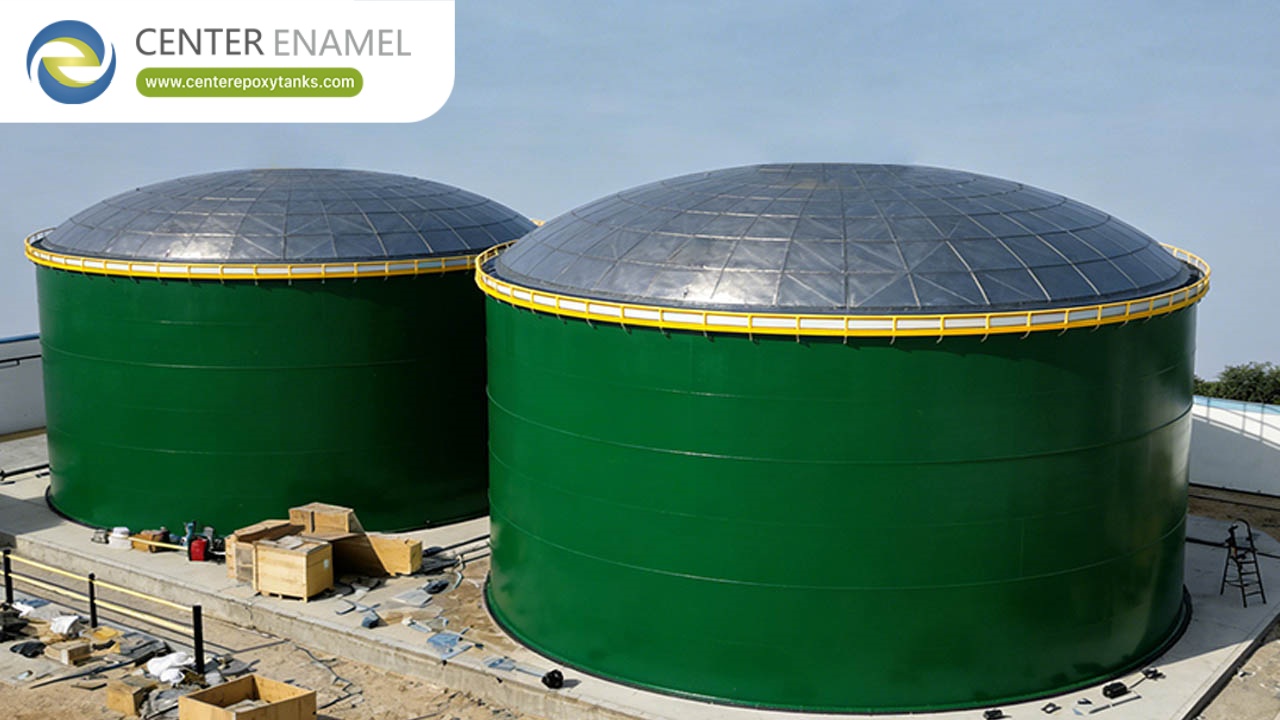
Aluminum Dome Roof Accessories
The aluminum dome roof is more than panels and nodes: its usefulness comes from the accessories — manways, louvers, walkways, vents, handrails and instrument penetrations — that turn a cover into a working structure. This article explains the common accessories, why they must be designed into the dome, and how penetration scheduling keeps them structurally sound.
Accessories Are Part Of The Design
Aluminum domes are described as 'easily customizable for accessories and penetrations,' but that customization is a design task, not a field improvisation. Each accessory interrupts the membrane and must be reinforced.
Treating accessories as afterthoughts leads to field-drilled openings that remove local capacity. The disciplined approach designs them in from the first drawing.
Manways
Manways provide safe entry for inspection and maintenance. They are reinforced penetrations with a sealed cover and are placed for access to the tank interior without conflicting with nodes.
Size and location follow the access plan; a manway also supports confined-space entry procedure, so its position affects how safely the tank is serviced.
Louvers And Vent Openings
Louvers or screened openings may be used where a controlled opening (rather than a sealed cover) is intended for a specific atmosphere. They are penetrations with their own reinforcement and screen/closure detail.
For a sealed dome, ventilation is handled by P/V vents rather than louvers; the choice depends on whether the tank is enclosed or intentionally open at that point.
Walkways And Handrails
Walkways across a dome let crews reach penetrations and instruments safely. They load the local panels, so the dome design confirms capacity along the walkway path and at supports.
Handrails at manways and edges are safety items. Their attachment points are part of the penetration schedule, not loose fittings added on site.
Vents And Instruments
Vents (pressure-vacuum) and instrument penetrations (level, temperature, gas) are reinforced openings with collars. Each carries a load or a sealing requirement that the dome must accommodate.
Instrument penetrations are numerous on process tanks; the schedule should map them so the dome is built for the count, not modified for it later.
Common dome accessories
Accessory | Function | Design need |
Manway | Safe entry | Reinforced, sealed |
Walkway | Crew access | Local capacity |
Handrail | Edge safety | Fixed supports |
Vent | Pressure control | Sized + set |
Instrument | Measurement | Collar + seal |
Mixer | Process | Load reinforcement |
Mixer And Equipment Supports
Where a mixer or other equipment mounts through the dome, the penetration must carry the equipment load and vibration. This is a higher local demand than a passive vent and needs explicit reinforcement.
Confirm the dome's local capacity at the equipment point and the dynamic load; a mixer on an unreinforced panel is a failure waiting to happen.
Penetration Scheduling
The penetration schedule lists every opening: type, diameter, location (node), applied load, and reinforcement detail. It is the document that makes accessories structural rather than accidental.
Bidders and inspectors use the schedule to verify the dome was built for its accessories. No schedule, no assurance.
Material Compatibility Of Accessories
Accessory frames, fasteners and seals should match the dome's corrosion strategy — including isolation where they meet steel tank parts. A stainless or compatible frame at a steel interface avoids galvanic issues.
Seals at accessories use the same UV-stable silicone grade as the seams so the whole cover ages consistently.
Installation Of Accessories
Accessories are set at their designed nodes during assembly with reinforced collars and sealed gaskets; torque and seal continuity are checked at acceptance. Moving one after assembly off its reinforced location removes capacity.
Because accessories are load-bearing details, their installation is a QA item, not a finish touch.
Inspection Of Accessories
Inspect accessories for seal continuity, looseness, and load signs at supports. A weeping instrument collar or a loose walkway bracket is found early by including accessories in the dome inspection scope.
Records should show each accessory's as-built location so future work does not accidentally compromise it.
Penetration schedule fields
Field | Purpose |
Type | What opens the dome |
Diameter | Size of opening |
Node | Where on the grid |
Load | Applied demand |
Reinforcement | Local capacity |
Specifying Accessories
Write the accessory list with loads into the spec, require a penetration schedule, and verify it at first-article and acceptance. That converts 'customizable' from a slogan into a built and verified structure.
The payoff is a dome that is not just a cover but a working platform matched to the tank's operations.
Spare And Replacement Accessories
Seals, gaskets and small fittings wear faster than the structure. Stocking the exact replacement grade — including the UV-stable silicone used at seams — keeps an accessory failure from becoming a cover failure.
Tag spares to their penetration so a future crew fits the right part without reverse-engineering the dome. The accessory schedule is the key to that lookup.
Documenting the accessory list with its loads also helps future modifications stay safe: anyone adding equipment later can see what the dome was built to carry and where capacity remains.
Periodic review of the accessory schedule against actual use also reveals unused or overloaded openings, letting the owner rationalize penetrations and reduce future leak paths.
Frequently Asked Questions
Q: Are dome accessories designed in or added later?
A: Designed in. Each interrupts the membrane and needs reinforcement; field-drilling removes local capacity.
Q: What is a penetration schedule?
A: The document listing every opening (type, diameter, node location, load, reinforcement) that makes accessories structural rather than accidental.
Q: Can a mixer mount through a dome?
A: Yes, if the penetration carries the equipment load and vibration with explicit reinforcement and a confirmed local capacity.
Q: Why do accessories need material compatibility?
A: To avoid galvanic corrosion where they meet steel and to keep seals aging consistently with the seams.
Q: How are accessories inspected?
A: For seal continuity, looseness and load signs at supports, included in the dome inspection scope with as-built locations recorded.
Q: Are louvers used on a sealed dome?
A: Only where a controlled opening is intended; sealed domes use P/V vents for breathing instead.
Conclusion
Aluminum geodesic dome roofs are selected, designed and maintained as structural systems, not as standalone covers. The articles in this batch treat each angle — from OEM sourcing and tender specification to retrofit, corrosion, loads, accessories, applications and manufacturing — as a distinct user task with its own evidence and boundaries.
Work With Center Enamel
Center Enamel (Shijiazhuang Zhengzhong Technology Co., Ltd) has manufactured bolted and welded storage tanks since 2008 from its base in Shijiazhuang, China. The company produces GFS (Glass-Fused-to-Steel), FBE-coated, galvanized, stainless-steel and welded tanks, aluminum geodesic dome roofs, floating roofs, pressure vessels, and wastewater and biogas engineering packages. Its quality system carries ISO 9001, and aluminum dome roofs are designed to AWWA D108, API 650, ADM 2015, ASCE 7-10 and IBC 2012. With an installed base of 30,000+ projects and 300,000 enamel steel plates produced annually, Center Enamel supports drinking-water, municipal, industrial, petroleum, dry-bulk and architectural applications.
Planning a dome with manways, walkways or mixers? Contact Center Enamel to put every accessory into a reinforced penetration schedule so the dome is built for them, not modified for them.
Project Case Reference
Reference (cover-only, not a verified tank case): Panama Drinking water (cover-only reference) — aluminum dome roof, Ø20.64 m diameter. This is a dome-cover reference with diameter and application on record; it is disclosed as a C-grade reference and is not cited as a full tank-project delivery.
Sources
· Center Enamel brand facts (brand_facts.py): company profile, certifications, AluminumDome product data.
· Aluminum Dome Roof design standards: AWWA D108, API 650, ADM 2015, ASCE 7-10, IBC 2012.
· Project case anchors (case_anchors.py): verified tank projects delivered with aluminum dome roofs.
· Dome project references (brand_facts.py DOME_PROJECT_REFERENCES): cover-only diameter references, disclosed as C-grade.


