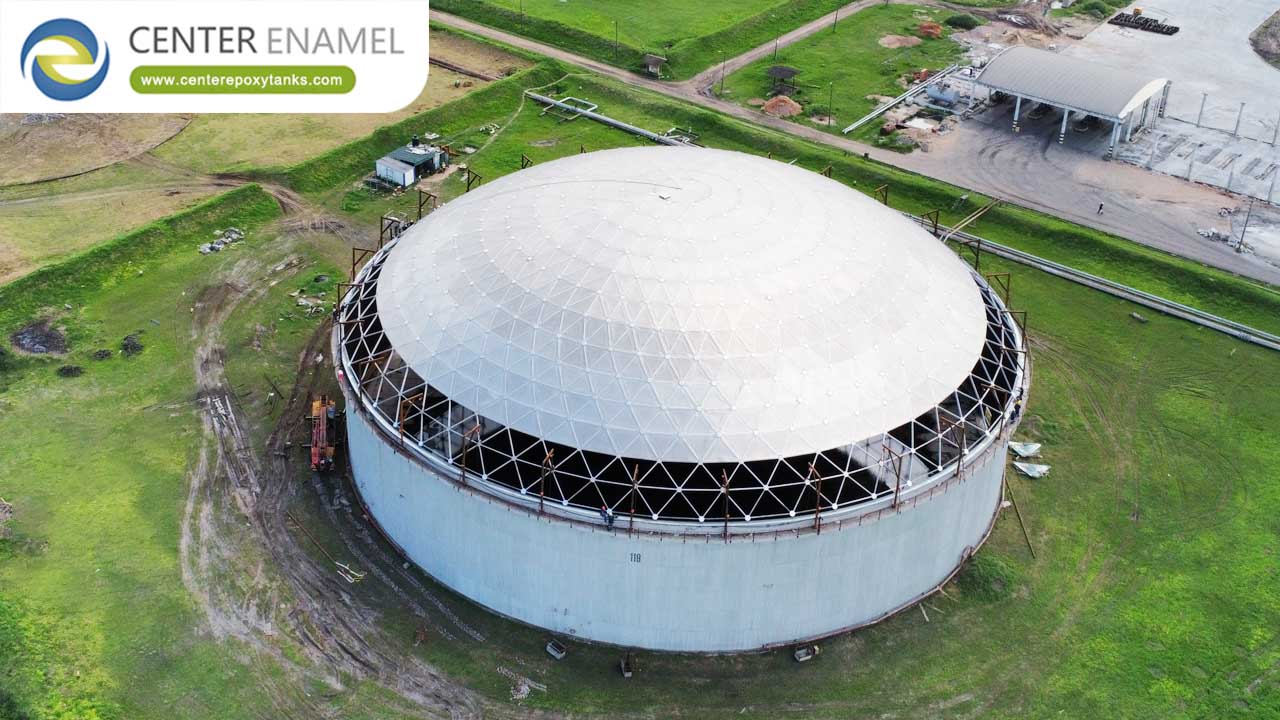
Aluminum Dome Roof Corrosion Resistance Deep-Dive
Aluminum's corrosion resistance is the reason dome roofs are specified as low-maintenance, but the real behavior is nuanced: aluminum is not immune, and its interaction with steel tanks and with chlorides or industrial atmospheres decides long-term performance. This article is a deep-dive into aluminum dome corrosion mechanisms, environments and the details that make the resistance hold up.
The Aluminum Oxide Film
Aluminum forms a thin, adherent, self-healing oxide layer in air that passivates the surface and slows further attack. This is why aluminum domes avoid the repainting cycles of carbon steel.
The film is stable in neutral pH and many atmospheres, but it can be locally broken by aggressive chemistry or by contact with dissimilar metals. Resistance is therefore conditional, not absolute.
Marine And Chloride Environments
Coastal and desalination sites expose aluminum to chlorides, which can cause pitting if the film is compromised. Proper alloy selection and a clean, well-drained detail reduce pitting risk.
For seawater-adjacent service, specify an alloy and temper suited to the chloride level and avoid crevices where brine can sit. The oxide film helps, but design details matter as much as the metal.
Industrial And Wastewater Atmospheres
Wastewater and biogas environments can carry sulfides and humidity that challenge many metals. Aluminum's resistance to H2S-containing atmospheres is a documented advantage for dome covers over treatment tanks, but the specific alloy and any coatings should match the gas mix.
Do not assume 'aluminum = inert everywhere.' A dome over a heavily acidic or caustic process stream needs the finish and any protective measure specified for that chemistry.
Galvanic Interaction With Steel
Aluminum is more anodic than steel, so where the two touch in the presence of an electrolyte, aluminum can corrode to protect the steel. The dome-to-tank steel rim is exactly such a junction and must be isolated or fastened with compatible materials.
Practical measures include dielectric isolation washers, compatible fasteners, and keeping the interface dry by design. Ignoring this is the most common way an otherwise-resistant dome fails at the edge.
Coatings And Surface Treatment
Mill-finish aluminum relies on its oxide film; anodizing thickens that film for extra protection in aggressive settings. The choice depends on environment and any potable-contact requirement (inert, non-leaching for drinking water).
Coatings are not a substitute for design isolation at steel interfaces, but they help in severe atmospheres. Specify the treatment and confirm it is compatible with the service.
Aluminum corrosion by environment
Environment | Main risk | Mitigation |
Marine / chloride | Pitting | Alloy choice, drainage |
Wastewater / H2S | Atmosphere attack | Alloy + seal integrity |
Industrial | Chemical film break | Treatment / coating |
Steel interface | Galvanic | Isolation / fasteners |
Seals, Gaskets And Non-Metal Parts
The dome's corrosion story includes its seals. Silicone gaskets that resist UV and temperature cycling keep seams sealed so water does not reach susceptible details. A failed seal can let brine sit at a node and start localized attack.
Non-metal components should be selected for the same environment as the aluminum, not borrowed from a generic kit. The weakest material in the joint often drives the failure.
Cathodic Protection Interaction
Tanks with cathodic protection (CP) introduce a controlled electrical environment. Aluminum's behavior under CP, especially overprotection, differs from steel and must be considered so the dome interface is not inadvertently driven to a harmful potential.
Coordinate the dome detail with the tank's CP design. The dome should not be a path that upsets the protected system or is damaged by it.
Design Details That Preserve Resistance
Good drainage, no trapped moisture, crevice avoidance, and isolation at dissimilar metals are the design habits that let aluminum's natural resistance do its job. The metal performs best when details stop electrolyte from dwelling.
Specify these in the dome design rather than relying on the alloy alone. Corrosion resistance is a system property, not just a material property.
Inspection Of Corrosion
Corrosion inspection focuses on interfaces, penetrations and any crevice where moisture collects. Early signs are discoloration, powdery deposit, or weeping at a seam — the same items a general dome inspection tracks.
Because aluminum corrosion is often local, targeted inspection at details beats a blanket assumption of 'no maintenance needed.'
Comparing To Steel And Concrete
Carbon steel needs coating and periodic repainting in most atmospheres; concrete can spall or rebar-corrode; aluminum trades an upfront material cost for avoided repaint and long stable service — if interfaces are handled.
The comparison should be made on the whole system (including the steel rim detail), not on the panel material in isolation. A dome poorly interfaced with steel can underperform a well-coated steel roof at the junction.
Resistance is a system
Element | Role | Specify |
Alloy / temper | Base resistance | Match environment |
Oxide / anodize | Surface passivation | Where aggressive |
Interface | Galvanic control | Isolation |
Seals | Keep dry | UV-stable silicone |
Inspection | Catch local attack | Detail-focused |
Specifying For Corrosion Resistance
Write the spec to name the environment (marine, wastewater, industrial), the alloy/temper or treatment, the isolation at steel interfaces, and the inspection cadence. That turns a marketing claim into a verifiable requirement.
Resistance is then demonstrable: the right alloy, the right detail, and the records to prove the dome was built and is maintained for its atmosphere.
Frequently Asked Questions
Q: Is aluminum immune to corrosion?
A: No. It relies on a self-healing oxide film and resists many atmospheres, but chlorides, aggressive chemistry and dissimilar-metal contact can cause localized attack.
Q: Why can aluminum dome meet steel tanks fail?
A: Aluminum is anodic to steel; without isolation or compatible fasteners at the rim, galvanic corrosion can attack the aluminum.
Q: How does aluminum handle H2S wastewater atmospheres?
A: Its resistance to sulfide-containing atmospheres is a documented advantage for covers over treatment tanks, with alloy and seals matched to the gas mix.
Q: Does aluminum need cathodic protection coordination?
A: Yes, where the tank has CP; the dome interface must be designed so CP does not drive the aluminum to a harmful potential.
Q: What design details preserve resistance?
A: Drainage, crevice avoidance, no trapped moisture, and isolation at dissimilar metals — corrosion resistance is a system property.
Q: How is aluminum corrosion inspected?
A: Target interfaces, penetrations and crevices for discoloration, powdery deposit or weeping; attack is usually local, not blanket.
Conclusion
Aluminum geodesic dome roofs are selected, designed and maintained as structural systems, not as standalone covers. The articles in this batch treat each angle — from OEM sourcing and tender specification to retrofit, corrosion, loads, accessories, applications and manufacturing — as a distinct user task with its own evidence and boundaries.
Work With Center Enamel
Center Enamel (Shijiazhuang Zhengzhong Technology Co., Ltd) has manufactured bolted and welded storage tanks since 2008 from its base in Shijiazhuang, China. The company produces GFS (Glass-Fused-to-Steel), FBE-coated, galvanized, stainless-steel and welded tanks, aluminum geodesic dome roofs, floating roofs, pressure vessels, and wastewater and biogas engineering packages. Its quality system carries ISO 9001, and aluminum dome roofs are designed to AWWA D108, API 650, ADM 2015, ASCE 7-10 and IBC 2012. With an installed base of 30,000+ projects and 300,000 enamel steel plates produced annually, Center Enamel supports drinking-water, municipal, industrial, petroleum, dry-bulk and architectural applications.
Specifying a dome for a corrosive site? Contact Center Enamel to match alloy, treatment and steel-interface isolation to your actual atmosphere — marine, wastewater or industrial.
Project Case Reference
Reference (cover-only, not a verified tank case): Guyana Drinking water (cover-only reference) — aluminum dome roof, Ø28.28 m diameter. This is a dome-cover reference with diameter and application on record; it is disclosed as a C-grade reference and is not cited as a full tank-project delivery.


