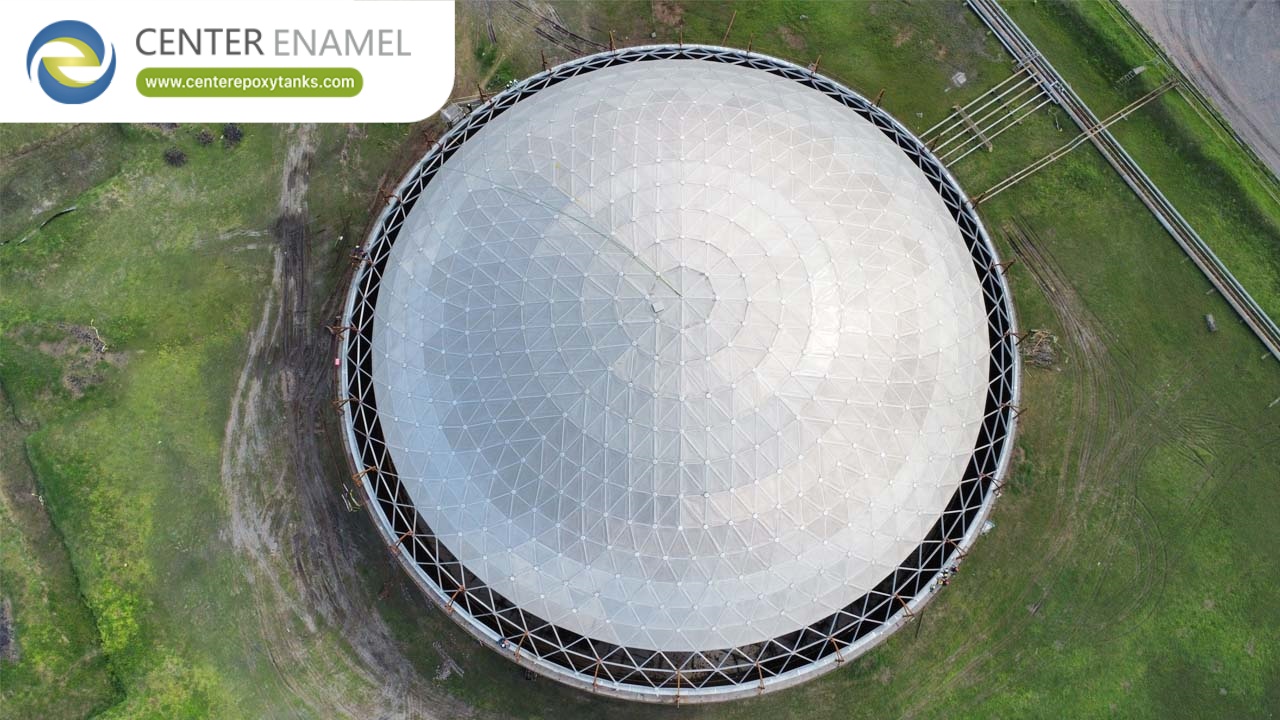
Aluminum Dome Roof Foundation And Tank-Rim Interface
The aluminum dome roof is only as good as its connection to the tank. The top ring, ring beam, anchorage and reaction transfer decide whether the dome's loads reach the foundation safely. This article focuses the dome-to-tank interface — the detail that turns a cover into a structural system.
The Interface Is Structural
A dome transfers its gravity, wind and seismic loads into the tank top ring and down to the foundation. The interface is not a trim detail; it is where the dome's reaction is carried. Design it, don't assume it.
For new tanks, the rim is designed for the dome from the start. For existing tanks, the rim must be assessed (retrofit) because it may not have been built for a dome.
Top-Ring Geometry
The dome connects to the tank's top ring; its diameter, out-of-plumb and anchorage pattern must match the dome's connection design. A dome specified from a drawing diameter alone can mismatch the as-built ring.
Survey the actual top ring before fabrication release so the dome connection fits the tank, not the ideal.
Ring-Beam Demand
The ring beam (or top course stiffener) carries the dome reaction around the perimeter. Under wind uplift or seismic, that demand can be significant. The beam must be sized for the combined action, not just for the old roof.
Where the existing ring is inadequate, the scope includes adding or upgrading the stiffener before the dome is set.
Anchorage And Reaction Transfer
Anchors transfer dome uplift, shear and overturning into the tank and foundation. Their pattern, capacity and the foundation's ability to resist overturning are checked as a system.
In high-wind or seismic zones, anchorage is the critical path; a dome on a weakly anchored tank can increase base demand and fail there, not in the dome.
Galvanic Isolation
Aluminum meeting the steel tank rim is a dissimilar-metal junction. Without isolation or compatible fasteners, galvanic corrosion attacks the aluminum. The interface detail addresses both structure and corrosion.
Use dielectric isolation washers or compatible fasteners and keep the junction dry by design. This single detail prevents most edge failures of otherwise-resistant domes.
Interface design items
Item | Requirement | Failure if missed |
Top ring | Matches dome connection | Mismatch / rework |
Ring beam | Carries reaction | Overstressed ring |
Anchorage | Uplift + overturning | Base failure |
Isolation | Aluminum-steel | Galvanic edge |
Seal | Continuous | Rim corrosion |
Seal At The Junction
The dome-to-tank junction must be sealed so water and vapor do not enter at the rim. The seal works with the structural connection, not instead of it.
A leaking junction can corrode the very ring it loads, so seal continuity is both a watertightness and a structural-longevity item.
For New Versus Existing Tanks
New tank: design rim, beam and anchorage for the dome and build to it. Existing tank: assess and upgrade as needed; the retrofit assessment gates the dome. The interface work differs but is critical in both.
Skipping the assessment on an existing tank is the most common way a dome project discovers, too late, that the rim cannot carry the reaction.
Installation Sequence At The Rim
Sequence: verify/upgrade the ring, set the dome connection (anchors, transition), assemble the dome to the rim, then torque and seal. The rim work is verified before the dome is closed.
Because the rim is load-bearing, its preparation and acceptance are QA items, witnessed like the dome's own first-article check.
Acceptance Of The Interface
Accept by checking rim alignment, anchor torque, reaction transfer evidence (calculation) and seal continuity. The interface is judged as part of the combined system, not the dome alone.
Retain the rim assessment, upgrade design and as-built in the tank file so the next inspector sees the full connection story.
Common Interface Failures
Assuming the rim was built for a dome, omitting galvanic isolation, and sealing without structural verification. Each lets the junction fail while the dome panels look perfect.
The remedy is to design and verify the interface explicitly, with the same rigor as the dome members.
New vs existing tank interface
Aspect | New tank | Existing tank |
Rim | Designed for dome | Assess/upgrade |
Beam | Sized | Add if needed |
Anchorage | Built in | Verify base |
Risk | Low | Assessment-gated |
Designing The Interface In
Specify the top-ring geometry, ring-beam demand, anchorage pattern, isolation detail and seal as contract requirements. That converts the interface from a hope into a verified part of the structure.
The result is a dome that is genuinely connected to its tank — load path continuous from crown to foundation.
Long-Term Interface Monitoring
The rim junction should be watched across the dome's life, not only at installation. Settlement, corrosion at the isolation detail, or anchor loosening show first at the interface and propagate into the dome.
Include the interface in the routine inspection scope with photos at tagged points. A monitored junction is how a small issue stays small instead of becoming a structural one.
Where the tank sits on variable or settling ground, extend monitoring to the foundation-to-rim connection, since settlement redistributes reaction and can open a once-tight junction.
Frequently Asked Questions
Q: Is the dome-tank interface structural?
A: Yes — it transfers gravity, wind and seismic loads into the tank top ring and foundation; it must be designed, not assumed.
Q: Why survey the actual top ring?
A: The dome connects to the as-built ring; a drawing diameter alone can mismatch the real out-of-plumb and anchorage pattern.
Q: What does the ring beam carry?
A: The dome reaction around the perimeter, significant under wind uplift or seismic; it must be sized for the combined action.
Q: Why isolate aluminum from the steel rim?
A: Aluminum is anodic to steel; without isolation or compatible fasteners, galvanic corrosion attacks the aluminum at the edge.
Q: Can a dome go on any existing tank?
A: Only after assessing the rim, beam and anchorage; if inadequate, upgrade (retrofit) before setting the dome.
Q: How is the interface accepted?
A: By rim alignment, anchor torque, reaction-transfer calculation and seal continuity, as part of the combined system.
Conclusion
Aluminum geodesic dome roofs are selected, designed and maintained as structural systems, not as standalone covers. The articles in this batch treat each angle — from OEM sourcing and tender specification to retrofit, corrosion, loads, accessories, applications and manufacturing — as a distinct user task with its own evidence and boundaries.
Work With Center Enamel
Center Enamel (Shijiazhuang Zhengzhong Technology Co., Ltd) has manufactured bolted and welded storage tanks since 2008 from its base in Shijiazhuang, China. The company produces GFS (Glass-Fused-to-Steel), FBE-coated, galvanized, stainless-steel and welded tanks, aluminum geodesic dome roofs, floating roofs, pressure vessels, and wastewater and biogas engineering packages. Its quality system carries ISO 9001, and aluminum dome roofs are designed to AWWA D108, API 650, ADM 2015, ASCE 7-10 and IBC 2012. With an installed base of 30,000+ projects and 300,000 enamel steel plates produced annually, Center Enamel supports drinking-water, municipal, industrial, petroleum, dry-bulk and architectural applications.
The dome is only as good as its connection. Contact Center Enamel to design and verify the tank-rim interface — ring beam, anchorage and galvanic isolation — not just the dome panels.
Project Case Reference
Project reference (B-grade, delivered with aluminum dome roof): Indonesia Drinking water — GFS bolted tank, Ø42.04 x 15.2 m (H), 1 tank, 2025. The dome roof was supplied as the cover solution for this verified tank project.


