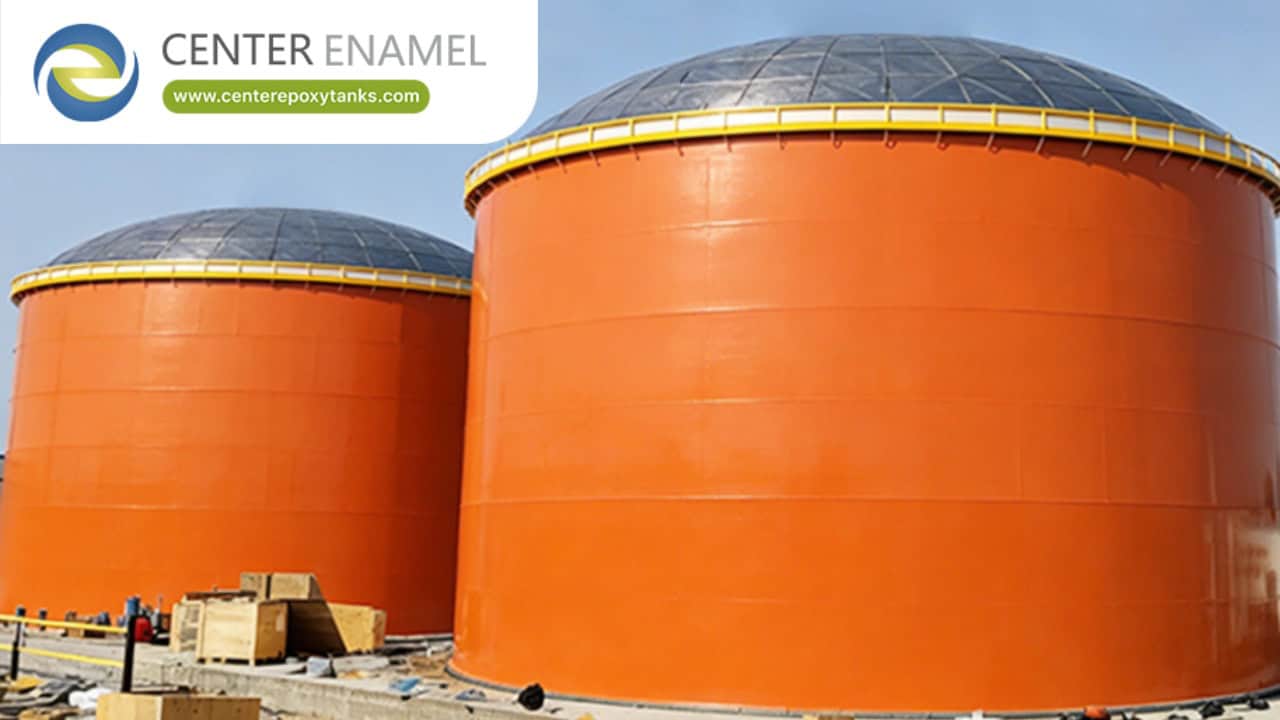
Aluminum Dome Roofs For Wastewater Tanks: H2S, Odor And Corrosion Atmosphere
Wastewater tanks generate H2S and methane and odor that must be enclosed and treated. This article deepens the wastewater angle — H2S corrosion atmosphere, odor enclosure, and a verified municipal project — beyond a general overview.
Wastewater's hostile atmosphere
Anaerobic zones in wastewater release H2S and methane. H2S is both toxic and corrosive (forming sulfuric acid under the moist, oxygenated rim), and methane is flammable. The cover must enclose these and interface with odor/vent treatment.
Enclosure for odor and gas
A geodesic dome fully encloses the surface, capturing H2S and methane at controlled vents routed to odor control or flare. The sealed envelope keeps the captured stream concentrated rather than diluted by air leaks.
Corrosion atmosphere and the dome
Aluminum's oxide film resists the H2S-driven acidity at the rim better than carbon steel would, but the sealing and any internal contact are selected for the wet, sour atmosphere. The corrosion fight is at the interface, not the alloy alone.
Verified delivered project
A real reference exists: a municipal wastewater project in Saudi Arabia (5 x 24.06 m diameter x 4.85 m, 11,020 m3 total, GFS bolted tank, 2023) was delivered with an aluminum dome roof. This validates dome-on-wastewater delivery, though it is a municipal, not industrial, case.
Wastewater consideration table
Factor | Challenge | Dome role |
H2S | Toxic + corrosive | Enclosure + sealed vents |
Methane | Flammable | Captured to flare/control |
Odor | Community impact | Tight envelope |
Corrosion | Acid at rim | Alloy + graded seal |
How it differs from potable
Potable (separate article) centers cleanliness and approvals; wastewater centers H2S, methane and odor. The dome type is shared; the atmosphere and treatment differ.
Inspection emphasis
Wastewater inspection prioritizes seal condition at the sour rim and the odor/vent interface, where H2S attack would first show.
Internal link note
This deepens wastewater specifically; the general overview and potable article address adjacent intents and should be linked, not duplicated.
Specification inputs
Provide H2S level, odor standard and treatment method; the dome is specified to enclose and connect.
Summary
For wastewater the dome encloses a hostile, gassy, corrosive atmosphere and ties into odor control — with a real municipal delivery on file.
H2S corrosion at the rim
H2S forms sulfuric acid where the moist, oxygenated rim meets it; aluminum's oxide film resists this better than carbon steel would, but the seal at the rim is still specified for the sour atmosphere.
The corrosion fight is at the interface, which is why the seal grade is named for wastewater service.
Odor to treatment
The dome captures H2S and methane at controlled vents routed to odor control or flare, keeping the captured stream concentrated rather than diluted by air leaks.
The treatment hardware is separate; the dome supplies the envelope that makes capture effective.
Reference recap
A delivered reference is the Saudi Arabia municipal wastewater project: 5 tanks, 24.06 m diameter, 4.85 m, 11,020 m3 total, GFS bolted tank, 2023, with an aluminum dome roof.
This validates dome-on-wastewater delivery, though as a municipal rather than industrial case.
Methane handling
Methane from anaerobic zones is flammable and is captured at dome vents to flare or control; the sealed envelope keeps the stream concentrated for safe handling.
Community odor
Enclosing the odor at source, rather than air-diluting it, is what reduces the community impact that open or weakly-covered tanks create.
Sulfuric acid at the rim
Though the tank holds wastewater, any entrained sulfur species can acidify the rim; aluminum's oxide film resists this better than steel, and the sour-grade seal completes the protection. The rim is where that chemistry is managed.
Odor threshold
Wastewater odor is noticeable far below toxic levels; enclosing at source, rather than air-diluting, is what keeps the community below the threshold. The dome's tight envelope is the physical basis for that control.
Wastewater enclosure discipline
Wastewater domes earn their place by enclosing H2S, methane and odor at source and routing them to treatment through controlled vents, with the seal graded for the sour rim. The discipline is in specifying that envelope and the treatment interface together, so the captured stream is concentrated and manageable rather than dilute and escaping.
Sour-rim enclosure
Wastewater's H2S acidifies the rim where moist, oxygenated conditions meet it; aluminum's oxide film resists this better than steel, and the sour-grade seal completes the protection at the joint that matters most.
Odor is captured at source and routed to treatment through the dome's controlled vents, keeping the stream concentrated rather than air-diluted. The enclosure and the treatment interface are specified together, which is what makes the cover useful rather than merely present.
Enclosure as control
The dome's role in wastewater is enclosure as control — capturing H2S, methane and odor at source so treatment, not atmosphere, receives them. That single function is what separates a covered tank from an open one in any municipal or industrial plant, and it is the reason the dome earns its place on the tank.
Frequently Asked Questions
Q: Why enclose wastewater tanks?
A: To capture H2S/methane and odor at controlled vents rather than release them.
Q: Does aluminum resist H2S corrosion?
A: Its oxide film resists the acidic rim better than steel; seals are graded for the sour atmosphere.
Q: Is there a delivered wastewater project?
A: Yes — Saudi Arabia municipal wastewater, 5 tanks, 11,020 m3, 2023, with aluminum dome.
Q: How does it differ from potable?
A: Wastewater centers H2S/odor; potable centers cleanliness/approvals.
Q: Where does the gas go?
A: Captured at dome vents to odor control or flare — separate systems.
Q: What should I specify?
A: H2S level, odor standard and treatment method.
Conclusion
For wastewater, the aluminum geodesic dome encloses a hostile H2S/methane/odor atmosphere and connects to treatment — a demanding but verified application, with a real municipal project on file.
Project Reference And Honest Disclosure
Reference project (verified in case library): Saudi Arabia Municipal wastewater 2023 — GFS bolted tank, 5 x 24.06 m diameter x 4.85 m, total capacity 11,020 m3. The aluminum dome roof was supplied as the tank cover; this reference demonstrates dome-on-tank delivery, not a wastewater application.
Work With Center Enamel
Center Enamel, established in 2008 and based in Shijiazhuang, China, manufactures glass-fused-to-steel (GFS), epoxy-coated, galvanized, stainless steel and welded storage tanks, aluminum geodesic dome roofs, floating roofs, pressure vessels and wastewater and biogas engineering packages. Its production system is certified to ISO 9001, and its tanks and coatings are validated against NSF/ANSI 61, WRAS, FM and CE (EN 1090) where applicable. The company has delivered more than 30,000 tank and enclosure projects across potable water, wastewater, fuel, chemical and dry-bulk applications.
Share your H2S level and odor standard and we can outline a dome envelope and vent interface suited to your wastewater tank.
Sources And Further Reading
AWWA D108, Standard for Aluminum Domes and Roof Structures.
WEF and OSHA guidance on H2S and confined wastewater atmospheres.
Verified case library: Saudi Arabia municipal wastewater tanks with aluminum domes (2023).


