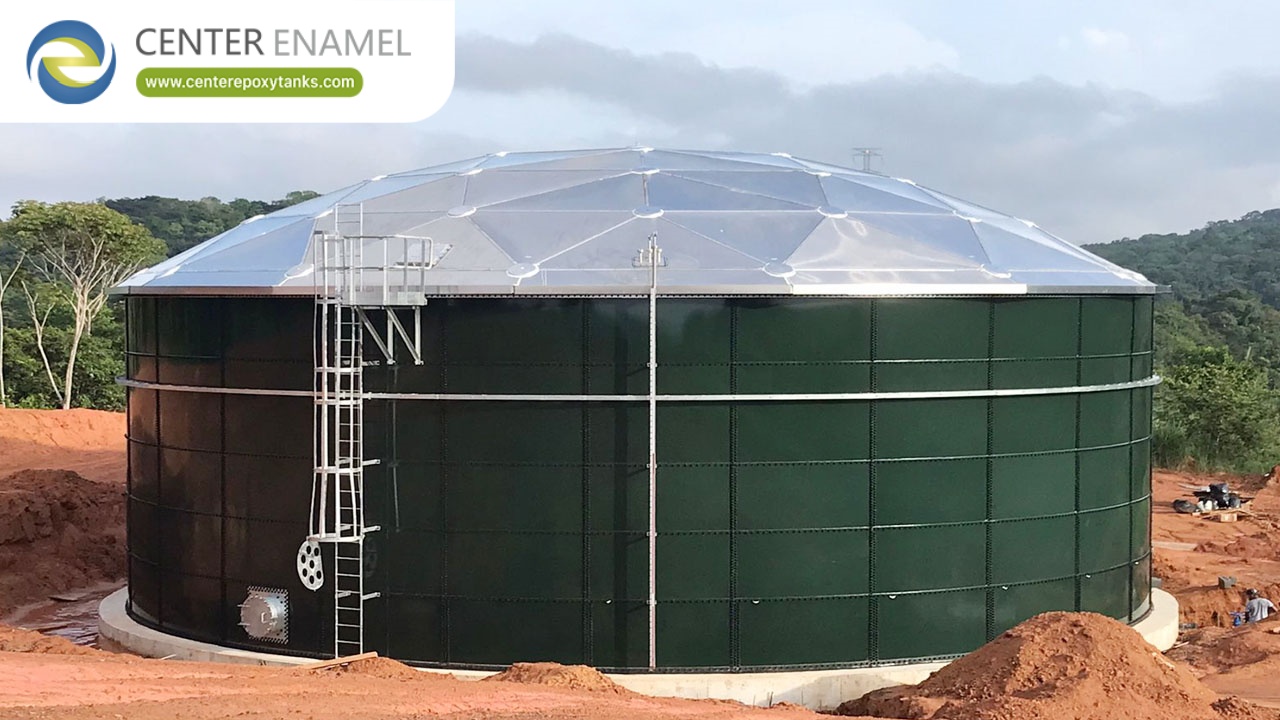
Aluminum Dome Roofs For Potable Water Storage Tanks
Potable-water storage demands a cover that protects quality without leaching or fostering contamination. This article focuses on aluminum dome roofs for drinking-water tanks: inert behavior, compliance considerations, vapor and access control, and real delivered drinking-water references.
Why Cover Potable Water At All
An open or poorly covered tank invites debris, animals, algae and evaporation loss. A sealed dome maintains water quality between treatment and distribution.
The cover must itself be safe for contact with potable systems — inert and non-leaching.
Inert, Non-Leaching Aluminum
Aluminum forms a stable oxide layer and does not rust or leach harmful species into water under normal potable service. Its corrosion resistance is intrinsic, avoiding coatings that could degrade into contact.
Where potable compliance (e.g., NSF/WRAS) is required, the cover material and any contact components must meet the applicable standard; confirm the specific certification for your market.
Vapor And Air-Quality Control
A dome can be detailed as a sealed or breathable cover with screened vents, controlling evaporation and excluding contaminants while allowing thermal breathing.
This supports stable chlorine residual and reduces THM formation risk compared with open exposure.
Access Hatches And Sampling
Manways, walkways and sample points are framed in aluminum and sealed. Clear-span geometry lets access be placed where needed without column conflict.
Fixed access simplifies compliant inspection and sampling routines.
Avoiding Contamination Pathways
With no internal columns, there are no column-penetration seals that can fail. The continuous gasket plane at the rim and nodes is the primary barrier.
Silicone gaskets resist UV and heat, keeping the seal intact through thermal cycling.
Reference: Malaysia Drinking-Water Tank (2025)
A Malaysia drinking-water project used GFS tanks with aluminum dome roofs: 4 units at Ø17.58 m × 21 m, total 20,380 m³ (2025). The dome was the supplied cover on GFS bolted tanks.
Reference: Mexico Drinking-Water Tank (2026)
A Mexico drinking-water project used a GFS tank with an aluminum dome roof: 1 unit at Ø27.52 m × 10.2 m, 6,060 m³ (2026).
Reference: Panama Drinking-Water Tank (2025)
A Panama drinking-water project used GFS tanks with aluminum dome roofs: 3 units at Ø15.29 m × 9 m, total 4,956 m³ (2025).
Specification Checklist For Potable Use
Confirm applicable potable certification (NSF/WRAS per market), inert contact materials, vent type, access/sampling points, and cleanability of the interior dome surface.
Coordinate the dome with the tank's potable lining and any mixing/aeration equipment.
Common Pitfalls
Assuming any 'aluminum' cover meets potable standards without confirming the specific certification; omitting vent/sample access; and neglecting coordination with the tank lining.
Resolve compliance and access in design, not at commissioning.
When A Dome Is The Right Call
For municipal and industrial potable storage where water quality, low maintenance and long life matter, an inert aluminum dome is a strong choice.
Pair it with a certified potable tank system for end-to-end compliance.
Chlorine Residual And Water Quality
By excluding light and debris, a sealed dome helps stabilize chlorine residual and limit algal growth between treatment and distribution, supporting regulatory water-quality targets.
The inert aluminum surface avoids leaching that could complicate potable compliance; confirm the applicable certification for your market rather than assuming universal acceptance.
Climate Adaptations
In tropical service the dome manages heat and algae risk through shading and sealed cover; in colder climates it pairs with the tank's thermal design for freeze protection.
Penetration layout should anticipate sampling, level monitoring and any mixing equipment the utility uses for residual management.
Access For Compliance Sampling
Potable systems need routine sampling and inspection. Frame manways and sample points so operators reach them without breaching the sealed cover.
Clear-span geometry supports flexible placement of these access points.
Algae And Light Exclusion
By shading the water, a sealed dome limits algal growth and helps maintain disinfectant residual. This supports treatment objectives between source and tap.
Pair the dome with a compatible potable tank lining for end-to-end quality protection.
Operating Benefits Day To Day
In operation, a sealed potable dome keeps out debris and animals, limits algal growth by shading, and stabilizes disinfectant residual - all of which reduce treatment load and complaint risk between source and tap.
Routine operator tasks are simpler because access points are framed and sealed rather than improvised, supporting consistent compliance routines.
Pairing With The Tank System
The dome performs best atop a certified potable tank system - GFS or FBE with appropriate lining - so the whole enclosure meets the water-quality objective. The cover and tank are specified together, not separately.
This system view avoids a certified dome over a non-compliant tank, or vice versa, which would undermine the potable claim.
Commissioning A Potable Dome
On handover, verify hatches and sample points operate, the seal is continuous at rim and nodes, and the cover is documented as compatible with the tank's potable certification for the market.
A brief operator orientation on access and inspection keeps the sealed cover performing and supports routine compliance sampling without breaching the barrier.
Project | Config | Total vol | Year |
Malaysia drinking water | 4 × Ø17.58 m × 21 m (GFS) | 20,380 m³ | 2025 |
Mexico drinking water | 1 × Ø27.52 m × 10.2 m (GFS) | 6,060 m³ | 2026 |
Panama drinking water | 3 × Ø15.29 m × 9 m (GFS) | 4,956 m³ | 2025 |
Potable requirement | Dome response |
Inert / non-leaching | Stable aluminum oxide, no rust |
Certification | Confirm NSF/WRAS per market |
Access | Sealed aluminum hatches |
Vapor | Screened vents, sealed or breathable |
Project Case Reference
Malaysia — Drinking water. Tank: GFS (Glass-Fused-to-Steel) bolted tank. Configuration: 4 units, Ø17.58 m × 21 m. Total volume: 20,380 m³. Year: 2025.
From case_anchors.py: aluminum dome roof was the supplied cover on these GFS drinking-water tanks (B-grade; dome is cover, tank body GFS). Mexico and Panama drinking-water anchors are also referenced in this article.
Frequently Asked Questions
Is aluminum safe for potable water?
Aluminum is inert and non-leaching in normal potable service; confirm the applicable potable certification (NSF/WRAS) for your market.
Does the dome need coating?
No — aluminum's corrosion resistance is intrinsic, avoiding coatings that could degrade into contact.
Can I sample and inspect easily?
Yes, sealed aluminum manways and sample points are framed in; clear span aids access.
What references exist?
GFS drinking-water tanks with aluminum domes in Malaysia (2025, 20,380 m³), Mexico (2026, 6,060 m³) and Panama (2025, 4,956 m³).
How is contamination prevented?
Continuous gasket seal at rim and nodes, no internal columns, UV-stable silicone gaskets.
What to specify for potable use?
Applicable certification, inert contact materials, vent type, access/sampling, interior cleanability.
Work With Center Enamel
Center Enamel (Shijiazhuang Zhengzhong Technology Co., Ltd) is a Chinese manufacturer of bolted storage tanks and aluminum geodesic dome roofs, established in 2008. Its product range covers Glass-Fused-to-Steel (GFS) tanks, Fusion-Bonded Epoxy (FBE) tanks, galvanized and stainless-steel tanks, welded tanks, pressure vessels, and aluminum dome roofs. The company holds ISO 9001, NSF, WRAS, FM, CE/EN 1090 and ISO 28765 certifications for its tank lines and designs aluminum domes to AWWA D108, API 650, ADM 2015, ASCE 7-10 and IBC 2012. It operates automated enamel-plate production and has supplied engineering projects across drinking-water, wastewater, biogas, fire-water and industrial-storage applications.
For aluminum geodesic dome roofs engineered to AWWA D108, API 650, ADM 2015, ASCE 7-10 and IBC 2012, contact Center Enamel to discuss your tank cover, span and site requirements.


