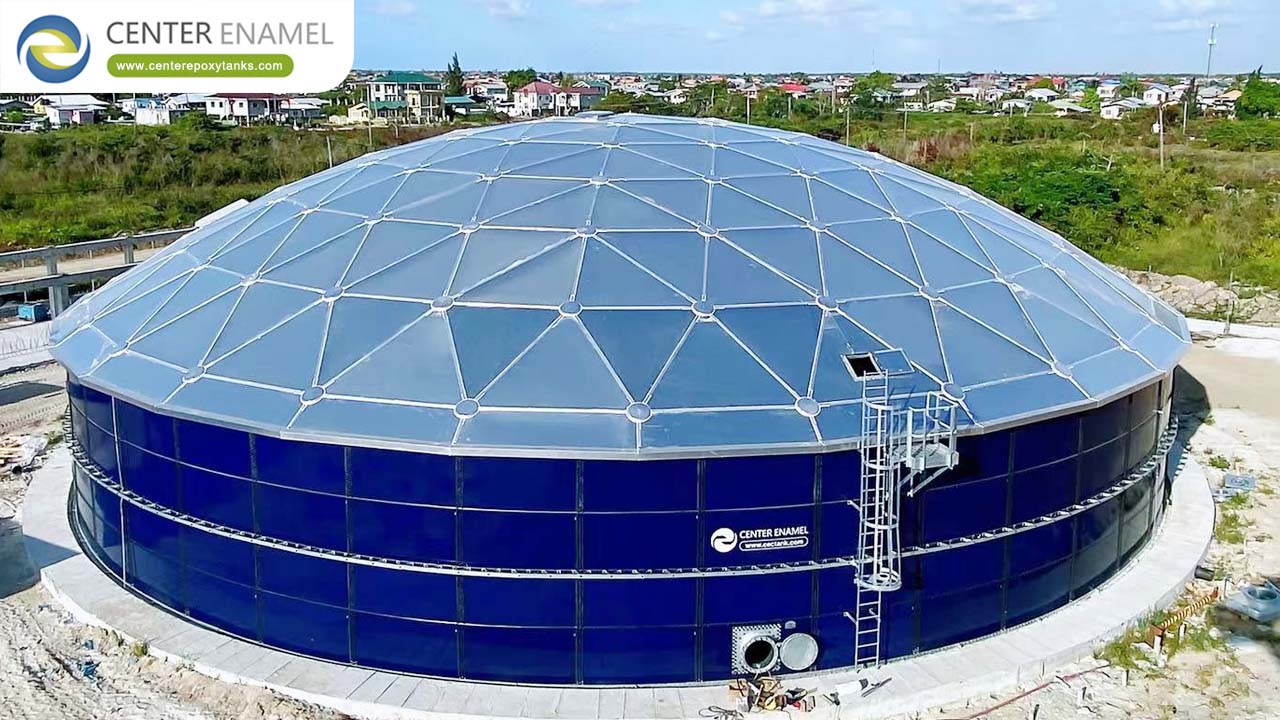
Aluminum Dome Roofs for Potable Water Storage Tanks: Engineering Excellence, Water Security, and Maintenance-Free Durability
In municipal water distribution networks, suburban community supply systems, and large-scale industrial water facilities, safeguarding treated drinking water from environmental contamination is a paramount public health priority. Traditional roofing systems—such as carbon steel cone roofs or flat concrete slabs—are highly susceptible to environmental weathering, rust flaking, structural cracking, and biological growth over time. To eliminate these risks and ensure lifelong water purity without burdensome maintenance, industry leaders specify the aluminum geodesic dome roof.
Fabricated from high-strength, marine-grade aluminum alloys assembled into a self-supporting three-dimensional space frame, aluminum domes provide a lightweight, hermetically sealed, and permanently corrosion-resistant overhead enclosure. As a globally trusted leader in advanced liquid storage and containment manufacturing, Shijiazhuang Zhengzhong Technology Co., Ltd. (Center Enamel) delivers precision-engineered aluminum dome roofs designed to integrate seamlessly with municipal potable water tanks worldwide.
Core Advantages of Aluminum Domes in Potable Water Applications
Pairing an aluminum geodesic dome with a municipal water reservoir delivers several critical engineering and sanitary advantages:
True Clear-Span Architecture: Unlike traditional roofs that require interior pillars or center support columns, geodesic domes distribute environmental loads uniformly across the tank perimeter wall. Eliminating internal columns removes notorious "catch points" where debris, sediment, and biofilm can accumulate and compromise drinking water quality.
Permanent, Maintenance-Free Corrosion Resistance: High-grade 6000-series aluminum alloys naturally form a passive oxide film that protects against atmospheric moisture, high humidity, and internal condensation. Unlike carbon steel, aluminum never requires periodic sandblasting or protective repainting, saving utilities hundreds of thousands of dollars in lifecycle maintenance costs.
Absolute Environmental Sealing: The hermetically sealed structure blocks sunlight entirely to prevent algal blooms, while secure gasket systems and screened air vents keep out dust, insects, birds, and wildlife.
Lightweight Profile: Weighing a fraction of steel or concrete alternatives, aluminum domes exert minimal dead load on the underlying storage vessel walls and foundation, lowering structural engineering requirements.
Governing Engineering Standards: AWWA D108 and NSF/ANSI 61 Compliance
To guarantee public health safety and structural reliability, aluminum dome roofs dedicated to potable water service are manufactured in accordance with strict international standards:
ANSI/AWWA D108: The American Water Works Association standard governing the minimum design, materials, fabrication, and erection requirements for aluminum dome roofs on water and wastewater storage facilities.
NSF/ANSI 61 Certification: Ensures that all component materials, gaskets, and sealants coming into direct or indirect contact with stored water meet strict health effects criteria, preventing any harmful chemical leaching into the public supply.
Data Table: Comprehensive Comparison of Potable Water Tank Roof Technologies
Technical Parameter | Aluminum Geodesic Dome Roofs | Traditional Carbon Steel Cone Roofs | Cast-in-Place Concrete Domes |
Corrosion & Contamination Risk | Permanent corrosion-free aluminum; zero risk of rust flaking or chemical leaching | High risk of oxidation and rust scale entering the water supply over time | Vulnerable to concrete spalling, micro-cracking, and moisture seepage |
Internal Support Structure | True clear-span design; zero internal support columns | Requires interior rafter supports and center support pillars for large diameters | Massive self-supporting concrete shell, but vulnerable to settling cracks |
Maintenance Overhead | Extremely low; zero coating maintenance or painting required throughout its lifecycle | High; requires frequent inspection, scraping, and repainting intervals | Moderate to high; requires joint sealing, crack injection, and waterproofing |
Material Weight & Load Impact | Ultra-lightweight structure; minimizes dead load on tank walls and foundation | Heavy structural steel dead weight; requires robust wall reinforcement | Extremely heavy dead load; requires massive foundation support |
Expected Service Life | Exceeds 40 to 50+ years of maintenance-free operation | 20 to 25 years with aggressive coating maintenance | 30+ years, subject to environmental conditions and structural settling |
Frequently Asked Questions (FAQ)
Q: What is an aluminum dome roof for potable water storage tanks?
A: It is a self-supporting, geodesic space-frame structure built from high-strength aluminum alloys, designed to serve as a permanent, contamination-free cover for municipal drinking water reservoirs and storage tanks.
Q: Why are internal support columns eliminated in aluminum geodesic domes?
A: The triangular lattice geometry of a geodesic dome distributes snow, wind, and dead loads uniformly to the perimeter tension ring. This clear-span design eliminates internal columns, removing potential collection zones for biofilm and debris to ensure superior water hygiene.
Q: Do aluminum dome roofs meet drinking water safety certifications?
A: Yes. When specified for municipal water service, aluminum dome components, gaskets, and sealants comply with stringent standards such as AWWA D108 and NSF/ANSI 61 health effects requirements.
Q: Can an aluminum dome be retrofitted onto an existing concrete or steel water tank?
A: Yes. Aluminum geodesic domes are frequently engineered to retrofit existing bolted steel, welded steel, or concrete water reservoirs, upgrading older compromised roofs to a maintenance-free system without extended service interruptions.


