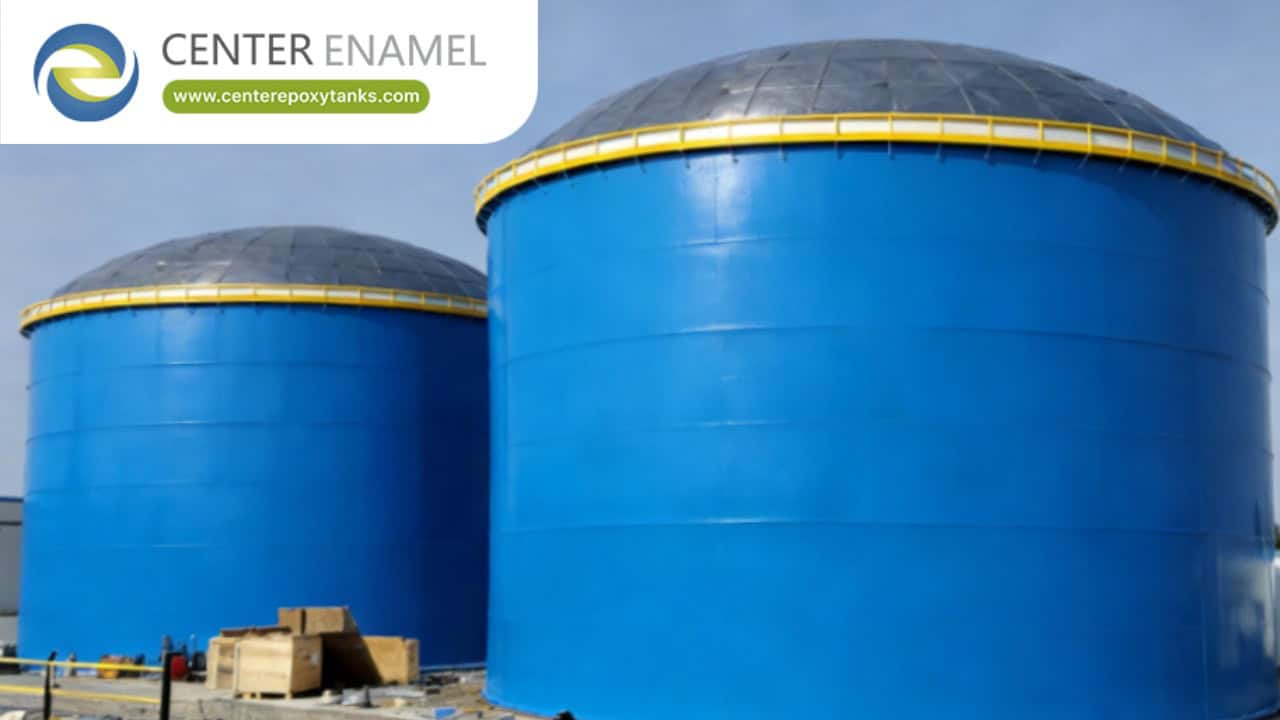
Aluminum Dome Roofs for Municipal Water Tanks: Engineering Infrastructure Resilience and Water Purity
Municipal water authorities and civil engineering firms face intense operational pressures to safeguard public water supplies against contamination, extreme weather events, and aging infrastructure decay. For large municipal water tanks, clear-water reservoirs, and wastewater clarification basins, the choice of roof cover dictates long-term asset integrity, maintenance overhead, and water safety.
Traditional carbon steel roofs and heavy concrete slabs are increasingly being replaced by advanced aluminum dome roofs for municipal water tanks. Utilizing high-strength structural aluminum alloys and self-supporting geodesic geometry, these modern engineered covers provide a maintenance-free, weather-tight barrier that protects municipal water security for decades.
Core Engineering Principles and AWWA D108 Standards
The exceptional performance of aluminum geodesic domes stems from rigorous design standards and metallurgical science:
AWWA D108 Compliance: Designed in strict compliance with the American Water Works Association (AWWA D108) standard, these structures meet rigorous engineering calculations for site-specific environmental forces, including heavy snow loads, hurricane-force wind speeds, and seismic accelerations.
Clear-Span Geodesic Architecture: Composed of an interlocking network of triangular aluminum panels, the geodesic dome distributes loads uniformly across the perimeter. This design is completely self-supporting, eliminating the need for internal columns, rafters, or trusses.
Inherent Corrosion Immunity: Fabricated from marine-grade 6000-series aluminum alloys, the structure naturally forms a passive, self-healing oxide layer. Unlike steel, it does not rust, completely eliminating the need for periodic sandblasting, priming, or hazardous field recoating.
Advanced Sealing and Contamination Defense: Airtight batten systems with concealed, gasketed stainless steel fasteners prevent moisture ingress while completely blocking sunlight—stopping algal blooms and keeping out dust, insects, and bird droppings.
Technical Performance Matrix: Municipal Tank Cover Options
Technical Parameter | Aluminum Geodesic Dome Roofs | Traditional Welded Steel Roofs | Cast-in-Place Concrete Slabs |
Corrosion Resistance | Superior; natural aluminum oxide layer requires zero painting or anti-rust maintenance | Low; highly vulnerable to atmospheric oxidation, requiring recurring protective coatings | Moderate; susceptible to concrete carbonation, rebar oxidation, and surface spalling |
Internal Support Requirements | None; self-supporting clear-span structure spans large diameters without internal columns | Requires internal support columns and rafters that create internal corrosion points | Requires heavy interior columns, load-bearing walls, and complex shoring |
Structural Dead Weight | Extremely lightweight; reduces foundation and tank wall load requirements | High dead weight requiring heavy structural anchoring and foundation design | Extremely heavy monolithic mass requiring massive civil engineering foundations |
Asset Lifespan & Maintenance | Multi-decade service life (40+ years) with virtually zero ongoing maintenance | 20 to 25 years, dependent on frequent inspection and repainting cycles | 30+ years, but prone to micro-cracking and joint sealant degradation |
Frequently Asked Questions (FAQ)
Q: Why are aluminum geodesic domes preferred over steel roofs for municipal water tanks?
A: Aluminum domes offer permanent corrosion immunity without requiring painting or protective recoating. Their lightweight, self-supporting geodesic design eliminates internal columns, speeds up installation, and drastically reduces the total lifecycle cost of municipal water infrastructure.
Q: What engineering standards govern aluminum dome roofs in water treatment?
A: Quality municipal aluminum domes are designed and manufactured in strict compliance with AWWA D108 (Aluminum Structures for Water and Wastewater Tanks), alongside structural benchmarks like ASCE 7 and the International Building Code (IBC).
Q: Can an aluminum dome roof be retrofitted onto an existing concrete or steel municipal water tank?
A: Yes. Because aluminum domes are exceptionally lightweight, they can be custom-engineered and installed on top of existing concrete reservoirs or aging steel tanks without requiring costly structural reinforcement of the original tank walls or foundations.
Q: How do aluminum dome roofs protect potable water quality?
A: The dome provides a complete, sealed barrier against environmental contaminants, airborne dust, and animal ingress. Furthermore, by blocking all sunlight penetration, it prevents photosynthetic algal growth inside the reservoir, helping utilities maintain high water purity and stable disinfectant residuals.


