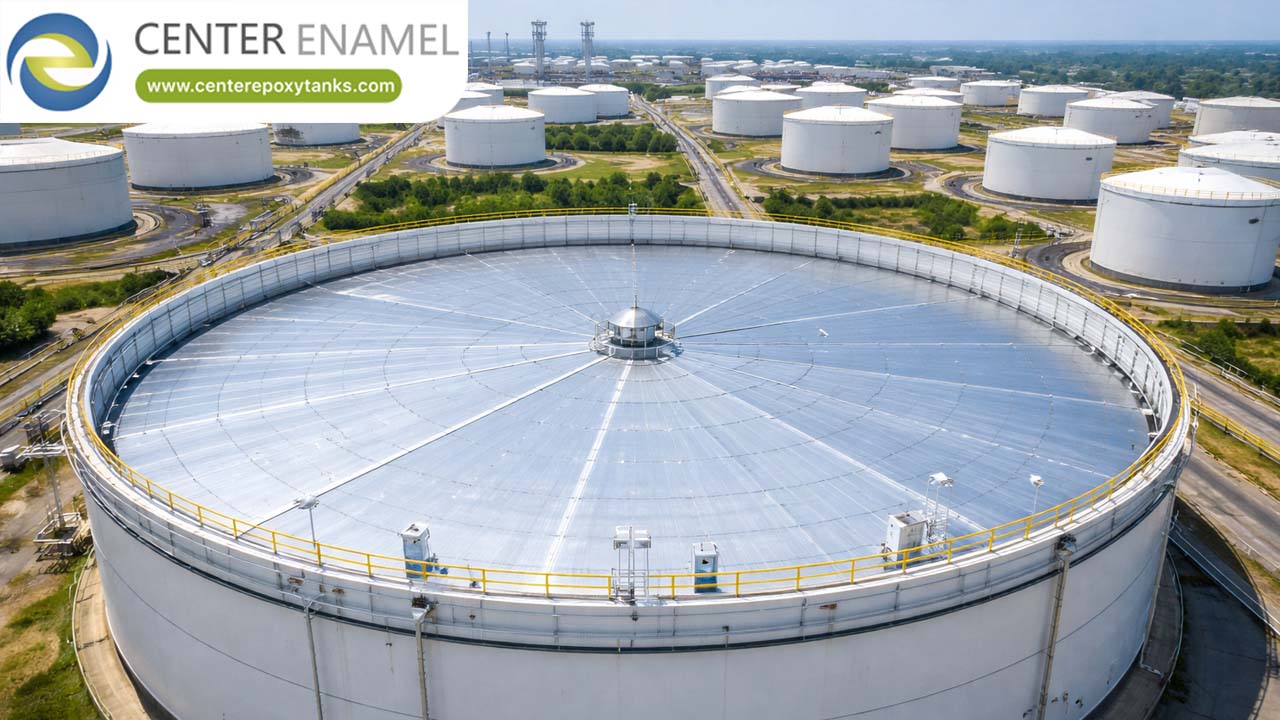
Engineered for Longevity: Resilient Floating Roofs for Vertical HFO Storage Tanks
While standard floating roofs are designed to prevent the evaporation of high-volatility light liquids (like gasoline or Jet A1), Heavy Fuel Oil (HFO) presents the opposite engineering challenge. HFO has low volatility but extreme viscosity, requiring continuous tank heating (typically 50°C to 80°C) to remain pumpable. Therefore, a resilient floating roof in an HFO vertical tank is engineered primarily for heat conservation, product oxidation prevention, and H2S (hydrogen sulfide) odor control. To survive this harsh environment, manufacturers must abandon standard lightweight aluminum and construct these roofs from heavy-duty carbon steel or stainless steel equipped with high-temperature mechanical shoe seals and integrated thermal insulation.
The Engineering Reality: Why Standard Roofs Fail in HFO
Procurement teams often make a critical error when adapting floating roof designs for HFO: they specify standard aluminum Internal Floating Roofs (IFRs) used in standard petroleum applications. Applying a standard IFR to an HFO tank will almost certainly result in catastrophic roof failure due to two specific factors:
The Clingage Factor (Weight Overload): HFO is thick and sticky. As the liquid level drops, a thick layer of heavy oil clings to the tank shell. Standard wiper seals drag this heavy material onto the roof, or the heavy vapors condense into dense waxes on top of the deck. Lightweight aluminum pontoons cannot support this added mass, leading to the roof sinking.
Thermal Degradation: HFO must be stored hot to maintain its flow characteristics. The continuous ambient heat inside the tank (often exceeding 60°C) weakens standard aluminum alloys, causing structural warping. Furthermore, standard urethane or rubber perimeter seals will rapidly melt, crack, or degrade in these temperatures.
The Blueprint for a Resilient HFO Floating Roof
To engineer an internal floating roof capable of a 20+ year lifespan in an active HFO storage facility, the design must prioritize heavy-duty structural integrity and thermal resistance.
1. Upgraded Metallurgy: Carbon or Stainless Steel
An HFO floating roof must be constructed as a heavy-duty steel pan or a robust double-deck steel system.
Carbon Steel (Coated): Cost-effective but requires high-temperature, chemical-resistant epoxy coatings (similar to FBE) to prevent sulfur-induced corrosion.
Stainless Steel (304L or 316L): The premium standard. It handles high temperatures flawlessly and provides exceptional resistance to the acidic compounds (like H2S) frequently found in heavy bunker fuels.
2. High-Temperature Sealing Systems
Standard foam or liquid-filled wiper seals are strictly prohibited. The perimeter seal must be a Mechanical Shoe Seal. This utilizes a heavy-gauge steel band (the "shoe") pressed tightly against the tank wall by robust mechanical springs. The continuous vapor barrier must be fabricated from specialized, high-temperature fabrics such as PTFE (Teflon) coated fiberglass, which can withstand continuous exposure to >80°C hot oil and corrosive vapors.
3. Thermal Efficiency & Heat Conservation
The primary ROI (Return on Investment) for installing an IFR in an HFO tank is reducing the load on the facility's boiler or heating coils. By floating a steel deck directly on the hot oil, the roof eliminates the convection currents in the massive vapor space above the liquid. Advanced designs incorporate high-density, closed-cell insulation within the floating deck pontoons, dramatically reducing heat loss through the roof and slashing the energy costs required to keep the HFO pumpable.
Comparison Matrix: Standard IFR vs. Heavy-Duty HFO IFR
Engineering Parameter | Standard IFR (Gasoline/Diesel) | Resilient HFO Floating Roof |
Primary Material | Lightweight Aluminum | Carbon Steel / 316L Stainless Steel |
Primary Purpose | VOC Emission Reduction | Heat Retention & H2S Odor Control |
Operating Temp. | Ambient (-10°C to 40°C) | Heated (50°C to 80°C+) |
Perimeter Seal | Urethane Wiper / Foam | Mechanical Shoe with PTFE Fabric |
Buoyancy Design | Hollow Aluminum Pontoons | Heavy-Duty Double Deck / Insulated |
Frequently Asked Questions (FAQ)
Q: Does Heavy Fuel Oil (HFO) technically require a floating roof?
A: Under traditional API 650 and API 653 standards, HFO does not require a floating roof for vapor emission control because its vapor pressure is very low. Standard practice is a fixed-roof tank with heating coils. However, modern environmental regulations (focused on H2S odor control) and the aggressive drive for thermal energy efficiency are making heavy-duty IFRs a standard upgrade for high-tier HFO facilities.
Q: Can you install a floating roof if the HFO tank has internal heating coils?
A: Yes, but it requires precise mechanical engineering. The heating coils are typically located near the floor of the tank. The floating roof must be designed with engineered "landing legs" (support legs) that are tall enough to ensure the roof lands safely above the heating coils when the tank is completely drained, preventing structural crushing.
Q: How do you prevent the floating roof from sinking under the weight of condensed heavy ends?
A: Proper drainage and scraping. A resilient HFO roof uses a mechanical shoe seal equipped with a heavy-duty "scraper" edge. As the roof descends, this edge aggressively shears the sticky HFO off the tank wall, pushing it back into the liquid pool below rather than allowing it to pile up on top of the floating deck.
Q: Will the high sulfur content in HFO destroy the roof?
A: It will destroy bare carbon steel or aluminum over time, as hydrogen sulfide (H2S) in the vapor space combines with any condensation to form corrosive acids. This is why HFO roofs must either be fabricated from 316L Stainless Steel or coated with industrial-grade, high-temperature thermoset epoxies to guarantee longevity.


