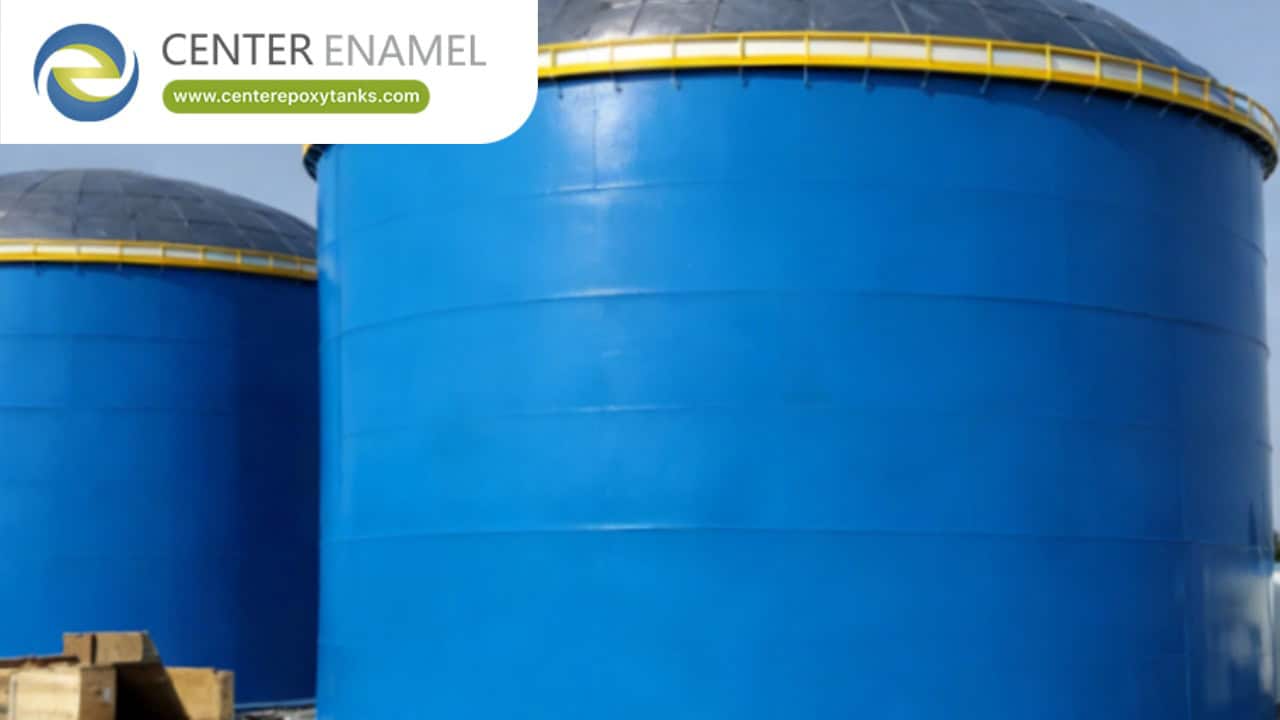
Aluminum Dome Roofs For Gas Storage: Low-Pressure Gas Holders
Gas storage — low-pressure holders for natural gas, town gas or process gas — uses a dome as a sealed, lightweight cover. This article centers low-pressure gas holders and clearly differentiates from biogas digester domes (covered separately), since the two are easily confused.
Gas holders need a sealed light cover
Low-pressure gas is stored in a fixed tank with a gas blanket or low-pressure holder; the cover must seal the gas, stay light, and not add load. An aluminum geodesic dome suits that as a sealed, self-supporting cap.
Pressure range and the dome
These are low-pressure systems; the dome is designed for the holder's pressure range and the thermal breathing of the gas. It is not a high-pressure vessel — the pressure class is set by the holder, and the dome matches it.
Differentiation from biogas domes
Biogas domes (separate article) handle digestate gas with H2S and moisture on anaerobic tanks. Gas-holder domes here handle higher-value fuel or process gas, often cleaner. The enclosure logic is similar; the gas chemistry and the tank type differ.
Sealing for gas
Gas retention demands a tight perimeter and seam seal; the grade is selected for the gas. A leaking cover loses product and defeats the holder's purpose.
Access and safety
Gas holders need monitored openings and isolation. The dome's controlled vents align with gas detection and relief, which remain separate safety systems.
Gas vs biogas table
Factor | Gas holder | Biogas digester |
Gas | Fuel / process gas | Digestate gas + H2S |
Tank | Gas holder | Anaerobic digester |
Chemistry | Cleaner | Wet, sour |
Priority | Retention | Digester gas + access |
How it differs from other applications
Water centers potability; petroleum centers volatility; gas centers retention at low pressure. The dome is the sealed cap; the gas class defines the seal.
Honest boundary
No gas-holder aluminum-dome project is in the verified case library; this is engineering guidance, and is distinct from biogas coverage.
Specification inputs
Provide gas type, pressure range and retention need; the dome is specified to seal and match the holder.
Summary
For gas storage the dome is a sealed, light, low-pressure cap; specified for the gas, it retains product without adding load.
Pressure-class match
The dome is designed to match the holder's low-pressure class and the gas's thermal breathing. It is not a high-pressure vessel; the pressure class is set by the holder.
Specifying the dome to the holder's class prevents over- or under-design of the cover.
Gas-retention seal
Gas retention demands a tight perimeter and seam seal graded for the gas; a leaking cover loses product and defeats the holder's purpose.
The seal grade is chosen for the gas type, because not all gases attack or escape through seals equally.
Gas versus biogas clarity
Gas-holder domes handle cleaner fuel or process gas on a holder; biogas domes handle wet, H2S-rich digestate gas on a digester. The enclosure logic is similar, the chemistry differs.
Keeping the two distinct prevents applying biogas lessons to the wrong gas and vice versa.
Holder types
Low-pressure holders vary by gas and design; the dome is specified to the holder's class and the gas it contains, not to a generic 'gas' label.
Retention measurement
Gas retention is verified by the holder's monitoring; the dome's tight seal is what makes that retention real rather than leaking product to atmosphere.
Town gas versus natural gas
Town gas and natural gas differ in composition and odorant; the dome seal is graded for the specific gas so retention holds. The holder type and the gas define the seal, not a generic 'gas' label that would fit neither well.
Holder pressure limit
Low-pressure holders operate within a narrow pressure band; the dome is designed to that band and the gas's thermal breathing, not to high pressure. Staying within the holder's class is what keeps the cover fit for purpose.
Defining the gas service
Before specifying the cover, define the gas precisely — composition, odorant, pressure band — because the dome seal and the holder class follow that definition, and a vague 'gas storage' label fits no real design. The enclosure is then matched to the named gas and pressure, which is what makes retention verifiable rather than assumed at commissioning.
Holder and cover as one system
The gas holder and its cover are one pressure system; the dome is designed to the holder's class and the gas's thermal breathing, not as an independent cap. Specifying the two together avoids a cover that fights the holder's pressure band.
Retention is verified by the holder's monitoring, and the dome's tight seal is what makes that retention real instead of leaking product to atmosphere. The enclosure and the measurement are designed as a pair, which is the only honest way to claim low loss.
Holder-class clarity
Stating the holder class up front prevents a cover specified for the wrong pressure band; the dome is matched to the holder, not the other way round, which keeps the whole gas-storage system coherent.
Frequently Asked Questions
Q: Can domes cover gas holders?
A: Yes — as a sealed, lightweight, self-supporting cap for low-pressure gas.
Q: Is it a pressure vessel?
A: No — it matches the holder's low-pressure class; high pressure is not the dome's role.
Q: How does it differ from biogas domes?
A: Cleaner fuel/process gas on a holder vs wet, H2S biogas on a digester.
Q: Is there a delivered gas project?
A: Not in the verified library; this is engineering guidance.
Q: What drives the seal grade?
A: The gas type and the retention requirement.
Q: What should I specify?
A: Gas type, pressure range and retention need.
Conclusion
For low-pressure gas storage, an aluminum dome is a sealed, light cap that retains gas without loading the holder. Specified for the gas class, it is distinct from — though often confused with — biogas digester domes.
Project Reference And Honest Disclosure
Evidence note: the verified case library contains aluminum-dome-roof deliveries only on potable-water, wastewater and desalination tanks. No petroleum, chemical, gas or LNG project with an aluminum dome roof is on file. This article is therefore based on general aluminum-dome engineering and applicable codes, and does not present a project case for this application.
Work With Center Enamel
Center Enamel, established in 2008 and based in Shijiazhuang, China, manufactures glass-fused-to-steel (GFS), epoxy-coated, galvanized, stainless steel and welded storage tanks, aluminum geodesic dome roofs, floating roofs, pressure vessels and wastewater and biogas engineering packages. Its production system is certified to ISO 9001, and its tanks and coatings are validated against NSF/ANSI 61, WRAS, FM and CE (EN 1090) where applicable. The company has delivered more than 30,000 tank and enclosure projects across potable water, wastewater, fuel, chemical and dry-bulk applications.
Share the gas type and pressure range and we can outline a dome cap specified for your holder's retention need.
Sources And Further Reading
AWWA D108, Standard for Aluminum Domes and Roof Structures.
API 650 / API 2000 for tank venting context.
Low-pressure gas-holder design practice references.


