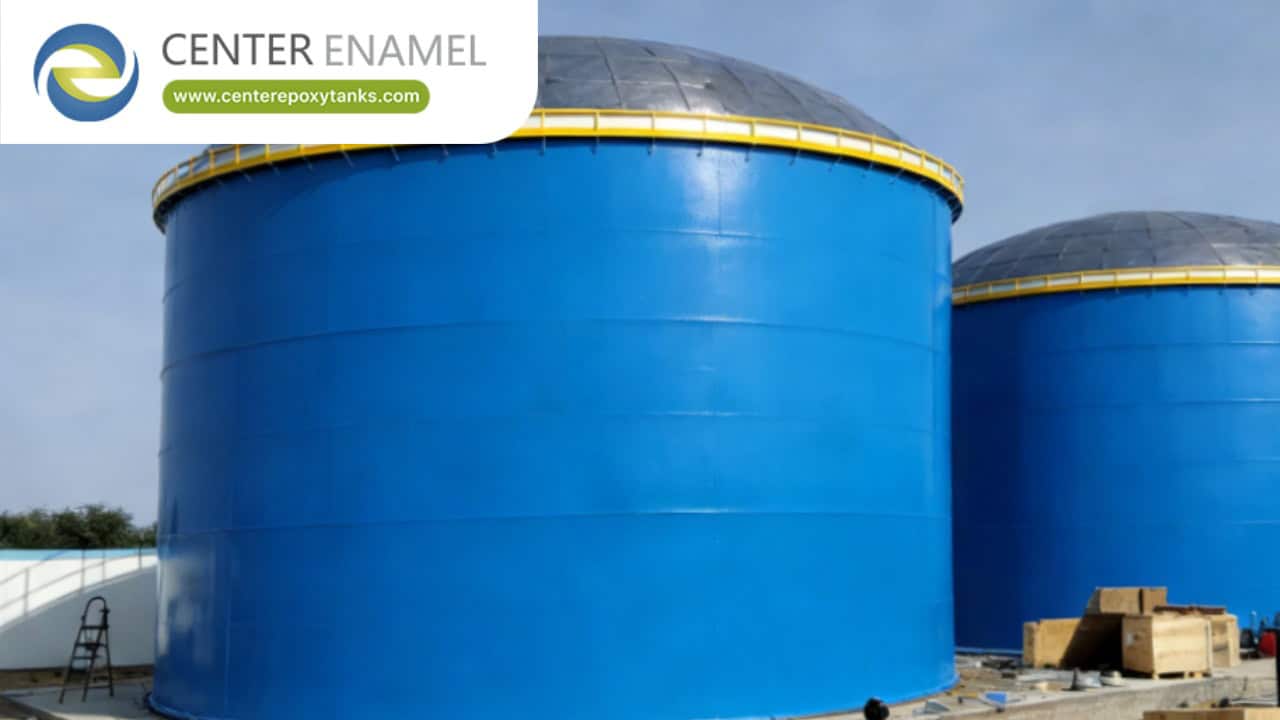
Aluminum Dome Roofs For LNG Storage: Outer-Tank Weather Cover Role
LNG is stored cryogenic at about -162°C in double-walled tanks. An aluminum geodesic dome's realistic role there is the outer tank's weather cover — never contacting LNG. This article is deliberately conservative about that boundary, because overclaiming cryogenic capability would be false.
LNG is cryogenic — set the boundary first
LNG is stored near -162°C. The inner tank (often 9% nickel steel or concrete with insulation) holds the LNG; the outer tank is a containment and weather shield. An aluminum dome, if used, covers the OUTER tank as a weather protection — it does not contact LNG and is not the cryogenic barrier.
Outer-tank weather cover role
The legitimate function is keeping rain, snow and debris off the outer tank top and providing a sealed, low-maintenance cap over the outer containment. This is the same enclosure logic as other applications, applied where temperatures are ambient at the dome.
What the dome is NOT
The dome is not a cryogenic component, not in contact with LNG, and not a substitute for the inner tank's insulation or the outer tank's structural design. Claims that an aluminum dome 'stores LNG' would be incorrect.
Materials and the boundary
At the outer-tank top the dome sees ambient conditions; aluminum's properties suit that. The interface with the outer tank must respect the tank designer's loads and the thermal bridge rules of the containment system.
Sealing and vapor space
The outer containment may have a monitored interspace; the dome's sealed envelope supports that monitoring rather than compromising it. Sealing grades are selected for the outer-tank atmosphere.
LNG scope table
Layer | Holds LNG? | Dome role |
Inner tank | Yes (cryogenic) | None — separate system |
Insulation | Barrier | None |
Outer tank | Containment | Weather cover (dome) |
Dome | n/a | Ambient weather cap |
How it differs from other applications
Unlike water or petroleum, LNG's defining feature is cryogenic and the dome is deliberately one step removed — a cover over the cover. The honesty here is the boundary.
Honest boundary and evidence
No LNG aluminum-dome project is in the verified case library, and the dome's role is explicitly the outer-tank weather cover. This article is conservative engineering framing, not a delivered-project claim.
Specification inputs
Provide outer-tank design, loads and the containment system's interface rules; the dome is specified as an ambient weather cover only.
Summary
For LNG the aluminum dome is a weather cover over the outer tank, clearly outside the cryogenic path — specified conservatively, never as an LNG contact component.
Outer-tank interface
Where a dome covers the LNG outer tank, it must respect the tank designer's loads and the thermal-bridge rules of the containment system; the interface is defined by the tank, not assumed by the dome.
The dome is an ambient-weather cover that sits on a precisely engineered outer tank, and the connection is specified accordingly.
What the dome is not
The dome is not a cryogenic component, not in contact with LNG, and not a substitute for inner-tank insulation. Claims that an aluminum dome 'stores LNG' would be incorrect.
Stating the negative explicitly is what keeps this application honest.
Conservative specification inputs
Specify the outer-tank design, the interface loads and the containment rules; the dome is then specified as an ambient weather cover only, with no cryogenic contact claimed.
Those inputs bound the scope to what is real and avoid overreach.
Thermal-bridge rule
The dome's connection to the outer tank respects the containment system's thermal-bridge rules; the interface is defined by the tank, not assumed by the dome.
Verification limit
Because there is no LNG contact, verification is bounded to the outer-tank weather cover. Staying within that limit is what keeps the claim honest.
Outer-tank concrete role
The LNG outer tank is often post-tensioned concrete that also provides blast and containment; the dome, if used, covers this outer structure at ambient conditions. The interface respects the concrete designer's loads and thermal rules.
Seismic at the interface
Seismic loads transfer through the outer tank to any cover; the dome's connection is detailed for those loads without compromising the containment system's thermal bridge. The interface is defined by the tank, not by the dome.
Bounding the LNG scope
The disciplined way to specify a dome over an LNG outer tank is to bound the scope explicitly: ambient weather cover only, no cryogenic contact, interface loads from the tank designer. That boundary is stated in the specification so no later reader infers an LNG-handling role; the honesty of the scope is itself part of the engineering.
Honest scope as engineering
Specifying a dome over an LNG outer tank is an exercise in drawing a clear line: ambient weather cover, no cryogenic contact, interface loads from the tank designer. That line is written into the specification so no reader infers an LNG-handling role for the aluminum.
The discipline is the deliverable. A cover that knows its boundary is more valuable than one that overclaims, because the containment system's safety depends on every component staying within its defined role. The dome's role here is explicitly the outer, ambient one.
Frequently Asked Questions
Q: Can an aluminum dome touch LNG?
A: No. LNG is cryogenic; the dome, if used, covers the outer tank at ambient conditions.
Q: What is the dome's LNG role?
A: Weather protection and sealed cap over the outer containment — not a cryogenic component.
Q: Is the dome a substitute for insulation?
A: No — the inner tank and insulation handle cryogenics; the dome is the outer weather cover.
Q: Is there a delivered LNG project?
A: Not in the verified library; this is conservative engineering framing.
Q: Why be so careful here?
A: Overclaiming cryogenic capability would be false; the boundary must be explicit.
Q: What should I specify?
A: Outer-tank design, loads and containment interface rules — dome as ambient cover only.
Conclusion
For LNG storage, the aluminum geodesic dome's honest role is a weather cover over the outer tank, entirely outside the cryogenic path. Specified conservatively as an ambient cap, it adds enclosure without overclaiming any LNG contact.
Project Reference And Honest Disclosure
Evidence note: the verified case library contains aluminum-dome-roof deliveries only on potable-water, wastewater and desalination tanks. No petroleum, chemical, gas or LNG project with an aluminum dome roof is on file. This article is therefore based on general aluminum-dome engineering and applicable codes, and does not present a project case for this application.
Work With Center Enamel
Center Enamel, established in 2008 and based in Shijiazhuang, China, manufactures glass-fused-to-steel (GFS), epoxy-coated, galvanized, stainless steel and welded storage tanks, aluminum geodesic dome roofs, floating roofs, pressure vessels and wastewater and biogas engineering packages. Its production system is certified to ISO 9001, and its tanks and coatings are validated against NSF/ANSI 61, WRAS, FM and CE (EN 1090) where applicable. The company has delivered more than 30,000 tank and enclosure projects across potable water, wastewater, fuel, chemical and dry-bulk applications.
If your LNG outer-tank design permits an aluminum weather cover, share the interface loads and containment rules and we can outline a conservative dome scope.
Sources And Further Reading
AWWA D108, Standard for Aluminum Domes and Roof Structures.
API 650 / API 620 and EN 14620 context for LNG tank containment.
Conservative framing: dome as outer-tank weather cover only; no cryogenic contact claimed.


