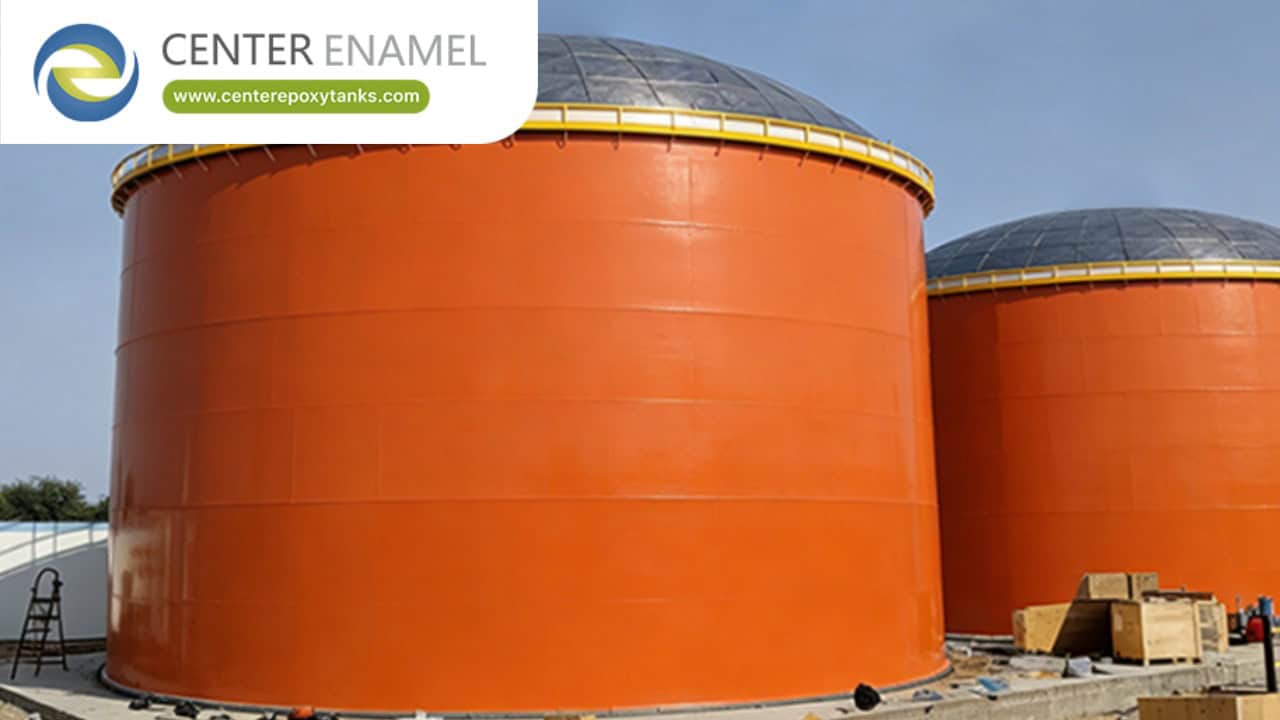
Aluminum Dome Roofs For Fuel Storage Depots: Stage II Recovery And Small Tanks
Fuel depots — distribution and retail — store gasoline and diesel in smaller tanks, often near communities, with Stage II vapor recovery. This article centers depot-scale fuel storage and how an aluminum dome fits that context, distinct from large terminal or crude coverage.
Depots are smaller and closer
Fuel depots use smaller tanks than terminals and sit nearer people. The dome still encloses the surface, but the drivers are community emissions, Stage II recovery at dispensing, and a compact, low-maintenance cover.
Stage II vapor recovery
At dispensing, Stage II captures vapor displaced from vehicle tanks. The dome's sealed envelope supports the depot's vapor system by keeping the tank space tight; the recovery hardware remains separate.
Smaller tanks, same enclosure logic
A small tank benefits from a self-supporting dome because there is no internal column to obstruct access or cleaning. The clear span matters at any diameter.
Community and odor
Near communities, enclosing fuel vapor reduces odor and fugitive emissions. The dome's tight seal is the physical basis for that local benefit.
Maintenance simplicity
Depots value low maintenance; an aluminum dome's corrosion resistance and few moving parts suit that. Inspection focuses on seals and vents.
Depot vs terminal table
Aspect | Depot | Terminal |
Tank size | Smaller | Large |
Recovery | Stage II at dispense | Stage I bulk |
Context | Near community | Industrial |
Priority | Odor + low maintenance | Throughput + capture |
How it differs from crude/refined
Crude centers heating; refined centers volatility; depot centers community and Stage II. The dome encloses in all; the companion system differs.
Honest boundary
No fuel-depot aluminum-dome project is in the verified case library; this is engineering guidance for depot service.
Specification inputs
Provide fuel, tank size, Stage II scheme and community setback; the dome is specified to enclose and support recovery.
Summary
For fuel depots the dome is a compact, low-maintenance, tight enclosure that supports Stage II and reduces community impact.
Stage II and the envelope
At dispensing, Stage II captures vapor displaced from vehicle tanks. The dome's tight tank space supports that by keeping the vapor where recovery can collect it.
The recovery hardware remains separate, but the dome's seal is what makes the envelope effective for Stage II.
Community odor benefit
Near communities, enclosing fuel vapor cuts odor and fugitive emissions. The dome's tight seal is the physical basis for that local benefit, not a marketing claim.
For a depot, the difference between an open and an enclosed tank is often noticeable to neighbors.
Low-maintenance appeal
Depots value low maintenance; an aluminum dome's corrosion resistance and few moving parts suit that, with inspection focused on seals and vents.
Simple, infrequent checks fit a depot's lean staffing better than a complex roof.
Small-tank access
Smaller depot tanks still benefit from a self-supporting dome with no internal column obstructing access or cleaning. Clear span helps at any diameter.
Setback design
Near communities, the enclosed tank reduces odor and fugitive emissions, supporting the setback and the depot's license to operate.
Dispensing vapor
At the dispenser, vapor displaced from vehicle tanks is captured by Stage II; the dome's sealed tank space supports that by keeping the captured stream tight. The recovery unit is separate, but its efficiency depends on the envelope the dome provides.
Depot monitoring
Depots near communities monitor for odor and fugitive emission; an enclosed tank gives a defined, monitorable envelope rather than a diffuse source. The monitoring points attach to the dome's controlled vents, making detection straightforward.
Depot-scale fit
Fuel depots need a compact, low-maintenance, community-compatible cover; the aluminum dome fits that scale with clear-span access and a tight envelope that supports Stage II recovery and cuts odor. The depot case is won by matching the cover to depot realities — smaller tanks, dispensing recovery, near-neighbor setback — rather than scaling down a terminal design and hoping it fits.
Depot monitoring and license
Near communities, the enclosed tank gives a defined, monitorable envelope that supports the depot's operating license and odor complaints response. Monitoring attaches to the dome's controlled vents, making detection straightforward and keeping the depot a good neighbor; that license-and-community dimension is what distinguishes depot from bulk-terminal service.
Community and compliance fit
A depot lives next to people, so the dome's value is as much about odor and fugitive emission control as about product. Enclosing the vapor at source, rather than air-diluting it, is what keeps the depot below the community threshold and supports its operating license.
Low maintenance matters at depot scale, where staffing is lean; an aluminum dome's few moving parts and corrosion resistance suit that, with inspection focused on seals and vents. The cover is chosen for the depot's whole operating reality, not just its tank geometry.
Frequently Asked Questions
Q: Do domes suit small fuel depot tanks?
A: Yes — self-supporting clear span helps access and cleaning at any size.
Q: What is Stage II here?
A: Vapor recovery at dispensing; the dome keeps the tank space tight to support it.
Q: Why does community matter?
A: Enclosing vapor cuts odor and fugitive emissions near people.
Q: Is there a delivered depot project?
A: Not in the verified library; this is engineering guidance.
Q: How does it differ from terminals?
A: Smaller tanks, Stage II, community proximity vs bulk throughput.
Q: What should I specify?
A: Fuel, tank size, Stage II scheme and setback.
Conclusion
For fuel depots, an aluminum dome is a compact, low-maintenance, tight enclosure that supports Stage II recovery and reduces community impact — the same enclosure logic as larger tanks, tuned to depot scale.
Project Reference And Honest Disclosure
Evidence note: the verified case library contains aluminum-dome-roof deliveries only on potable-water, wastewater and desalination tanks. No petroleum, chemical, gas or LNG project with an aluminum dome roof is on file. This article is therefore based on general aluminum-dome engineering and applicable codes, and does not present a project case for this application.
Work With Center Enamel
Center Enamel, established in 2008 and based in Shijiazhuang, China, manufactures glass-fused-to-steel (GFS), epoxy-coated, galvanized, stainless steel and welded storage tanks, aluminum geodesic dome roofs, floating roofs, pressure vessels and wastewater and biogas engineering packages. Its production system is certified to ISO 9001, and its tanks and coatings are validated against NSF/ANSI 61, WRAS, FM and CE (EN 1090) where applicable. The company has delivered more than 30,000 tank and enclosure projects across potable water, wastewater, fuel, chemical and dry-bulk applications.
Share your depot tank sizes and Stage II scheme and we can outline a dome envelope suited to community-adjacent fuel storage.
Sources And Further Reading
AWWA D108, Standard for Aluminum Domes and Roof Structures.
API 650 / API 2000 for tank venting context.
Stage II vapor recovery practice references for fuel dispensing.


