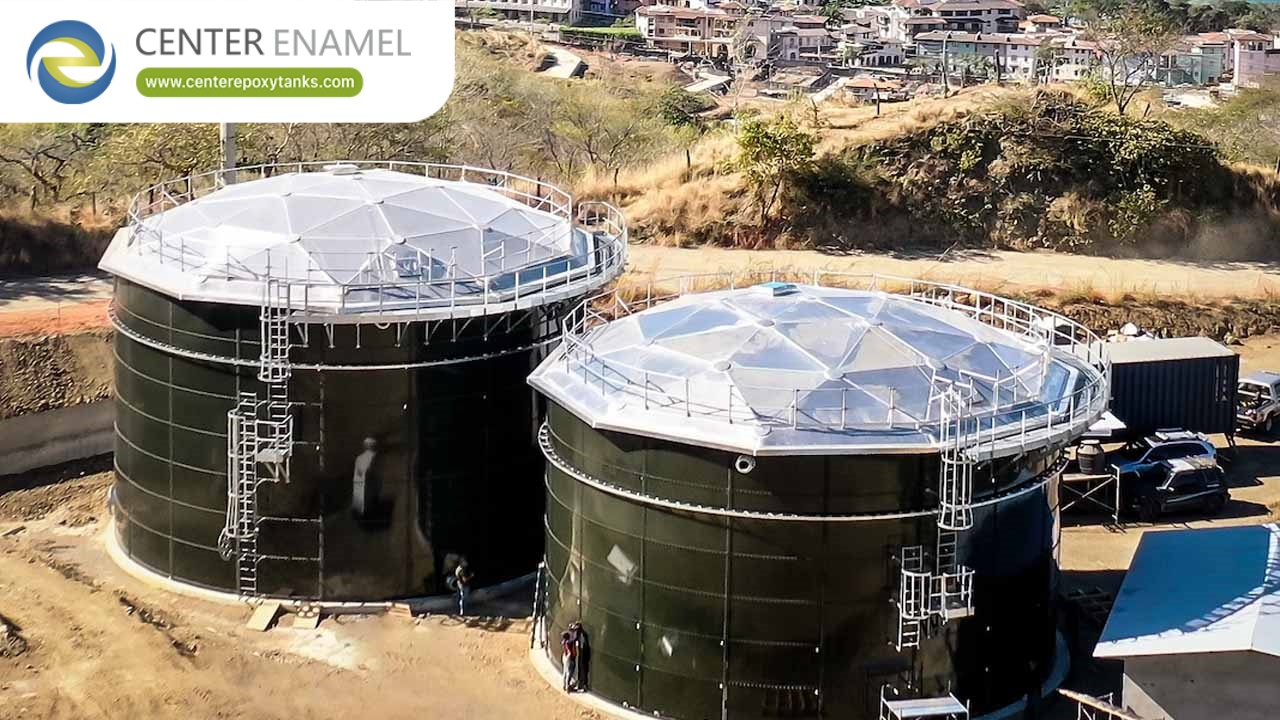
Aluminum Dome Roofs For Fire Water Storage Tanks
Fire-water tanks must stay reliable on demand — protected from contamination, freezing and debris. This article covers aluminum geodesic domes for fire-water storage, with an honest note that no fire-specific project case is on file and the discussion follows general fire-protection engineering and the product's application scope.
Fire-Water Reliability Requirement
Fire-water tanks must deliver on demand per the governing standard (commonly NFPA 22 for private fire-protection water storage). The cover protects the reserve without compromising access or quality.
A dome supports this by excluding contaminants and reducing standing loss.
Standby Reliability And Water Quality
A sealed aluminum dome keeps out debris, animals and algae, preserving the stored reserve. Aluminum is inert and needs no repaint, supporting long standby with low upkeep.
Water-quality preservation reduces the risk of pump or sprinkler blockage at the moment of demand.
Freeze Protection Considerations
In cold climates, freeze protection is provided by the overall tank design (insulation, heat trace, or buried/indoor configuration), not the dome alone. The dome contributes a low-profile, sealed top that pairs with the chosen freeze strategy.
Coordinate the dome with the tank's thermal design rather than treating it as the sole freeze measure.
Pump Draft And Access
Fire pumps and draft connections need clear, protected access. Manways and nozzle penetrations are framed in aluminum and sealed, placed per the fire-protection layout.
Clear-span geometry aids internal access for inspection of the reserve.
Debris And Bird Exclusion
A continuous sealed cover excludes leaves, birds and vermin that could clog intakes. This is a routine but important reliability factor for seldom-used reserves.
Silicone gaskets keep the seal through thermal cycling and UV.
Honest Scope Note
No fire-water-specific project case is recorded in the available sources. Fire-water use is discussed from the product's general application scope and fire-protection engineering principles, not a verified fire-specific reference.
A supplier should provide a fire-water reference and confirm NFPA 22 coordination before such a claim is made.
Coordination With The Tank System
As with any tank, the dome load reaches the shell/foundation via the perimeter ring; the fire-water tank must be checked for the dome reaction.
Penetrations (drains, overflow, gauge, pump connections) are coordinated with the fire-protection design.
Specification Checklist
Confirm the governing standard (e.g., NFPA 22), freeze-protection strategy, penetration schedule, access, and the dome's code calculations.
Require a fire-water reference and stamped calculations for the actual loads.
Common Pitfalls
Assuming the dome provides freeze protection by itself, and omitting penetration coordination with the fire-protection layout.
Resolve thermal and access interfaces in design.
When A Dome Fits Fire Water
For fire-water reserves needing contamination protection, low maintenance and reliable access, an aluminum dome is a sensible cover within the overall tank and freeze-protection design.
Verify a relevant reference and standard coordination before specifying.
Reserve Calculation Context
Fire-water reserves are sized per the governing standard (commonly NFPA 22) for the required duration and demand; the dome is the cover that protects that reserved volume, not the sizing basis.
Coordinate the dome penetrations with the fire-protection layout - drains, overflow, gauge and pump connections - so the cover supports, not obstructs, the system.
Integration With Pump House
Where the tank feeds a fire-pump house, the dome's sealed manways and nozzle penetrations provide protected access for suction and monitoring.
The low-maintenance aluminum cover reduces the upkeep burden on a reserve that may sit idle for long periods between demands.
Draft And Suction Interface
Fire pumps connect to the reserve through suction and draft points that must remain protected and accessible. Frame these in the dome without compromising the seal.
Coordinate with the fire-protection layout so the cover supports system performance on demand.
Freeze-Protection Strategy
In cold climates, freeze protection comes from the tank's thermal design - insulation, heat trace or location - with the dome as the sealed top. Do not treat the dome as the sole freeze measure.
Specify the thermal strategy explicitly so the cover and tank work together.
Reserve Protection In Practice
A fire-water reserve may sit idle for years, so contamination or blocked access at the moment of demand is the key risk. The dome protects the reserve from debris, algae and animals while keeping access points clear for pumps and gauges.
Low-maintenance aluminum is well suited to this standby role, where upkeep is easy to defer but must not be neglected.
Coordinating With Fire Protection
Penetrations for suction, overflow, gauge and pump connections follow the fire-protection layout and are framed and sealed in the dome. The cover supports - rather than obstructs - system performance on demand.
Coordinate the dome with the fire-protection engineer so the sealed top and the active system work together.
Fire Dome Acceptance Criteria
Accept the dome against the fire-protection layout: penetrations for suction, overflow, gauge and pump connections are correctly placed and sealed, and access is clear for demand-day operation.
Record the sealed cover and spare gasket list in the fire-protection asset file so standby reliability is maintained with minimal upkeep over the reserve's life.
Need | Dome response |
Reliability | Sealed, inert, low-maintenance cover |
Water quality | Excludes debris/algae |
Freeze | Pairs with tank thermal design |
Access | Framed, sealed penetrations |
Item | Status |
Fire-specific case | Not on file (disclosed) |
Governing std | Confirm NFPA 22 / local |
Verify with | Supplier fire reference + calcs |
Frequently Asked Questions
Can domes cover fire-water tanks?
Yes — they protect the reserve from debris and contamination and support reliable access within the overall tank design.
Is there a fire-water case?
No fire-specific project case is on file; this article follows general fire-protection engineering and the product scope, disclosed honestly.
Does the dome prevent freezing?
Not alone — freeze protection comes from the tank's thermal design; the dome is the sealed top that pairs with it.
How are pumps accessed?
Through framed aluminum penetrations (drains, overflow, gauge, pump connections) coordinated with the fire layout.
Why aluminum for standby?
Inert, no repaint, low upkeep — good for seldom-used reserves.
What to verify?
A fire-water reference, NFPA 22 (or local) coordination, and stamped calculations.
Work With Center Enamel
Center Enamel (Shijiazhuang Zhengzhong Technology Co., Ltd) is a Chinese manufacturer of bolted storage tanks and aluminum geodesic dome roofs, established in 2008. Its product range covers Glass-Fused-to-Steel (GFS) tanks, Fusion-Bonded Epoxy (FBE) tanks, galvanized and stainless-steel tanks, welded tanks, pressure vessels, and aluminum dome roofs. The company holds ISO 9001, NSF, WRAS, FM, CE/EN 1090 and ISO 28765 certifications for its tank lines and designs aluminum domes to AWWA D108, API 650, ADM 2015, ASCE 7-10 and IBC 2012. It operates automated enamel-plate production and has supplied engineering projects across drinking-water, wastewater, biogas, fire-water and industrial-storage applications.
For aluminum geodesic dome roofs engineered to AWWA D108, API 650, ADM 2015, ASCE 7-10 and IBC 2012, contact Center Enamel to discuss your tank cover, span and site requirements.


