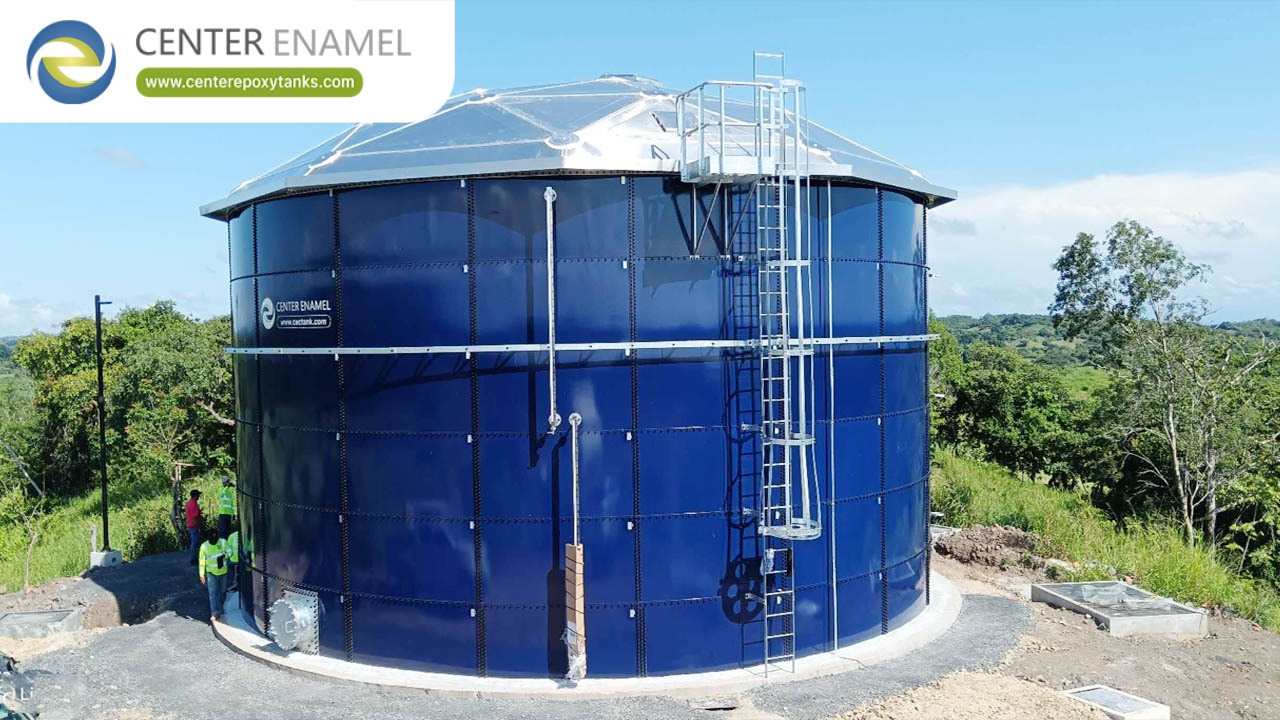
Aluminum Dome Roofs For Bulk And Dry-Solids Storage
Bulk and dry-solids storage — grain, cement, minerals — needs covers that control dust, shed weather and allow safe inspection and reclaim. This article covers aluminum geodesic domes for bulk storage, noting that no dedicated bulk project case is on file and the discussion is based on the product's stated application scope.
Bulk Storage Cover Needs
Dry-bulk silos and sheds need weather protection, dust containment, and safe access for loading, level measurement and inspection. The cover must not obstruct reclaim or create dead zones.
Clear-span geometry helps here: material flows and equipment move without column interference.
Dust Control
A sealed aluminum dome with gasketed nodes and rim limits fugitive dust at the top of the structure, supporting environmental and housekeeping goals.
Penetrations for loading spouts, vents and instrumentation are framed and sealed in aluminum.
Loading-Spout And Penetration Interface
Loading spouts, dust collectors and level sensors pass through framed aluminum curbs. Because the dome is clear-span, penetrations can be placed where the process needs them.
Early fixation of the penetration schedule avoids field cutting of aluminum.
Walkable Inspection And Access
The dome surface and internal clear span support safe inspection and access routing. Manways and walkways are framed in aluminum and sealed.
No internal columns means fewer confined-space entry points and simpler routine checks.
Weather And Rodent/Bird Exclusion
A continuous sealed cover excludes rain, birds and rodents from the stored product — important for food-grade and sensitive bulk solids.
Aluminum's corrosion resistance suits outdoor bulk yards without repaint programs.
Clear-Span Reclaim
Under the dome, reclaim equipment (conveyors, augers, drawpoints) operates without column conflict, improving live-storage geometry.
This is a structural advantage over covers that need internal support.
Honest Scope Note
No dedicated bulk/dry-solids project case is recorded in the available sources; the bulk-storage use is listed among the product's application fields. This article is therefore based on the product scope and general bulk-handling engineering, not a verified bulk reference.
A supplier should provide a bulk-specific reference before such a claim is made for a particular project.
Coordination With The Vessel
As with any tank, the dome load reaches the vessel shell/foundation via the perimeter ring. The bulk vessel must be checked for the dome reaction.
Penetration and vent coordination follows the process design.
Specification Checklist
Confirm product type, dust-class requirements, penetration schedule, access needs, and the governing code for the dome and vessel.
Request a bulk-specific reference and stamped calculations for the actual loads.
Common Pitfalls
Assuming a water-tank reference applies to bulk without checking dust and loading interfaces, and omitting penetration coordination.
Resolve process interfaces in design.
When A Dome Fits Bulk Storage
For outdoor bulk solids needing dust control, weather exclusion and clear-span access, an aluminum dome is a low-maintenance candidate within the product's stated application scope.
Verify a relevant reference and the vessel's capacity for the dome load before specifying.
Food-Grade Bulk Considerations
For food-grade solids, the inert aluminum surface and sealed cover support hygiene; any contact component should be confirmed against the relevant food-standard expectations for the market.
Access for inspection and cleaning is simplified by the clear-span interior, reducing confined-space exposure during routine sanitation.
Reclaim Geometry
Under a clear-span dome, reclaim conveyors and drawpoints are laid out without column obstructions, improving live-storage geometry and drawdown.
Penetrations for loading and dust collection are placed to match the process flow, fixed early to avoid field modification of aluminum.
Loading And Unloading Interface
Bulk domes interface with loading spouts, dust collectors and conveyors. Frame these penetrations and plan them with the process layout to avoid field modification.
Clear span aids equipment placement and reclaim geometry beneath the cover.
Environmental Permit Context
Dust and emissions permitting may apply to bulk handling. The sealed dome supports compliance by limiting fugitive dust at the top of the structure.
Confirm the permit basis with the authority; the dome is one contributor to the overall control strategy.
Process Interface For Bulk
Bulk handling links the dome to conveyors, spouts and dust control. Framed penetrations carry these interfaces, and the clear-span interior lets equipment route without column conflict - a real advantage for reclaim and live storage.
Early fixation of the process interface prevents field cutting of aluminum, which is difficult and weakens the structure.
Compliance And Neighbor Context
Bulk sites may face dust and emissions expectations from regulators and neighbors. A sealed dome supports compliance by limiting fugitive dust at the top of the structure, contributing to the overall control strategy.
Confirm the permit basis with the authority so the dome is credited appropriately within the site's environmental controls.
Bulk Dome Commissioning Notes
Verify dust-control penetrations are sealed and the loading interface aligns with the process layout before accepting the dome; misalignment here is the usual cause of rework.
Because no bulk-specific case is on file, confirm the supplier's reference and calculations for your exact product and environment before treating the dome as proven for the duty.
Bulk Dome Acceptance
At acceptance, confirm dust-control penetrations are sealed and the loading interface aligns with the process layout; misalignment is the usual cause of rework on bulk domes.
Because no bulk-specific case is on file, verify the supplier's reference and calculations for your exact product and environment before treating the dome as proven for the duty.
Need | Dome response |
Dust control | Sealed gasketed barrier + framed penetrations |
Access | Clear span, walkable, framed manways |
Weather exclusion | Continuous cover, no repaint |
Reclaim | No internal columns |
Item | Status |
Bulk-specific case | Not on file (disclosed) |
Application field | Listed: Bulk Storage |
Verify with | Supplier bulk reference + calcs |
Frequently Asked Questions
Can domes cover bulk solids?
Yes — the product's application scope includes bulk storage; domes provide dust control, weather exclusion and clear-span access.
Is there a bulk project reference?
No dedicated bulk case is on file; this article is based on the stated application field and general bulk engineering, disclosed honestly.
How are loading spouts handled?
Through framed aluminum penetrations coordinated in design.
Why clear span for bulk?
Reclaim equipment and access work without column conflict, improving live storage.
What to verify before specifying?
A bulk-specific reference, vessel capacity for the dome load, and stamped calculations.
Does it exclude birds/rodents?
Yes — a continuous sealed cover excludes rain, birds and rodents from the product.
Work With Center Enamel
Center Enamel (Shijiazhuang Zhengzhong Technology Co., Ltd) is a Chinese manufacturer of bolted storage tanks and aluminum geodesic dome roofs, established in 2008. Its product range covers Glass-Fused-to-Steel (GFS) tanks, Fusion-Bonded Epoxy (FBE) tanks, galvanized and stainless-steel tanks, welded tanks, pressure vessels, and aluminum dome roofs. The company holds ISO 9001, NSF, WRAS, FM, CE/EN 1090 and ISO 28765 certifications for its tank lines and designs aluminum domes to AWWA D108, API 650, ADM 2015, ASCE 7-10 and IBC 2012. It operates automated enamel-plate production and has supplied engineering projects across drinking-water, wastewater, biogas, fire-water and industrial-storage applications.
For aluminum geodesic dome roofs engineered to AWWA D108, API 650, ADM 2015, ASCE 7-10 and IBC 2012, contact Center Enamel to discuss your tank cover, span and site requirements.


