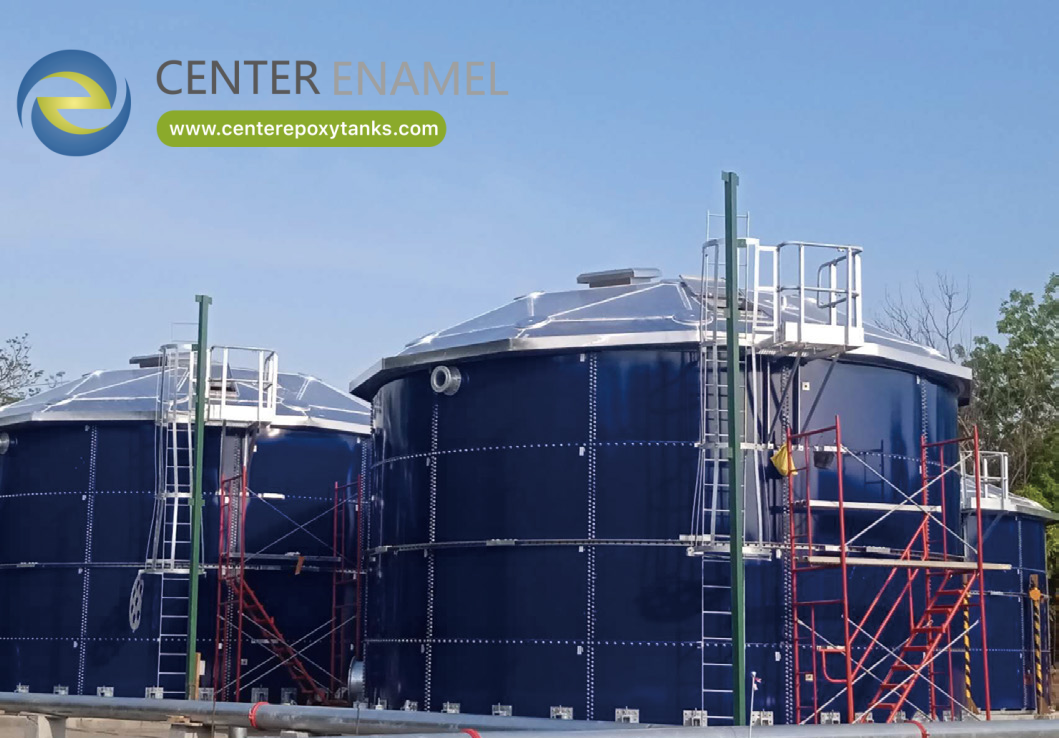
Aluminum Dome Roofs for Fire Protection Storage Tanks: Engineering for Reliability
For mission-critical fire protection systems, the integrity of the water supply is non-negotiable. Aluminum Geodesic Dome Roofs are rapidly replacing traditional steel and concrete covers in industrial fire protection storage. By providing a self-supporting, corrosion-resistant, and maintenance-free enclosure, these domes ensure the reliability required by NFPA 22 (Standard for Water Tanks for Private Fire Protection) while eliminating the recurring costs of internal corrosion and structural recoating.
1. Why Aluminum Domes for Fire Water Storage?
Fire protection tanks often remain filled for long periods, creating an environment susceptible to vapor-phase corrosion—the space between the water level and the roof. Traditional steel roofs in this environment require frequent inspection, sandblasting, and recoating to prevent rust from falling into the water, which can damage downstream pumps and sprinkler nozzles.
Immunity to Corrosion: Aluminum naturally forms a self-healing oxide layer, making it immune to atmospheric corrosion. This eliminates the need for internal or external protective coatings, significantly reducing the Total Cost of Ownership (TCO).
Clear-Span Architecture: The geodesic design transfers loads to the perimeter of the tank, removing the need for internal support columns. This ensures there are no "dead spots" or corrosion-prone column bases within the tank, simplifying maintenance and cleaning.
Lightweight Structural Integrity: Aluminum domes are significantly lighter than steel or concrete roofs, reducing the load on the tank shell and foundation. This is especially beneficial in seismic zones where lower roof mass improves the tank’s overall seismic rating.
2. Compliance and Technical Standards
When selecting a roof for fire protection, compliance with international engineering standards is critical for insurance and regulatory approval.
NFPA 22 Integration: Modern aluminum domes are engineered to support required fire-safety appurtenances, including high-velocity vents, manways, and internal monitoring systems, ensuring full compliance with NFPA 22 mandate requirements.
Design Standards: Most high-quality aluminum domes are designed to meet or exceed AWWA D108 (Aluminum Structures for Water and Wastewater Tanks) and are compatible with API 650 requirements for storage tank design, ensuring structural stability under wind, snow, and live-load conditions.
3. Comparative Advantage: Lifecycle Performance
Feature | Aluminum Geodesic Dome | Traditional Steel Roof | Concrete Roof |
Corrosion Maintenance | None (Zero) | High (Regular Recoating) | Moderate (Sealing/Patching) |
Service Life | 30+ Years | 10–15 Years | 20–25 Years |
Internal Supports | None (Clear Span) | Required (Columns) | Required |
Seismic Load | Very Low | High | Very High |
Installation | Rapid (Bolted/Modular) | Slow (Welding/Heavy Crane) | Slow (Concrete Curing) |
4. Strategic Implementation
Choosing an aluminum dome roof is not just an aesthetic upgrade; it is an investment in operational availability. For facilities where water availability is the last line of defense against disaster, the "fit and forget" nature of aluminum reduces the risk of emergency system failures and ensures that maintenance teams can focus on critical fire pump and valve inspections rather than structural roof repairs.


