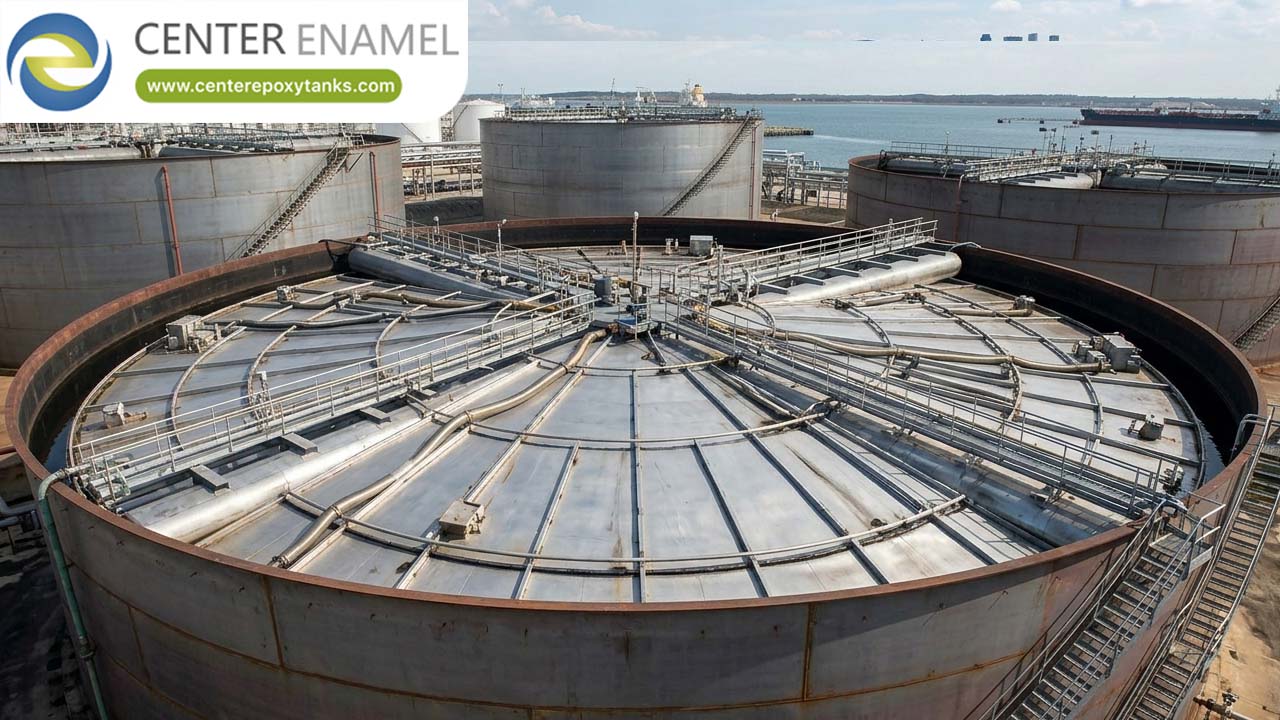
Leading External Floating Roof Manufacturers: A Procurement Guide
Leading External Floating Roof (EFR) manufacturers are specialized engineering firms that produce high-performance, API 650-compliant storage covers designed to eliminate the vapor space in large-diameter crude oil and petroleum tanks. A top-tier manufacturer distinguishes itself through: (1) Advanced Seal Technology that minimizes Volatile Organic Compound (VOC) emissions, (2) High-Integrity Drainage Systems that prevent roof sinking during heavy rainfall, and (3) Structural FEA-backed designs that ensure buoyancy and stability under extreme wind and snow loads. Procurement teams should prioritize manufacturers that offer complete, verified engineering data packages rather than mere component fabrication.
The Critical Role of the Manufacturer
Selecting an EFR manufacturer is not merely a purchase of steel; it is an infrastructure investment. Because the EFR is the primary line of defense against VOC emissions and product loss, the quality of the manufacturer's engineering determines the tank’s operational efficiency and environmental compliance for the next 20+ years.
Leading manufacturers focus on solving the three "Pain Points" of EFR ownership:
Seal Efficacy: The gap between the roof and the tank shell is the primary leakage point. Top manufacturers provide dual-seal systems (Primary and Secondary) that are verified for low-emission performance.
Drainage Reliability: A failed drain is the leading cause of EFR failure (sinking). Leading providers engineer articulated, flexible hose or pipe systems that do not suffer from fatigue-induced cracking.
Structural Buoyancy: Using independent, compartmented pontoons ensures that if one section is punctured, the roof remains afloat, preventing a catastrophic loss of product and infrastructure.
Evaluation Matrix: Vetting a Top-Tier EFR Manufacturer
When vetting potential suppliers, use this framework to separate high-end engineering firms from commodity fabricators:
Evaluation Metric | Top-Tier Manufacturer | Commodity Fabricator |
Engineering Support | Full FEA/Structural calculations | Standardized/Template designs |
Seal Quality | Verified Low-Emission Performance | Basic wiping seals |
Drainage System | Fatigue-tested, high-reliability | Standard hardware store components |
Regulatory Compliance | Certified API 650 (Appendix C) | Claims "compliance" without data |
After-Sales Support | Installation supervision/training | Supply-only model |
Key Technical Standards for Procurement
To ensure your facility remains audit-ready and structurally sound, specify that your manufacturer meets these international benchmarks:
API 650 (Appendix C): The global standard for External Floating Roofs. It governs the buoyancy, structural strength, and loading calculations required for safe operation.
Emission Testing (API 2517/2519): Reputable manufacturers have performance data on their seal systems, showing how effective their EFRs are at reducing VOC losses.
Material Certification: Ensure all aluminum/steel components are accompanied by Mill Test Certificates (MTCs) to ensure structural integrity under seismic and wind loads.
Frequently Asked Questions (FAQ)
Q: Why is EFR drainage often considered the "weak link" in tank infrastructure?
A: In older EFR designs, drainage was achieved through rigid piping that struggled to handle the cyclic movement of the roof, leading to fatigue failure. Modern, leading manufacturers have moved to flexible, reinforced hoses or articulated pipe systems that allow for smooth, frictionless movement as the tank level rises and falls.
Q: How do leading manufacturers handle "fitment" on old tanks?
A: Leading manufacturers offer custom field-measuring services. Because older tanks often have "out-of-round" shells, a generic roof will not seal properly. Top-tier providers use laser scanning to map the existing tank shell geometry and fabricate the EFR to match the shell's unique profile perfectly.
Q: How does a top-tier EFR manufacturer assist with installation?
A: A leading manufacturer provides more than just the parts. They supply a comprehensive Installation Manual, structural installation drawings, and, crucially, on-site technical supervision to ensure that the seals are gapped and aligned correctly—an installation error here is the most common reason for future leaks.
Partnering for Long-Term Storage Reliability
Your choice of manufacturer is a 20-year infrastructure decision. By prioritizing firms that leverage advanced seal science, fatigue-resistant drainage, and full structural transparency, you protect your storage assets against environmental risk and regulatory non-compliance.
Are you evaluating an EFR installation or looking to optimize an existing roof system?
Contact our engineering team for a structural capacity assessment, seal effectiveness analysis, or a material compatibility report tailored to your specific tank diameter and stored product.


