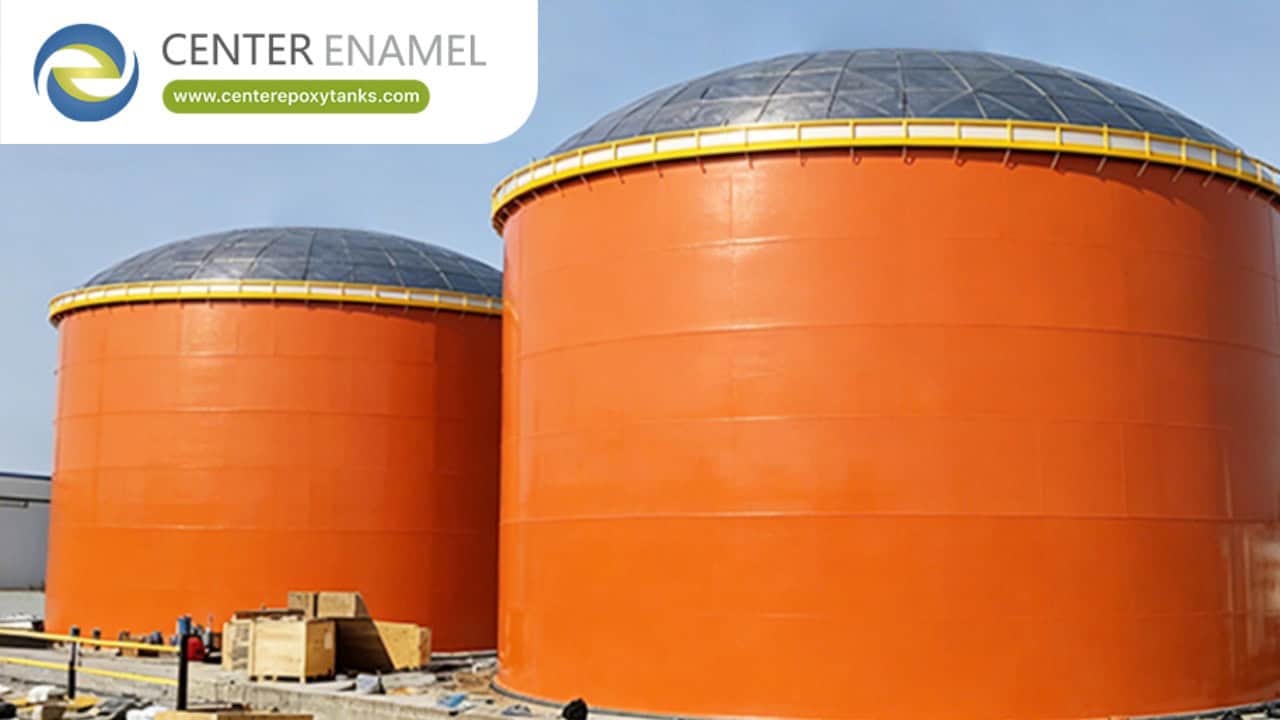
Aluminum Dome Roofs for Bulk Storage Silos: The Engineering Benchmark
An aluminum dome roof is a clear-span, geodesic structural cover engineered for large-diameter bulk storage silos. By leveraging a lightweight, high-strength triangular lattice framework, these domes eliminate the need for internal support columns, which are common failure points in traditional steel or concrete roofs. Engineered to meet international standards such as API 650 (Appendix G) and AWWA D108, aluminum dome roofs provide a corrosion-proof, maintenance-free enclosure that seals bulk materials (grains, chemicals, cement, or water) from environmental contaminants, moisture, and UV degradation, while drastically reducing total lifecycle costs compared to conventional roof systems.
The "Clear-Span" Engineering Advantage
In large-scale bulk storage, the roof is the most vulnerable point for structural fatigue and chemical degradation. Traditional silo covers often rely on internal trusses or columns, which create "dead zones" where moisture, dust, and corrosive vapors accumulate.
Aluminum dome roofs solve these issues through:
Clear-Span Design: The geodesic geometry transfers loads to the perimeter of the silo, removing the need for internal supports. This maximizes usable interior space and eliminates the structural obstacles that hinder discharge systems or internal mechanical components.
Immunity to Corrosion: Aluminum naturally forms a self-healing oxide layer, rendering it immune to atmospheric rust and highly resistant to the chemical vapors found in industrial wastewater, fertilizers, and petrochemical storage. It does not require the recurring recoating or painting that carbon steel roofs demand.
Lightweight Structural Integrity: The high strength-to-weight ratio of aerospace-grade aluminum reduces the dead load on the silo walls and foundation. This allows for easier retrofitting onto existing structures and simplifies the overall foundation requirements for new builds.
Comparative Overview: Silo Cover Technologies
Feature | Aluminum Dome Roof | Conventional Steel Cone Roof | Concrete/RCC Roof |
Structural Design | Clear-span (No columns) | Requires internal support | Heavy; massive foundation |
Corrosion Resistance | Excellent (Inert Material) | Low (Needs frequent coating) | Moderate (Crack-prone) |
Maintenance | Minimal/None | High (Recoating/Painting) | High (Crack sealing) |
Installation Speed | Fast (Modular/Bolted) | Slow (Field welding) | Very Slow (Civil construction) |
Emission/Moisture Control | High (Vapor-tight seals) | Low | Moderate |
Operational & Environmental Compliance
Leading industries—from wastewater management to agricultural grain handling—are moving toward aluminum domes for three critical reasons:
Moisture & Contamination Barrier: Whether storing dry powders (cement/grain) or sensitive liquids, the dome acts as a hermetic seal. When paired with high-quality gasketing, it prevents moisture ingress, which can cause clumping in grains or chemical reaction in bulk powders.
Reduced Vapor Emissions: In petrochemical or chemical sectors, aluminum domes are instrumental in VOC emission control, providing a stable, vapor-tight headspace that limits environmental impact and product loss.
Rapid Retrofitting: Many facilities utilize these roofs to modernize aging silos. Because they are modular and lightweight, they can be assembled on the ground and lifted into place or built piece-by-piece atop the silo, significantly reducing downtime and safety risks associated with "hot work" (welding).
Frequently Asked Questions (FAQ)
Q: Are aluminum dome roofs suitable for extreme weather (high wind/snow)?
A: Yes. The geodesic triangulated geometry is inherently stable. Manufacturers perform site-specific Finite Element Analysis (FEA) to ensure the dome is engineered to handle the specific wind, snow, and seismic loads of your facility’s geographic location.
Q: Can these domes be installed on existing concrete or steel silos?
A: Absolutely. Their lightweight design often allows them to be installed on existing structures that could not support the dead load of a heavy steel or concrete replacement roof.
Q: How do you prevent galvanic corrosion when mounting aluminum on a steel silo?
A: This is a standard engineering procedure. We utilize isolation gaskets, nylon washers, and specialized hardware at all connection points to break the electrical contact between the aluminum dome and the steel silo wall, preventing any galvanic reaction.
Partnering for Infrastructure Longevity
A dome roof is a 30-to-50-year investment. By choosing an aluminum geodesic system, you are eliminating the "maintenance cycle" of painting and structural repair, ensuring your bulk storage remains secure, compliant, and cost-efficient.
Are you evaluating an infrastructure project requiring large-scale storage covers?
Contact our engineering team to request a structural feasibility analysis, review our load-bearing certifications, or obtain a preliminary dome design proposal tailored to your silo diameter and environmental requirements.


