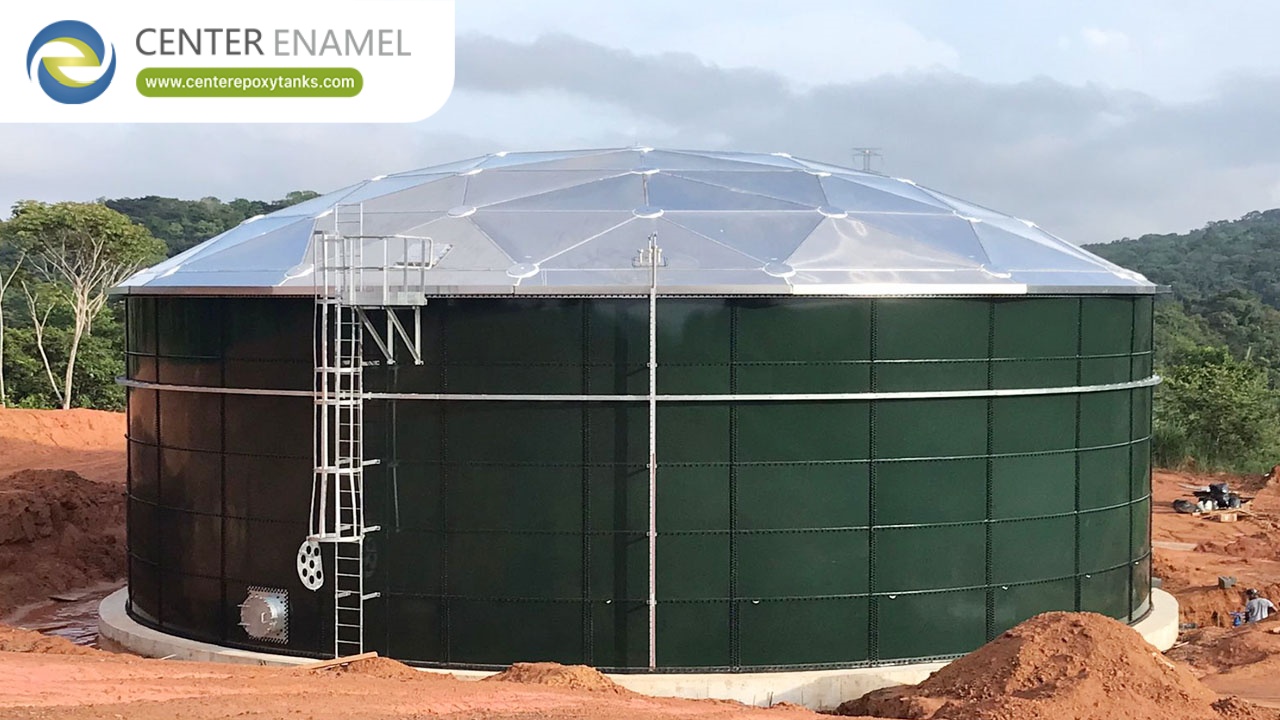
Aluminum Dome Roofs For Aquaculture And RAS Tanks
Aquaculture and recirculating aquaculture systems (RAS) use large water tanks that benefit from a cover — for bio-security, temperature control, evaporation reduction and operator access. Aluminum geodesic domes are a fit for these tanks, but the service (humid, sometimes saline, bio-security-sensitive) drives specific detailing. This article covers dome use in aquaculture.
Why Cover An Aquaculture Tank
A cover reduces evaporation and heat loss, limits light to control algae, improves bio-security against birds and contaminants, and gives operators dry access to feeders and instruments. An open tank loses all of these controls.
For RAS especially, the tank is part of a controlled process; a stable, cleanable cover supports water-quality management more than an open top.
Why A Rigid Aluminum Dome
A clear-span rigid dome gives unobstructed tank access (no internal columns in the water), a walkable surface for feeders and instruments, and low maintenance in a humid, sometimes saline atmosphere. Its corrosion resistance suits the environment better than repaint-prone steel.
The geodesic form scales to the large diameters aquaculture tanks use, and penetrations can be planned for feeders, sensors and access rather than improvised.
Bio-Security And Cleanability
Aquaculture demands clean, inert surfaces. Aluminum's inert, non-leaching finish (with the right specification) avoids contaminating the water, and the smooth dome interior is easier to keep clean than a porous or coated alternative.
Penetrations should be sealed to prevent pest or contaminant entry while allowing controlled access for feeding and monitoring. Bio-security is designed into the penetration plan.
Condensation And Humidity
A warm, humid tank under a cooler cover can condense on the underside. Detailing — drainage, ventilation where appropriate, and material choice — manages condensation so it does not drip or pool at details.
For RAS, coordinate any dome ventilation with the system's air/water balance; the cover is part of the controlled environment, not separate from it.
Saline And Corrosive Atmosphere
Coastal or marine aquaculture exposes the dome to salt. Aluminum's corrosion resistance helps, but alloy selection and interface isolation (where the dome meets a steel or concrete tank rim) should be specified for the chloride level.
As with all domes, galvanic isolation at the aluminum-steel junction prevents edge corrosion that would otherwise undermine an otherwise-resistant cover.
Aquaculture dome — spec focuses
Focus | Requirement | Why |
Bio-security | Sealed penetrations | Exclude contaminants |
Finish | Inert, non-leaching | Water quality |
Atmosphere | Humid / saline | Alloy + isolation |
Access | Walkway + manway | Operator safety |
Condensation | Drainage / vent | No drip / pool |
Penetrations For Feeding And Monitoring
Feeders, dissolved-oxygen and temperature sensors, and access manways are planned penetrations with reinforcement and seals. The schedule maps them so the dome supports the farm's operations.
Because aquaculture tanks are accessed often, walkways and handrails on the dome are practical safety items included in the design.
Temperature And Light Control
A cover moderates temperature swing and limits algal light. The dome's opacity and any insulation detail can be specified to the farm's thermal and biological needs rather than left to chance.
These are service choices: a cold-water species and a warm-water species may want different cover behavior, and the dome spec should reflect that.
Installation And Farm Uptime
Dome assembly can proceed with the tank in service where the method allows partial operation, but confined-space and water-safety controls apply. Plan access so the farm keeps producing.
Because aquaculture is continuous, the installation method statement should address working over a live, occupied tank.
Comparison To Alternative Covers
Fabric or FRP covers are alternatives; a rigid aluminum dome trades higher capital for walkable access, penetration capacity and low lifecycle upkeep in a humid, saline setting. The choice follows the farm's access and bio-security needs.
For tanks needing frequent loaded penetrations and operator access, the rigid dome is often the more serviceable cover.
Acceptance For Aquaculture Service
Accept by document review (certs, calculations, bio-security-relevant finish) and physical checks (fit-up, torque, seal continuity, penetration reinforcement). Retain records with the tank file.
Include the dome in the farm's inspection plan so condensation, seals and penetrations are checked on a defined cadence.
Dome vs alternative covers
Aspect | Aluminum dome | Fabric / FRP |
Access | Walkable | Limited |
Penetrations | Many, loaded | Few |
Upkeep | Low | Wear / replace |
Capital | Higher | Lower |
When A Dome Fits Aquaculture
Choose a rigid aluminum dome when the tank needs bio-secure, walkable, penetration-rich covering in a humid or saline environment with low lifecycle upkeep. For simple, low-access covers, lighter alternatives may suffice.
Specify the atmosphere, access and bio-security needs so the dome is built for fish-farm service, not for a generic water tank.
Seasonal And Stocking Considerations
Aquaculture demand shifts with stocking density and season; a cover specified for summer may need different ventilation or access at harvest. The dome spec should anticipate these cycles rather than lock a single condition.
Coordinate cover behavior with the farm's production plan so access, feeding and monitoring remain practical through the year. The dome is part of the operating system, not separate from it.
Operators who review the cover at each production cycle catch small issues — a weep at a manway, a loose walkway bracket — before they affect water quality or access safety.
Frequently Asked Questions
Q: Why cover an aquaculture tank?
A: For bio-security, evaporation and heat-loss reduction, light/algae control, and dry operator access to feeders and instruments.
Q: Why aluminum for fish-farm tanks?
A: Its corrosion resistance in humid/saline atmospheres and inert, non-leaching finish suit water quality and low lifecycle upkeep.
Q: How is condensation handled?
A: Through drainage, appropriate ventilation and material choice so condensate does not drip or pool at details.
Q: Are feeders and sensors penetrations?
A: Yes — planned, reinforced openings in the penetration schedule, with seals that maintain bio-security.
Q: Does the dome need galvanic isolation?
A: Where it meets a steel or concrete rim in a saline setting, yes, to prevent edge corrosion.
Q: Dome or fabric cover for RAS?
A: Compare on access and bio-security needs; a rigid dome suits frequent, loaded penetrations and operator access.
Conclusion
Aluminum geodesic dome roofs are selected, designed and maintained as structural systems, not as standalone covers. The articles in this batch treat each angle — from OEM sourcing and tender specification to retrofit, corrosion, loads, accessories, applications and manufacturing — as a distinct user task with its own evidence and boundaries.
Work With Center Enamel
Center Enamel (Shijiazhuang Zhengzhong Technology Co., Ltd) has manufactured bolted and welded storage tanks since 2008 from its base in Shijiazhuang, China. The company produces GFS (Glass-Fused-to-Steel), FBE-coated, galvanized, stainless-steel and welded tanks, aluminum geodesic dome roofs, floating roofs, pressure vessels, and wastewater and biogas engineering packages. Its quality system carries ISO 9001, and aluminum dome roofs are designed to AWWA D108, API 650, ADM 2015, ASCE 7-10 and IBC 2012. With an installed base of 30,000+ projects and 300,000 enamel steel plates produced annually, Center Enamel supports drinking-water, municipal, industrial, petroleum, dry-bulk and architectural applications.
Covering aquaculture or RAS tanks? Contact Center Enamel to specify alloy, inert finish and a bio-secure penetration plan matched to your humid or saline farm environment.
Project Case Reference
Project reference (B-grade, delivered with aluminum dome roof): Malaysia Drinking water — GFS bolted tank, Ø17.58 x 21.0 m (H), 4 tanks, 2025. The dome roof was supplied as the cover solution for this verified tank project.


