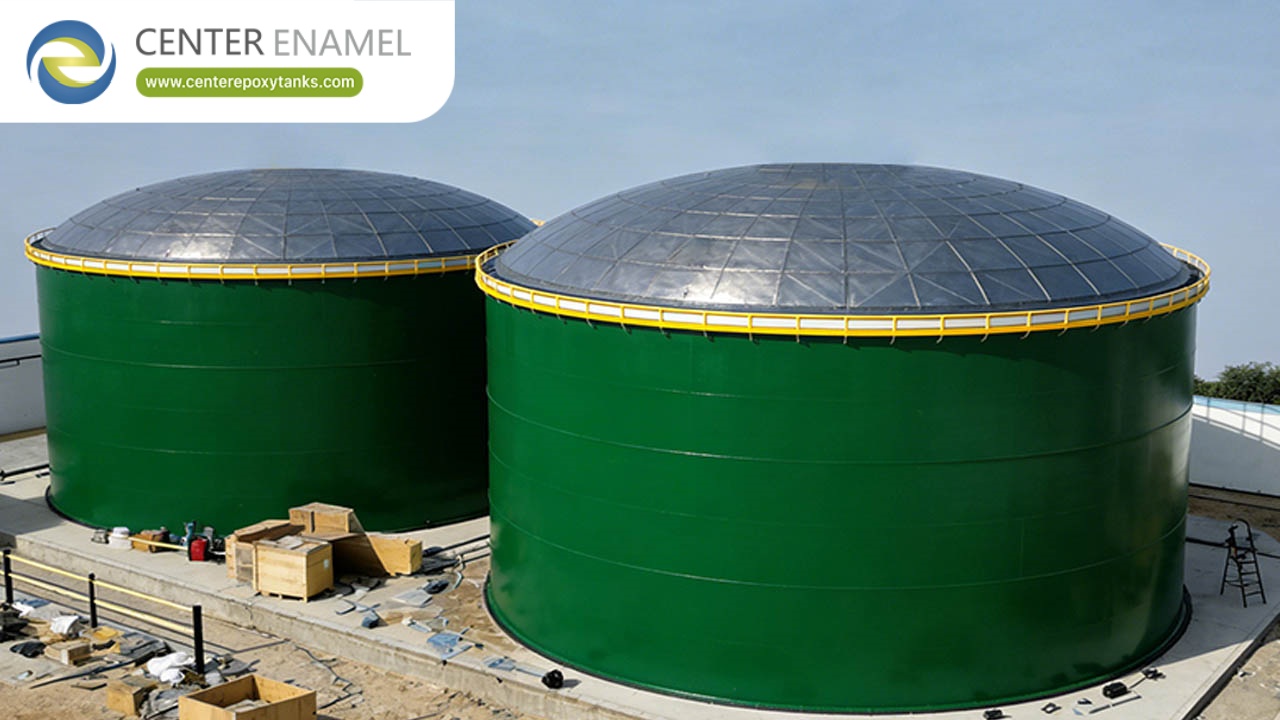
Aluminum Dome Roofs For Biogas And Anaerobic Digestion Tanks
Anaerobic digestion tanks produce biogas (mostly methane) and odor-bearing atmospheres that demand a carefully specified cover. Aluminum geodesic domes are used over digesters and biogas holders, but the service carries explosion and corrosion considerations distinct from ordinary water tanks. This article covers how a dome is specified for biogas and AD service.
Why A Dome Over A Digester
A digester needs a sealed, weatherproof cover that contains biogas and resists the sulfide-laden, humid atmosphere. An aluminum dome offers a clear-span sealed cover that avoids the repainting cycles steel would need in that environment.
The dome also provides a mounting surface for gas takeoff, mixers and instruments, and a structure that does not intrude columns into the digestate.
Biogas And Explosion Considerations
Methane in the vapor space is flammable; the cover and its penetrations must suit a potentially explosive atmosphere. This is a system responsibility: gas detection, relief and electrical area classification are part of the digester design, with the dome providing the compatible cover and penetrations.
Aluminum's behavior in such atmospheres is favorable for corrosion, but the dome is not itself the explosion-protection system. Specify the gas-management strategy separately.
Odor And Sulfide Atmosphere
Biogas and digestate release H2S and odor. Aluminum's resistance to sulfide-containing atmospheres is a documented advantage for such covers, with alloy and seals matched to the gas mix.
Seal integrity matters doubly here: a leaking seam releases odor and gas. Silicone gaskets that resist UV and temperature cycling help keep the cover tight over time.
Gas Takeoff And Penetrations
Gas offtake, safety relief, mixers and level instruments all penetrate the dome. Each is a reinforced opening with a capacity check, and the schedule must map them so the dome is built for the process, not modified for it.
Gas takeoff location affects mixing and gas quality; coordinate penetration placement with the process design rather than defaulting to a convenient node.
Pressure And Relief
A digester operates under a controlled pressure band. The dome must accommodate the gas-holder pressure and any relief device without distress. Relief strategy is specified by the process safety design; the dome provides the compatible cover and penetration.
For a double-membrane gas holder, the dome is a different solution (rigid cover vs flexible membrane); the choice depends on the gas-storage concept, not just the tank.
Biogas dome — spec focuses
Focus | Requirement | Why |
Atmosphere | CH4/H2S class | Explosion + corrosion |
Alloy/seal | Sulfide-resistant | AD environment |
Penetrations | Gas, mixer, instruments | Reinforced |
Relief | Coordinated | Pressure band |
Interface | Galvanic isolation | Steel rim |
Corrosion Detailing
Beyond alloy choice, manage the steel interface (galvanic isolation) and keep seams drained so sulfide-laden condensate does not dwell at details. Corrosion resistance here is a system property.
Inspection should target penetrations and interfaces where condensate and gas meet the structure — the same details a general dome inspection tracks, with extra attention to the AD atmosphere.
Comparison To Membrane Covers
Flexible membrane roofs are common for gas holders; a rigid aluminum dome is an alternative where a walkable, penetration-rich, low-maintenance rigid cover is preferred. The two are not interchangeable and should be compared on the gas-storage concept.
For tanks needing both gas collection and frequent, loaded penetrations (mixers, instruments), a rigid dome can be the more serviceable choice.
Installation Over An Active Digester
Working over a live, gas-bearing tank demands confined-space and hot-work controls and isolation of the gas space during assembly. The method statement is part of the scope, not an afterthought.
Because the tank is active, partial-service or gas-freeing plans should be agreed before dome assembly begins.
Acceptance For Biogas Service
Accept by document review (certs, calculations, gas-strategy coordination) and physical checks (fit-up, torque, seal continuity, penetration reinforcement). The dome is judged as part of the digester system.
Retain the as-built and QA records with the digester file so future inspectors see the cover's basis.
Common Specification Gaps
Omitting the gas-atmosphere classification, carrying over a water-tank seal spec, or treating ventilation as an afterthought. Each gap undermines a cover meant for a hazardous, corrosive service.
Specify the atmosphere, the alloy/seal, the penetration schedule and the relief coordination so the dome is fit for biogas, not just for 'a tank.'
Dome vs membrane gas holder
Aspect | Aluminum dome | Membrane |
Cover | Rigid, walkable | Flexible |
Penetrations | Many, loaded | Limited |
Maintenance | Low | Membrane wear |
Use | Digester cover | Gas storage |
When A Dome Fits Biogas Service
Choose a rigid aluminum dome when you need a walkable, penetration-rich, low-maintenance sealed cover over a digester and the gas-management system is designed around it. For pure gas storage, compare against membrane holders on the storage concept.
The decision should follow the process design, with the dome specified to match the actual atmosphere and pressures.
Commissioning And Gas-Tightness
Before a digester dome enters service, a gas-tightness check confirms seals and penetrations hold under the operating pressure band. This step validates the cover as part of the gas system, not just as a structure.
Record the test pressure and result with the as-built file. A documented gas-tightness baseline is what later inspections measure drift against.
Frequently Asked Questions
Q: Can an aluminum dome cover a biogas digester?
A: Yes — as a sealed, penetration-rich rigid cover resistant to the sulfide atmosphere, provided the gas-management and relief strategy is designed separately.
Q: Is the dome the explosion protection?
A: No. Gas detection, relief and area classification are part of the digester design; the dome provides the compatible cover and penetrations.
Q: Why is aluminum suited to AD atmospheres?
A: Its resistance to sulfide-containing, humid atmospheres is a documented advantage, with alloy and seals matched to the gas mix.
Q: How do gas takeoff and mixers penetrate the dome?
A: As reinforced openings in the penetration schedule, with capacity checks and placement coordinated to the process design.
Q: Dome or membrane gas holder?
A: Compare on the gas-storage concept: rigid dome for a walkable, penetration-rich digester cover; membrane for pure flexible gas storage.
Q: What inspection matters most for AD domes?
A: Penetrations and interfaces where condensate and gas meet the structure, with extra attention to the corrosive atmosphere.
Conclusion
Aluminum geodesic dome roofs are selected, designed and maintained as structural systems, not as standalone covers. The articles in this batch treat each angle — from OEM sourcing and tender specification to retrofit, corrosion, loads, accessories, applications and manufacturing — as a distinct user task with its own evidence and boundaries.
Work With Center Enamel
Center Enamel (Shijiazhuang Zhengzhong Technology Co., Ltd) has manufactured bolted and welded storage tanks since 2008 from its base in Shijiazhuang, China. The company produces GFS (Glass-Fused-to-Steel), FBE-coated, galvanized, stainless-steel and welded tanks, aluminum geodesic dome roofs, floating roofs, pressure vessels, and wastewater and biogas engineering packages. Its quality system carries ISO 9001, and aluminum dome roofs are designed to AWWA D108, API 650, ADM 2015, ASCE 7-10 and IBC 2012. With an installed base of 30,000+ projects and 300,000 enamel steel plates produced annually, Center Enamel supports drinking-water, municipal, industrial, petroleum, dry-bulk and architectural applications.
Specifying a dome over a digester or biogas tank? Contact Center Enamel to match alloy, seals and penetration schedule to the CH4/H2S atmosphere and your gas-management design.
Project Case Reference
Project reference (B-grade, delivered with aluminum dome roof): Saudi Arabia Municipal wastewater — GFS bolted tank, Ø24.06 x 4.85 m (H), 5 tanks, 2023. The dome roof was supplied as the cover solution for this verified tank project.


