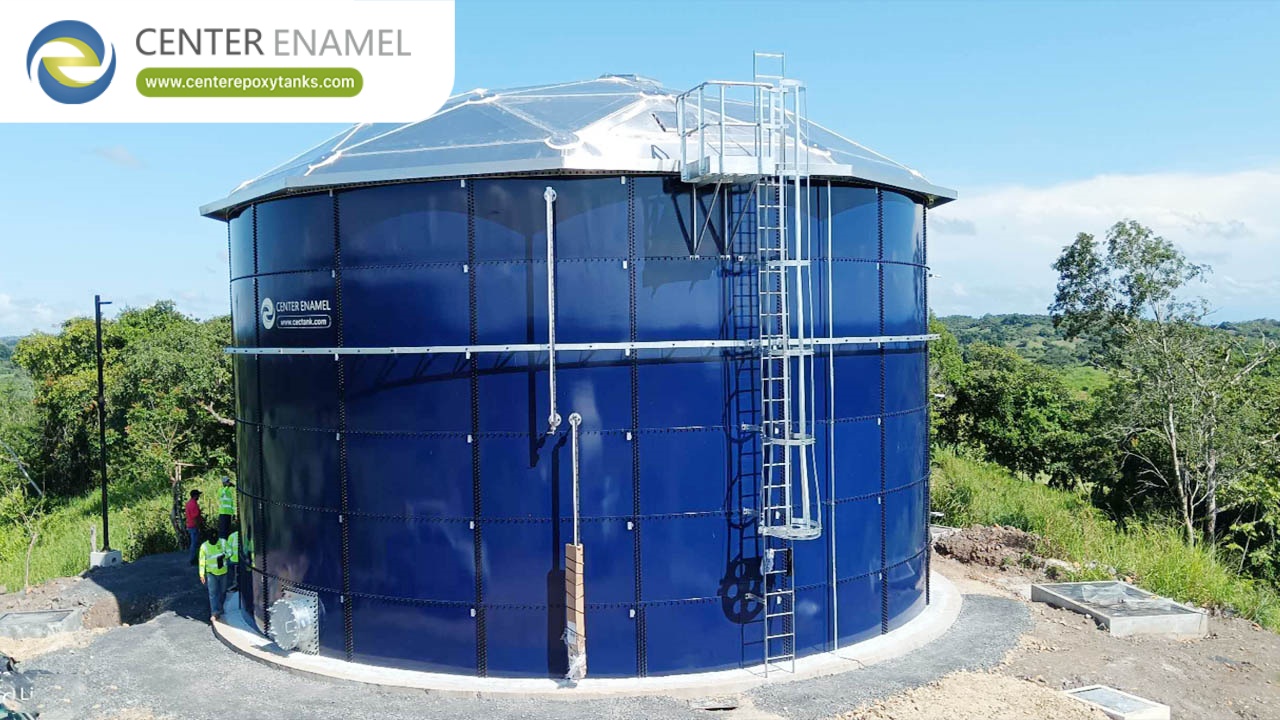
Aluminum Dome Roof Ventilation And Pressure-Vacuum Protection
A sealed aluminum geodesic dome changes how a tank breathes. Ventilation and pressure-vacuum protection are not accessories bolted on at the end — they are part of the cover design, especially for flammable or vapor-bearing service. This article covers vent sizing, manways and the considerations that keep a domed tank safe and compliant.
A Sealed Dome Changes Breathing
An open or cone-vented tank breathes to atmosphere freely; a sealed dome encloses the vapor space and must be deliberately vented. Ignoring this when adding a dome can create over-pressure or vacuum that the old arrangement never saw.
Ventilation and pressure-vacuum (P/V) protection are therefore designed into the dome's penetration schedule, not added after the fact.
Pressure-Vacuum Vents
P/V vents relieve modest over-pressure and admit air on vacuum so the tank and dome are not stressed by breathing. They are sized to the tank's in/out flow and thermal breathing, per the applicable standard (API 650 appendix for fixed roofs where applicable).
The vent setting must suit the tank and dome rating. A vent set too high defeats protection; too low chatters and wears. Sizing is a calculation, not a guess.
Manways And Access
Manways in the dome provide safe access for inspection and entry, and are themselves penetrations that must be reinforced and sealed. Location should suit the tank's access plan and not conflict with structural nodes.
A manway is also a controlled opening for confined-space entry; its placement affects how inspection and cleaning are performed safely over the dome's life.
Flammable And Hydrocarbon Service
For fuel or diesel storage, vapor management and ignition control matter. The dome provides a sealed cover, but ventilation, vent setting and any flame-arresting or deflection details must match the service and the relevant standard.
A large-span dome over a diesel or petroleum tank (such as cover-only references up to the 72 m class) still requires the tank's vapor and fire-protection systems designed for that service; the dome is the cover, not the hazard control alone.
Vent Sizing Basis
Sizing considers maximum fill rate (displacement), maximum withdrawal (vacuum), and thermal breathing, with the vent area set so pressure stays within the tank and dome limits. Higher flows need larger or multiple vents.
The dome's penetration schedule records each vent with diameter and setting so the as-built matches the calculation.
Ventilation design inputs
Input | Drives | Deliverable |
Fill/withdraw rate | Displacement flow | Vent area |
Thermal breathing | Pressure range | Vent setting |
Service | Hazard class | Relief strategy |
Standard | API 650 etc. | Compliance |
Integration With Tank Systems
Vents, manways, mixers and instruments share the dome. Coordination avoids conflicting penetrations and ensures each is reinforced. The dome design confirms local capacity at every opening.
For tanks with existing ventilation, retrofitting a dome means re-checking the old vents against the new enclosed condition rather than carrying them over unverified.
Explosion And Relief Considerations
Where the service warrants, relief and any flame or deflagration protection are specified by the tank/system design, not by the dome alone. The dome must accommodate the relief device without compromising its structure.
This is a system responsibility: the dome provides the cover and penetrations; the tank's process safety design provides the relief strategy.
Installation Of Ventilation Penetrations
During assembly, vents and manways are set at their designed nodes with reinforced collars and sealed gaskets. Torque and seal continuity are checked at acceptance.
Field relocation of a vent after assembly should be avoided; moving a penetration off its reinforced location removes local capacity.
Inspection Of Vents And Seals
Vents are inspected for blockage, seat condition and correct setting; seals at penetrations are checked for continuity. A stuck or blocked vent is a safety item, not cosmetic.
Include vents in the dome inspection scope so breathing protection is verified on the same cadence as the structure.
Common Mistakes
Sealing a tank with a dome but keeping vents sized for the open condition; placing vents at unreinforced nodes; and treating ventilation as an afterthought. Each can undermine the cover's purpose.
The fix is to design ventilation into the dome from the start, with the penetration schedule and calculations as contract deliverables.
Dome penetrations — ventilation
Penetration | Reinforced? | Check |
P/V vent | Yes | Setting + seat |
Manway | Yes | Seal + access |
Instrument | Yes | Local capacity |
Mixer | Yes | Load + collar |
Designing Ventilation In
Specify the service, the flow rates, the thermal breathing, and the standard; require a vent schedule with sizes and settings and a dome penetration plan that reinforces each opening. That turns ventilation from a risk into a documented part of the cover.
The result is a sealed dome that still breathes correctly — protected against both pressure and vacuum across its service life.
Commissioning Ventilation
At start-up, verify each vent opens at its set pressure and that the dome shows no distress under the tank's first fill/withdraw cycle. Commissioning confirms the ventilation design, not just the structure.
Record the as-commissioned vent settings and include them in the dome file. Later inspections compare against this baseline rather than against an assumed value.
Frequently Asked Questions
Q: Does a sealed dome need ventilation?
A: Yes. A sealed dome encloses the vapor space and must be deliberately vented; otherwise pressure or vacuum builds that the old open arrangement never saw.
Q: How are pressure-vacuum vents sized?
A: From fill/withdraw displacement, vacuum on withdrawal, and thermal breathing, set so pressure stays within tank and dome limits per the applicable standard.
Q: Are dome manways structural penetrations?
A: Yes — they must be reinforced and sealed, and located to avoid conflicting with structural nodes.
Q: Does a dome over fuel change fire protection?
A: The dome is the cover; the tank's vapor and fire-protection systems must still be designed for the flammable service.
Q: Why re-check vents when retrofitting a dome?
A: The new enclosed condition changes breathing versus the old open tank, so existing vents must be re-verified, not carried over.
Q: What goes in the vent schedule?
A: Each vent with diameter, setting and location, tied to the sizing calculation and the dome penetration plan.
Conclusion
Aluminum geodesic dome roofs are selected, designed and maintained as structural systems, not as standalone covers. The articles in this batch treat each angle — from OEM sourcing and tender specification to retrofit, corrosion, loads, accessories, applications and manufacturing — as a distinct user task with its own evidence and boundaries.
Work With Center Enamel
Center Enamel (Shijiazhuang Zhengzhong Technology Co., Ltd) has manufactured bolted and welded storage tanks since 2008 from its base in Shijiazhuang, China. The company produces GFS (Glass-Fused-to-Steel), FBE-coated, galvanized, stainless-steel and welded tanks, aluminum geodesic dome roofs, floating roofs, pressure vessels, and wastewater and biogas engineering packages. Its quality system carries ISO 9001, and aluminum dome roofs are designed to AWWA D108, API 650, ADM 2015, ASCE 7-10 and IBC 2012. With an installed base of 30,000+ projects and 300,000 enamel steel plates produced annually, Center Enamel supports drinking-water, municipal, industrial, petroleum, dry-bulk and architectural applications.
Designing a sealed dome over a breathing or flammable tank? Contact Center Enamel to integrate vent sizing, manways and reinforcement into the dome penetration plan from the start.
Project Case Reference
Reference (cover-only, not a verified tank case): Mozambique Diesel / petroleum (cover-only reference) — aluminum dome roof, Ø72.39 m diameter. This is a dome-cover reference with diameter and application on record; it is disclosed as a C-grade reference and is not cited as a full tank-project delivery.


