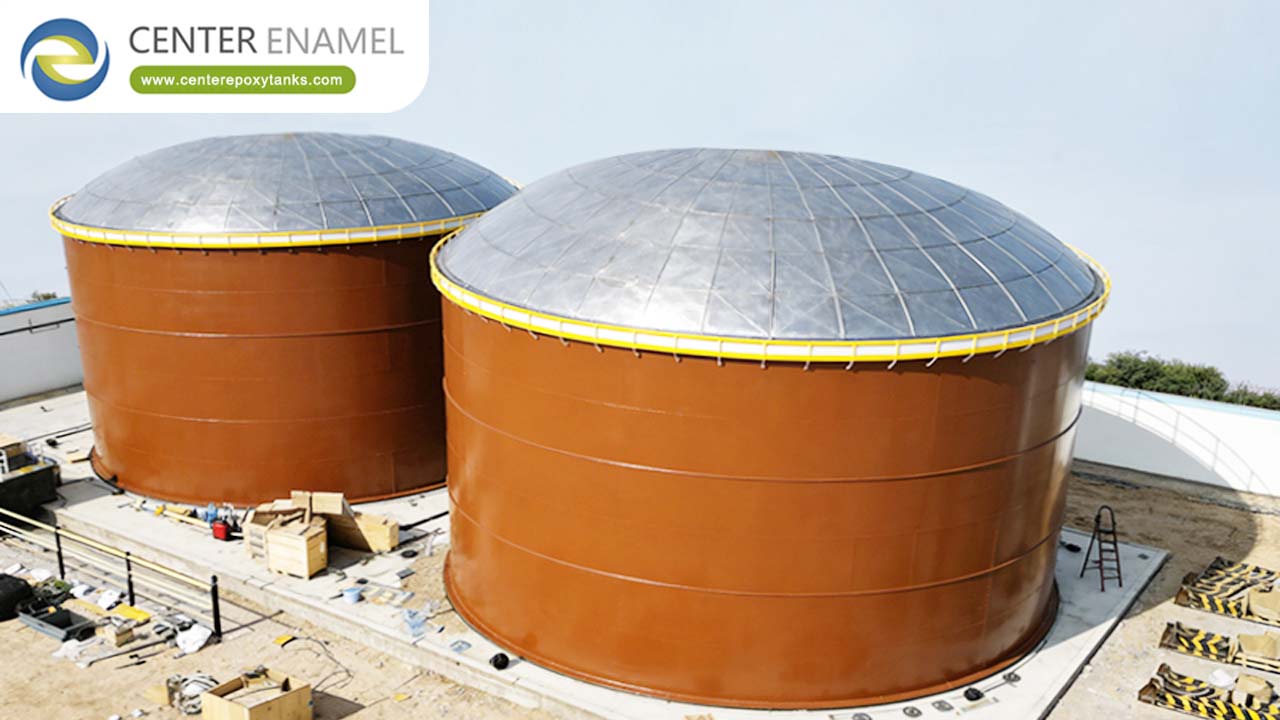
Aluminum Dome Roofs And API 650: Where The Standard Applies
Engineers often ask whether an aluminum dome must comply with API 650. The honest answer is nuanced: API 650 governs the steel tank, while the aluminum dome is typically covered by AWWA D108 with API 650 referenced for interface loads. This article clarifies the boundary so you specify the right standard at the right place.
The two standards and their scopes
API 650 is the welded steel tank standard — shell, bottom, and in its Annex, certain roof types. AWWA D108 is the standard specifically for aluminum domes and roof structures. The dome is an aluminum structure; its primary design reference is D108, which itself coordinates with the loads and interface defined by the tank standard.
Where API 650 enters
API 650 matters at the interface: the tank top ring that the dome sits on, the design loads the tank must carry, and any vapor-space or venting context the tank standard sets. The dome designer uses those interface conditions; the dome itself is analyzed per D108.
Annex coverage of aluminum domes
API 650's Annex covers some aluminum dome configurations, but many projects cite D108 as the dedicated aluminum-dome standard and use API 650 for the supporting tank and loads. The precise split should be stated in the specification, not left implicit.
Loads the dome must satisfy
The dome is designed for gravity, wind, snow, the specified live load and the pressure conditions of the tank. These load cases originate from the project's geographic and process data and are applied per D108 with the tank interface per API 650.
What the specifier should verify
Confirm which standard governs the dome (usually D108), which governs the tank (API 650), and that the interface loads are explicitly transferred. A dome 'to API 650' with no D108 reference leaves the aluminum structure's own criteria undefined.
Standard boundary table
Element | Governing standard | Note |
Steel tank shell/bottom | API 650 | Tank structure |
Aluminum dome | AWWA D108 | Aluminum structure |
Interface loads | API 650 (used by D108) | Top-ring condition |
Venting context | API 2000 / API 650 | Separate |
Common misconceptions
The frequent error is assuming one standard covers everything. The steel tank and the aluminum dome are different materials with different standards; the specification must name both and the linkage between them.
Geographic and jurisdictional factors
Local authorities may adopt API 650, AWWA, or national equivalents (e.g., EN codes in Europe). The governing codes should be listed for the project, and the dome supplier should show conformance to the applicable set.
Documentation to request
Ask for the dome's D108 compliance statement, the load cases applied, and the interface calculation with the tank top ring. That package answers the API 650 question concretely.
Relationship to other codes
ASCE 7-10 (loads), IBC 2012 and ADM 2015 (aluminum design) also feed the dome calculation. API 650 is one input among several, not the whole story.
Summary
API 650 governs the tank; AWWA D108 governs the aluminum dome; the two meet at the top ring. Specify both and verify the interface, and the code question is settled.
What to write in the specification
The specification should name AWWA D108 for the aluminum dome and API 650 for the steel tank, then state the interface: the top-ring condition and the loads the dome imposes on it.
Leaving the standard implicit forces the supplier to assume, and assumptions about which code governs the aluminum structure are exactly where errors creep in.
Jurisdictional adoptions
Authorities adopt standards differently: some follow API 650 directly, some reference AWWA, others apply EN codes in Europe. The project's applicable set should be listed so the dome supplier shows conformance to the right one.
A dome 'built to international standards' without naming them cannot be verified against the project's jurisdiction.
Documentation to request
Ask for the D108 compliance statement, the load cases applied (gravity, wind, snow, live, pressure), and the top-ring interface calculation. Together these answer the API 650 question concretely.
Without those three documents, 'compliant' is a claim; with them, it is evidence.
Common audit finding
The usual gap is a dome specified 'to API 650' with no D108 reference, leaving the aluminum structure's own criteria undefined. Naming both standards closes that gap.
Link to load cases
The dome's load cases — gravity, wind, snow, live, pressure — originate from the project and are applied per D108 with the tank interface per API 650. The case list is the audit trail.
Designer responsibility
The dome designer owns the aluminum structure's analysis under D108 and the transfer of interface loads to the tank. The tank designer owns the shell and the top ring that receives those loads. The specification makes that division explicit so neither side assumes the other's check.
Owner verification
The owner verifies by requesting the D108 compliance statement, the applied load cases and the interface calculation, then confirming they reference the same tank standard. That three-document package is the practical proof of code compliance; without it, the claim is unverifiable.
Frequently Asked Questions
Q: Must an aluminum dome comply with API 650?
A: The dome itself is typically governed by AWWA D108; API 650 governs the steel tank and the interface loads.
Q: Does API 650 cover aluminum domes?
A: It has Annex coverage for some configurations, but D108 is the dedicated aluminum-dome standard.
Q: Where do the two standards meet?
A: At the tank top ring, where interface loads are transferred from dome to shell.
Q: What should a specifier verify?
A: D108 compliance for the dome, API 650 for the tank, and an explicit interface load calculation.
Q: Are other codes involved?
A: Yes — ASCE 7-10, IBC 2012, ADM 2015 and local adoptions also apply.
Q: What documents should I request?
A: D108 compliance statement, applied load cases, and the top-ring interface calculation.
Conclusion
API 650 and AWWA D108 are complementary, not competing: one for the steel tank, one for the aluminum dome, linked at the top ring. Name both in the specification and verify the interface, and the standard question is answered with evidence rather than assumption.
Project Reference And Honest Disclosure
Evidence note: the verified case library contains aluminum-dome-roof deliveries only on potable-water, wastewater and desalination tanks. No petroleum, chemical, gas or LNG project with an aluminum dome roof is on file. This article is therefore based on general aluminum-dome engineering and applicable codes, and does not present a project case for this application.
Work With Center Enamel
Center Enamel, established in 2008 and based in Shijiazhuang, China, manufactures glass-fused-to-steel (GFS), epoxy-coated, galvanized, stainless steel and welded storage tanks, aluminum geodesic dome roofs, floating roofs, pressure vessels and wastewater and biogas engineering packages. Its production system is certified to ISO 9001, and its tanks and coatings are validated against NSF/ANSI 61, WRAS, FM and CE (EN 1090) where applicable. The company has delivered more than 30,000 tank and enclosure projects across potable water, wastewater, fuel, chemical and dry-bulk applications.
If you are writing a dome specification, we can provide the D108 compliance statement and the interface load summary referenced to your tank standard.
Sources And Further Reading
AWWA D108, Standard for Aluminum Domes and Roof Structures.
API 650, Welded Steel Tanks for Oil Storage (tank and interface context).
ADM 2015 (Aluminum Design Manual) and ASCE 7-10 for load basis.


