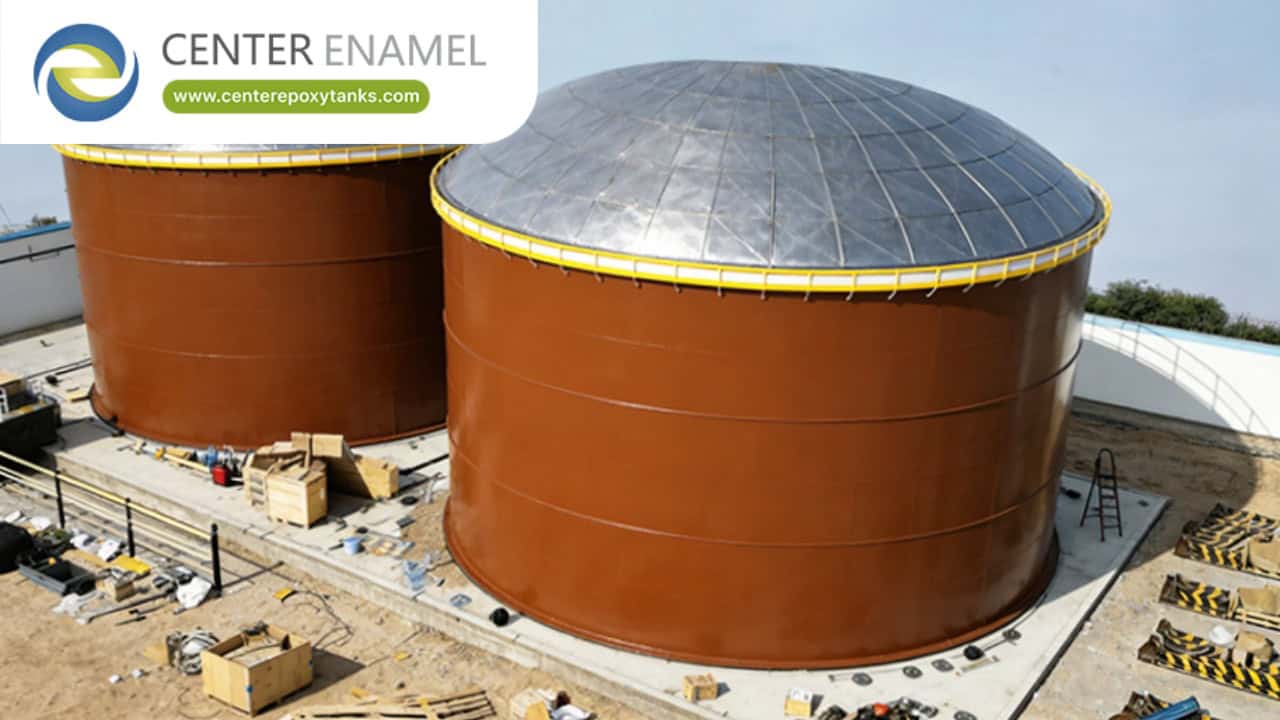
Aluminum Dome Roof Vapor Emission Control: Enclosure, Blanket Gas And Compliance
An aluminum dome can sharply cut tank vapor emissions by fully enclosing the liquid surface. This article focuses on the emissions-compliance angle — how the enclosure works, how it pairs with blanket gas and vapor recovery, and where it stops short of being a pressure vessel.
Enclosure as the first control
The single biggest emission source from a open or weakly-covered tank is the exposed liquid surface. A geodesic dome encloses that surface completely, so vapor has nowhere to escape except through designed openings. Enclosure is the foundation; everything else builds on it.
Blanket gas and the dome
Many hydrocarbon tanks use an inert blanket gas above the liquid to suppress vapor formation and oxidation. The dome provides the sealed volume that holds the blanket. The dome does not generate the gas; it maintains the space where the gas works.
Synergy with vapor recovery
Where vapor recovery or destruction is required, the dome's sealed vapor space is collected at the controlled vents and routed to recovery or flare. A poorly sealed alternative roof would dilute the stream and leak around the edges; the dome's tight envelope keeps the captured fraction high.
Emissions vs pressure: different questions
This article addresses emissions. Pressure and vacuum protection is a related but separate function (covered in the ventilation and pressure-protection article). A dome supports both, but the emission case is about containment and capture efficiency, not relief sizing.
What the dome does NOT do
An aluminum dome is not a pressure vessel and does not by itself meet a combustion or explosion-protection standard. It is the enclosure; the relief devices, detection and recovery remain separate engineered systems.
Emission-control element table
Element | Role | Dome contribution |
Surface enclosure | Stops open evaporation | Full sealed cover |
Blanket gas | Suppresses vapor | Holds the sealed space |
Vapor recovery | Captures stream | Tight envelope raises capture |
Relief / detection | Safety | Separate systems |
Regulatory framing
Emissions limits are set locally (EPA, EU IED, regional agencies). The dome is a physical enabler; compliance is demonstrated by measurement and the supporting systems, not by the dome alone.
Measurement and verification
Emission claims should be backed by a measurement method accepted by the regulator. The dome makes a high-capture envelope possible; the credit is claimed through monitoring, not assumed.
Comparison with alternatives
Versus an open tank or a loosely-fitted roof, the dome's advantage is the continuous sealed surface. Versus a fixed cone roof, the dome adds self-supporting clear span without internal columns that could disrupt vapor space or access.
Specification pointers
State the emission limit, the blanket gas if any, the recovery interface, and the measurement method. The dome is then specified to support those, with sealing grades matched to the vapor.
Summary
For vapor emission control the aluminum dome is the enclosure that makes capture and blanket gas effective. Pair it with the right recovery and relief systems and the emission win is real and measurable.
Measuring capture efficiency
Emission credit depends on measurement, not assumption. The regulator's accepted method quantifies what the enclosed, collected stream actually captures; the dome makes a high-capture envelope possible, the measurement proves it.
Specify the measurement method up front so the enclosure and the recovery interface are designed to be measurable, rather than discovering later that the geometry defeats the test.
Blanket gas and the dome envelope
Inert blanket gas suppresses vapor formation and oxidation above the liquid. The dome's job is to hold that sealed space so the blanket is effective and is not diluted by air leaks at a weak roof.
The blanket system and the dome are designed together: the dome provides the envelope, the blanket system provides the gas and its control. One without the other loses much of the benefit.
Emission vs safety boundary
A sealed dome is not a relief device. Pressure-vacuum relief, gas detection and fire protection remain separate engineered systems that connect through the dome's controlled openings.
Confusing emission control with pressure protection leads to under-specified safety; keeping the two functions distinct gives each the attention it needs.
Regulatory variability
Emission limits and accepted measurement methods differ by jurisdiction; the dome is the physical enabler, but the credit is claimed through the local regulator's method, not by the dome alone.
Monitoring interface
The dome's controlled vents are where monitoring connects. Designing the vents for the measurement method up front avoids retrofitting awkward sampling points later.
Emission control versus open tanks
An open or weakly-covered tank loses vapor across the whole surface continuously; the dome converts that diffuse loss into a captured, measurable stream. The difference is not marginal for volatile liquids, where surface evaporation dominates the emission inventory. Enclosure is therefore the single highest-leverage control, before any recovery hardware is considered.
Cost of uncontrolled leaks
Leaks around a poor roof are both emission and product loss; for valuable or regulated streams that loss is recurring and sometimes penalized. A tight aluminum envelope turns a chronic loss into a controlled, recoverable stream, which is why enclosure leads the abatement hierarchy rather than following it.
Frequently Asked Questions
Q: How does a dome control vapor emissions?
A: By fully enclosing the liquid surface so vapor escapes only through designed, collectable openings.
Q: Does the dome replace vapor recovery?
A: No. It provides the sealed envelope; recovery or destruction remains a separate system.
Q: Is a dome a pressure vessel?
A: No. It is an enclosure; relief, detection and recovery are separate engineered safety systems.
Q: Does it work with blanket gas?
A: Yes — the dome holds the sealed space where inert blanket gas suppresses vapor.
Q: Can emissions be claimed without measurement?
A: No. Compliance is shown by an accepted measurement method, not assumed from the dome.
Q: How does it compare to a fixed cone roof?
A: Both enclose; the dome adds clear span without internal columns that disrupt vapor space.
Conclusion
An aluminum geodesic dome is a powerful emission-control enabler because it encloses the surface completely and supports blanket gas and recovery. Treat it as the enclosure within a measured, regulated system — not as a standalone compliance device.
Project Reference And Honest Disclosure
Evidence note: the verified case library contains aluminum-dome-roof deliveries only on potable-water, wastewater and desalination tanks. No petroleum, chemical, gas or LNG project with an aluminum dome roof is on file. This article is therefore based on general aluminum-dome engineering and applicable codes, and does not present a project case for this application.
Work With Center Enamel
Center Enamel, established in 2008 and based in Shijiazhuang, China, manufactures glass-fused-to-steel (GFS), epoxy-coated, galvanized, stainless steel and welded storage tanks, aluminum geodesic dome roofs, floating roofs, pressure vessels and wastewater and biogas engineering packages. Its production system is certified to ISO 9001, and its tanks and coatings are validated against NSF/ANSI 61, WRAS, FM and CE (EN 1090) where applicable. The company has delivered more than 30,000 tank and enclosure projects across potable water, wastewater, fuel, chemical and dry-bulk applications.
If you are preparing an emissions-control scope, share the applicable limit and recovery interface and we can show how a dome envelope supports the capture strategy.
Sources And Further Reading
AWWA D108, Standard for Aluminum Domes and Roof Structures.
API 650 / API 2000 context for tank vapor-space and venting (pressure side; emission capture is supplementary).
Relevant local emission regulations (EPA, EU IED, or regional agency) for the specific site.


