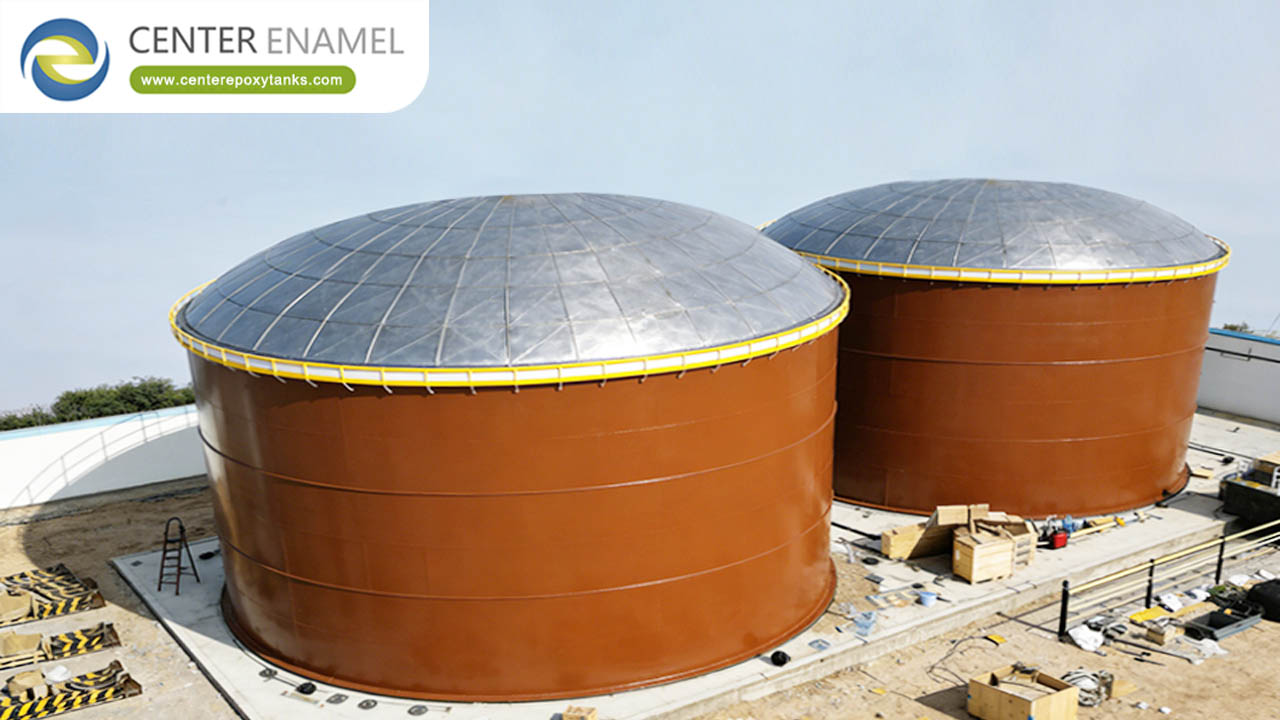
Aluminum Dome Roof Sealing System: Gaskets, Seam Sealants And Leak-Path Design
A sealed aluminum dome is only as tight as its joints. This article explains how the sealing system works at panel seams, the perimeter compression ring and every penetration, so you can specify a dome whose leak path is understood rather than assumed.
What the sealing system actually seals
An aluminum geodesic dome is assembled from factory-cut panels joined at node hubs. The sealing system has three jobs: keep rain and snow out, limit vapor escape from the tank, and stop external air from entering where it would disturb the tank's breathing or vapor-control design. None of these is achieved by the aluminum alone; it is the gasket and sealant at every joint that does the work.
Specifiers often ask for a 'watertight dome' without stating the target. Rain tightness, vapor containment and pressure integrity are different requirements with different details. A dome that sheds rain perfectly can still pass vapor if the seam sealant or perimeter gasket is wrong for the service.
Panel-seam gaskets and seam sealant
At each panel edge a continuous gasket sits between the two aluminum surfaces before the batten bar or bolt compresses them. The gasket grade must suit temperature, UV and the tank atmosphere. For potable water the gasket is selected to be inert and potable-compatible; for hydrocarbon or chemical service the gasket and any sealant must resist the specific vapor.
A bead of compatible sealant is typically applied at the seam as a second barrier. The sealant is not the primary structure — the bolted joint carries load — but it closes the microscopic path the gasket alone might leave.
Perimeter compression seal at the rim
Where the dome meets the tank top ring, a perimeter seal compresses against the steel. This is the most movement-prone joint because the tank and dome expand, contract and settle at different rates. The seal must accommodate that movement without losing contact.
A common failure is a perimeter seal specified once and never re-checked after settlement. The seal design should state its allowable movement and the inspection that confirms it still seats.
Penetrations: the real leak risks
Manways, vents, louvers, hatches and instrument penetrations break the shell. Each needs its own gasket and a compression detail that survives cycling. The accessory schedule should list every penetration with its seal grade so a future crew fits the right part.
Sealing vs ventilation: they must be coordinated
A dome that is well sealed still needs controlled openings for tank breathing and vapor management. Sealing and ventilation are not opposites; the dome is sealed everywhere except at designed openings. Confusing the two leads to either a stuffy tank or an uncontrolled vapor path.
Gasket and sealant selection table
Location | Function | Selection driver |
Panel seam | Rain + vapor barrier | Temperature, UV, tank atmosphere, potable compatibility |
Perimeter | Movement joint | Settlement and thermal movement allowance |
Penetration | Local seal | Media, cycling, access frequency |
Verification and leak testing
Sealing claims should be verifiable: witness the seam compression at installation, confirm gasket grade against the schedule, and where relevant perform a soap-bubble or pressure-decay check on the sealed envelope. A dome whose sealing is undocumented is a dome whose sealing is unknown.
Common mistakes
The most frequent errors are using one gasket grade for every service, ignoring perimeter movement, and treating sealant as structure. Each is avoidable with a written sealing specification tied to the tank's actual atmosphere.
When no project case applies
Sealing details are component-level engineering; the verified case library shows domes delivered on water and wastewater tanks, which validates the assembly method but not a hydrocarbon-specific gasket in service.
Specification checklist
State the target (rain / vapor / pressure), name the gasket grade per location, define perimeter movement allowance, list every penetration with its seal, and require a leak-check method. That checklist turns 'sealed dome' from a slogan into a verifiable scope.
Summary
The sealing system is the difference between a cover that looks closed and one that is closed. Specify it by location, service and verification, not by a single generic word.
Field verification of the seal
Sealing is only real if witnessed. At installation, confirm the seam gasket is the specified grade and that the batten-bar compression seats it uniformly; a seam that looks closed but is not compressed will leak vapor or rain.
Keep a record of the actual gasket grade installed at each joint. When a future inspection finds a weep or a loose seam, that record tells the crew which grade to fit rather than guessing from a generic 'aluminum dome gasket' label.
Sealing in the maintenance plan
Sealing should enter the maintenance plan as a named item, not as part of a vague 'check the roof' task. The plan states the inspection method (visual plus, where relevant, a pressure-decay or bubble check) and the interval.
Spares should be tagged to their location so a replacement gasket matches the service. A maintenance store full of unnamed seals invites the wrong grade being fitted at the worst moment.
The most common specification omission
The usual omission is leaving the gasket grade open, writing only 'sealed aluminum dome'. That single gap forces the supplier to choose, and the choice may not match the tank atmosphere.
Naming the grade per location — seam, perimeter, each penetration — turns a slogan into a verifiable scope and prevents the most frequent real-world sealing failure.
Seal failure modes to expect
The failures worth designing against are a seam gasket fitted at the wrong grade, a perimeter seal that lost contact after settlement, and a penetration gasket that cycled loose. Each is preventable with the grade named and the inspection done.
Spare-parts discipline
Tag every spare to its penetration so a future crew fits the right grade without reverse-engineering the dome. A tagged spare program turns 'sealed dome' from a hope into a maintained state.
Frequently Asked Questions
Q: What seals the seams between aluminum dome panels?
A: A continuous gasket compressed by the batten bar or bolt, backed by a compatible sealant bead at the seam.
Q: Can one gasket grade serve all services?
A: No. Potable, hydrocarbon and chemical atmospheres need different gasket and sealant grades; the schedule should name each.
Q: Why is the perimeter seal critical?
A: It is the most movement-prone joint (settlement, thermal) and must keep contact while the tank and dome move.
Q: Does sealing conflict with tank ventilation?
A: No. The dome is sealed everywhere except designed openings used for controlled breathing and vapor management.
Q: How is dome sealing verified?
A: Witness seam compression, confirm gasket grade against schedule, and use a pressure-decay or bubble check where relevant.
Q: Are penetrations a leak risk?
A: Yes, the highest-risk points; each needs its own gasket and a compression detail that survives cycling.
Conclusion
The aluminum dome sealing system is a location-by-location specification, not a single material. Define the target, name the grade per joint, allow for movement, and verify — then the dome is genuinely sealed rather than merely assembled.
Project Reference And Honest Disclosure
Evidence note: the verified case library contains aluminum-dome-roof deliveries only on potable-water, wastewater and desalination tanks. No petroleum, chemical, gas or LNG project with an aluminum dome roof is on file. This article is therefore based on general aluminum-dome engineering and applicable codes, and does not present a project case for this application.
Work With Center Enamel
Center Enamel, established in 2008 and based in Shijiazhuang, China, manufactures glass-fused-to-steel (GFS), epoxy-coated, galvanized, stainless steel and welded storage tanks, aluminum geodesic dome roofs, floating roofs, pressure vessels and wastewater and biogas engineering packages. Its production system is certified to ISO 9001, and its tanks and coatings are validated against NSF/ANSI 61, WRAS, FM and CE (EN 1090) where applicable. The company has delivered more than 30,000 tank and enclosure projects across potable water, wastewater, fuel, chemical and dry-bulk applications.
If you are specifying a dome and need the sealing schedule matched to your tank atmosphere, share the service conditions and we can outline a grade-by-location specification for review.
Sources And Further Reading
AWWA D108, Standard for Aluminum Domes and Roof Structures (aluminum geodesic dome design and fabrication).
API 650, Welded Steel Tanks for Oil Storage (tank roof and vapor-space context).
Center Enamel product documentation for aluminum geodesic dome roofs and node/batten assembly.


