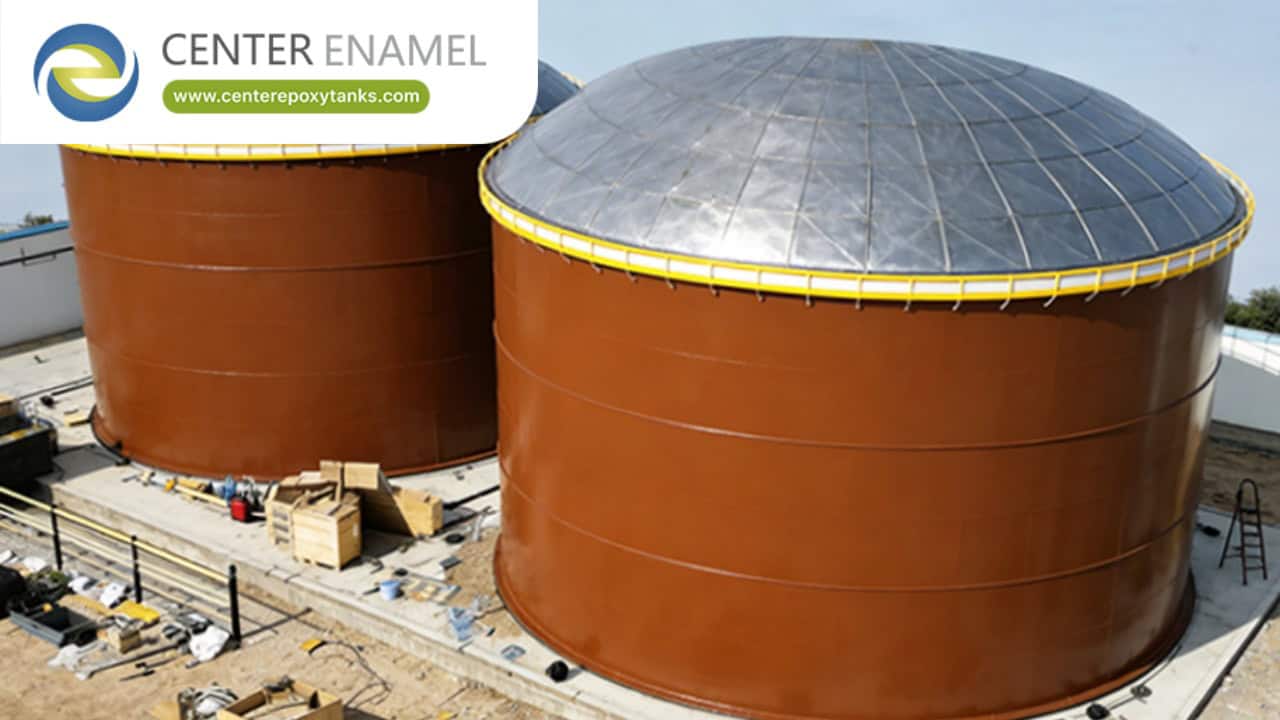
Aluminum Dome Roof vs Steel Fixed Roof
The comparison between an aluminium dome roof and a painted steel fixed roof is usually reduced to a sentence about maintenance: aluminium does not need painting, so it is cheaper over the life of the asset. That sentence is broadly true and it is also incomplete in ways that matter. This article compares the two on the mechanism of degradation, works through what the coating cycle actually costs on a live tank, and is direct about the cases where aluminium is the wrong choice.
Two Different Failure Mechanisms, Not Two Versions of One
A painted steel roof fails by loss of the coating film. The steel substrate is protected only for as long as the coating separates from it, and the sequence is predictable: the coating degrades under ultraviolet exposure, thermal cycling and mechanical wear, the first rust appears at a coating defect, and corrosion then proceeds under the film. Because the film is the only barrier, the protection is only as good as its weakest point, and the useful life of the roof is set by the time to first widespread film breakdown rather than by the time to full section loss.
An aluminium roof fails differently, because aluminium does not need a coating at all. The metal forms a thin, adherent oxide layer on exposure, and this layer is stable and self-repairing in ordinary atmospheric service, which is why aluminium is described as coating-free. That is a real and durable mechanism, and it is the core of the argument in favour of aluminium. But it is not immunity. Aluminium is susceptible to specific forms of attack, and those need to be identified for the actual headspace atmosphere and the actual product rather than assumed away.
The consequence for a specifier is that the comparison is not between two roofs on a single scale. It is between a system whose protection degrades on a cycle and requires access to renew, and a system whose protection is intrinsic to the material and requires access only to inspect.
Where Aluminium Is the Right Answer
Aluminium is generally the better choice where the headspace atmosphere is corrosive, where access for surface preparation and painting is expensive or difficult, and where the tank is large enough that the roof area, and therefore the painting quantity, is significant. Municipal wastewater and industrial process tanks are typical of this class. In a wastewater headspace, anaerobic activity can generate hydrogen sulfide, which condenses on cooler surfaces; the combination of moisture, hydrogen sulfide and oxidising bacteria produces conditions that attack steel through the coating defects faster than a normal atmospheric exposure would.
The second condition is equally important and is regularly ignored in comparisons: the cost of painting is not only the paint. It is the mobilisation, the containment and the access equipment, the surface preparation and the quality control of the coating system, and on a live tank it is the product management and the shutdown that go with getting a crew onto the roof. In many plants the access cost is larger than the coating cost itself.
The third condition is where the material difference compounds. Our own published product material states that aluminium panels are around 60 to 70 percent lighter per square metre than the steel equivalent, and a 2025 third-party market study reports the same order of difference. On a large tank that weight reduction is not just an erection convenience; it is the difference between a roof that can be installed with light equipment and one that cannot.
Where a Coated Steel Roof Is the Better Answer
Aluminium is the wrong answer in three fairly common situations, and a comparison that does not name them is not doing the reader a service. The first is a product that is not compatible with aluminium. Strongly alkaline or strongly acidic service, certain chloride-bearing conditions, and some process streams can attack aluminium. The specific compatibility of the alloy with the actual product, including the worst-case composition and the presence of water, has to be established rather than assumed, because the same alloy that behaves well in one service may not in another.
The second is a situation where the coating on a steel roof is genuinely not a burden. A small tank with a low-volume product, a good coating specification, straightforward access and a long interval between services will carry a steel roof for many years at low cost, and replacing it with aluminium will not repay the change.
The third is a structural situation. Aluminium has a lower modulus than steel, which affects the buckling behaviour of slender members, and it has a lower melting point, which is relevant where a tank might be exposed to a fire scenario. Neither point is disqualifying, but both mean that the material substitution has to be designed rather than assumed, and neither can be resolved by copying a steel roof detail.
Dissimilar Metals: The Detail That Gets Missed
A dome is never aluminium in isolation. It bolts to a steel or glass-fused-to-steel shell ring, it meets steel or stainless fittings, it carries stainless or aluminium fasteners at the nodes, and it interfaces with steel nozzles, platforms and ladders. Each of these joints is a potential galvanic couple in a wet electrolyte, and the anode in that couple is the aluminium.
The practical mitigations are standard and should be specified explicitly rather than assumed. Dissimilar metals should be isolated with a suitable barrier at the point of contact. Fasteners should be of a compatible material or properly coated. Areas where a coating or gasket will become trapped and hold moisture against an aluminium surface should be detailed to drain. And the detail should be recorded on the drawing so that a site assembler reproduces it, because this is exactly the kind of information that is lost between a shop drawing and a site.
A second aluminium-specific detail is surface condition at erection. Aluminium is soft and it marks easily, and a damaged oxide layer on an aluminium surface is a site for later inspection concern. Handling, storage and lifting instructions belong in the erection documentation, and the same applies to the coating of the steel shell ring where the dome bears on it.
The Coating Cycle Costed Properly
Cost element | Steel fixed roof | Aluminium dome roof | Comment |
Material and application labour | Surface preparation, primer, build coats, access equipment | Not applicable to the shell; limited touch-up only | The recurring element that disappears with aluminium |
Access and containment | Scaffolding, edge protection, hot-work and containment controls | Periodic visual inspection with light access | Often the largest element, and frequently excluded from the comparison |
Production impact | Possible shutdown, reduced filling rate or product management around the work | No equivalent shutdown for inspection | The element that usually dominates the real cost |
Structural consequence of stripping | Abrasion and impact damage to the remaining coating and plate during preparation | Not applicable | Each stripping cycle slightly reduces the remaining corrosion allowance |
End-of-life treatment | Coated steel requires separate handling | Aluminium has a well-established recycling route | Relevant to life-cycle assessment and to some site waste policies |
Verification burden | Coating thickness records, holiday testing and surface preparation records | Visual inspection and fastener and seal checks | Documentation obligation transfers rather than disappearing |
The point of this table is not that the steel column is entirely negative. It is that the two columns contain different things, and the elements most often left out of a comparison are the middle two, which are precisely the ones that determine the real cost. When a comparison is written by someone who has not had to arrange a tank entry, the painting looks cheap and the aluminium looks like a premium with little quantified benefit. The benefit is quantifiable, but only if the access and production-impact terms are on the table.
Verified Reference: Five Tanks in a Wastewater Service
The verified project record for Centre Enamel aluminium dome work includes a Saudi Arabian municipal wastewater project recorded in December 2023: five glass-fused-to-steel bolted tanks, each 24.06 m in diameter with a 4.85 m shell height, 11,020 cubic metres in total, with aluminium dome roofs on all five.
What this record supports is straightforward and should be stated precisely: aluminium dome roofs were designed, fabricated, shipped and installed on five glass-fused-to-steel shells in a municipal wastewater service, in an arid climate, as a multi-unit project.
What it does not support should be stated just as precisely. It is not a comparison study. The record contains no paired steel-roof data, no before-and-after condition assessment of any pre-existing roof, no coating-cycle cost, no measured corrosion rate and no service-life figure. It cannot be used to claim that aluminium performed better than steel on that site, only that aluminium domes were specified and delivered there. A supplier who presents a record like this as a head-to-head comparison has overstated what the evidence shows, and the same discipline applies in reverse.
How to Make the Comparison for Your Own Service
The comparison becomes tractable once four inputs are fixed. The headspace atmosphere and the product's worst-case composition, including water content and any hydrogen sulfide, chlorine or ammonia. The marine or industrial exposure class of the site, which drives whether the steel alternative would need a particular coating system and how quickly it degrades. The realistic interval between steel coating renewals on this specific tank, derived from the inspection record rather than from a rule of thumb. And the real cost of accessing the roof for that work on this specific tank.
With those four, the aluminium option can be evaluated on the cost of the alternative avoided and the material risks accepted, and the decision can be made by an engineer rather than by a preference. If the answer is that the tank is small, the coating is sound, the access is easy and the product is not volatile, then the steel roof with a recoating plan is a perfectly good asset and there is no reason to change it.
Case evidence disclosure: the verified project reference for this article is the Saudi Arabia municipal wastewater project (5 units, 24.06 m diameter x 4.85 m height, 11,020 m3 total, glass-fused-to-steel bolted tanks with aluminium dome roofs, recorded December 2023). The record documents the aluminium option as delivered; it contains no paired steel fixed roof data, no coating-cycle cost and no comparative performance measurement, so it is not presented as a head-to-head comparison result.
Conclusion
Aluminium wins against a painted steel roof for the same reason it wins against any other steel roof: it does not need a coating, and the coating cycle on a live tank costs far more than the paint. But it wins only where the corrosion environment justifies it, the product is compatible, and the structure has been designed for the material rather than copied from a steel detail. Fix the atmosphere, the exposure class, the real repainting interval and the real access cost, and the comparison resolves itself. Send us those four inputs and we will work the assessment through with you, including the cases where the steel roof with a recoating plan remains the better answer.
Frequently Asked Questions
Q: Is an aluminium dome roof cheaper than a steel fixed roof?
A: Not on purchase price. The aluminium structure costs more than a coated steel roof, and the case for it rests on the avoided coating cycle and, in many cases, the avoided access and production impact of that work. A 2025 third-party market study reports aluminium domes delivering 25 to 40 percent lower total cost of ownership over a 30-year lifecycle, attributed to eliminated painting and minimal maintenance. Test that figure against your own repainting interval and access cost before relying on it.
Q: Why does aluminium not need a coating?
A: Because aluminium forms a thin, adherent and self-repairing oxide layer on exposure to air, and that layer protects the metal in ordinary atmospheric service. It is a different protection mechanism from a coating film, and it does not degrade and peel in the way a film does, which is why the maintenance regime is inspection rather than renewal. It is not immunity: specific acids, alkalis and chloride conditions can attack aluminium, and product compatibility has to be established.
Q: Does aluminium suffer more corrosion than steel in a wastewater headspace?
A: In a corrosive headspace, the opposite is generally true. Steel relies entirely on its coating film, and corrosion proceeds under the film once it is breached. Aluminium's oxide layer is intrinsic to the metal and is stable in the hydrogen sulfide and moisture conditions typical of a wastewater headspace. Our own published material describes the passive oxide as effectively inert against hydrogen sulfide and sulfuric acid in the sludge tank headspace. The exceptions are the specific chemical conditions that attack aluminium directly.
Q: What happens where the aluminium dome meets the steel shell?
A: That junction is a galvanic couple in the presence of moisture, with the aluminium as the anode. It is handled by isolating dissimilar metals with a suitable barrier, using compatible or properly coated fasteners, detailing trapped-moisture locations to drain, and recording the detail on the fabrication drawing so that it is reproduced on site. Aluminium's lower modulus and lower melting point also mean that the structural detail and the fire scenario need specific attention rather than substitution from a steel precedent.
Q: Is an aluminium dome heavier or lighter than a steel roof?
A: Substantially lighter. Our own published material states that aluminium panels are around 60 to 70 percent lighter per square metre than the steel equivalent, and a 2025 third-party market study reports the same order of difference. That reduction lowers the load on the shell ring and foundation, often removes the need for heavy lifting equipment during installation, and is one of the reasons an aluminium dome can be retrofitted onto an existing shell that a steel roof would not be.
Q: How do I compare the two options without a supplier-provided study?
A: Build the comparison yourself from four inputs: the headspace atmosphere and the product's worst-case composition, the marine or industrial exposure class, the realistic repainting interval taken from the inspection record, and the real cost of accessing the roof for coating work on that tank including any production impact. Those four decide the case, and they are all things you already hold. Be sceptical of any supplied comparison that does not state the repainting interval and the access cost, because those are the two terms that usually make the difference.
Work With Center Enamel
Center Enamel is the trading name of Shijiazhuang Zhengzhong Technology Co., Ltd, established in 2008 and based in Shijiazhuang, Hebei Province, China. The company manufactures glass-fused-to-steel bolted tanks, fusion-bonded epoxy coated tanks, stainless steel and welded steel tanks, pressure vessels, aluminium geodesic dome roofs and floating roof systems. Aluminium dome design work is carried out against AWWA D108, API 650, ADM 2015, ASCE 7-10 and IBC 2012, and the broader product range is covered by ISO 9001, NSF/ANSI 61, CE/EN 1090, ISO 28765, WRAS and FM approvals. The company reports 30,000 installed projects and an annual output of 300,000 enamel steel plates, with technical support delivered through an international distributor network and a stated 24-hour response commitment.
If your project involves tank roofs, floating decks or the shells that carry them, send the tank diameter, shell height, product, operating temperature and site design loads. We will return a preliminary structural concept, the applicable design code basis, and a written scope that separates what is included from what the site contractor must provide.


