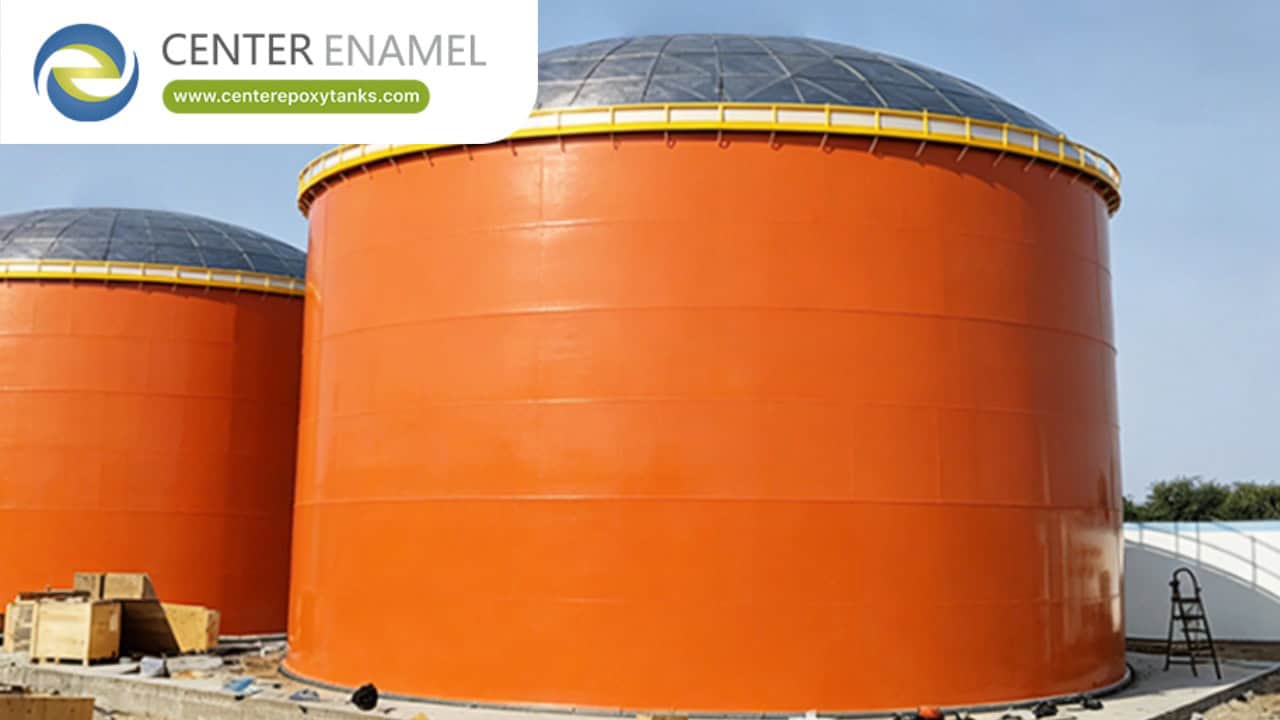
Aluminum Dome Roof for Tank Terminal
At terminal scale the dome stops being a product choice and becomes a zoning problem. A terminal is not one tank repeated: it is a set of operating zones with different loads, different vapour paths and different consequences of failure, and a specification that treats them as uniform will either over-engineer the quiet zones or under-serve the busy ones. This article works through the zones, the four interface points that decide whether a terminal dome actually works in service, and the specific evidence a reviewer should ask to see before signing a terminal specification.
A Terminal Is Three Zones With Different Duties, Not One Repeated Tank
Terminal layouts divide into broadly three zones, and each imposes a different set of constraints on the roof above the tank. The transfer zone, where loading arms and product lines reach the tank, brings dynamic loads, frequent access, hot work potential and a high consequence of vapour release. The service zone, holding day tanks and the tanks that feed the loading lines, has a high turnover rate and therefore a high working-loss exposure. The reserve zone, where the bulk of the site inventory sits, is quiet: the duty is mostly thermal and atmospheric, and the roof is essentially a long-term envelope.
Because the zones differ, they should not share one specification by default. The most common error in terminal dome procurement is to write a single house standard for all tanks and then let the engineering judgment happen in the field, one tank at a time, where it is hardest to audit. A terminal dome specification is better written as a zone matrix with a common structural basis and zone-specific accessory and access requirements.
The Four Interface Points That Decide Whether a Terminal Dome Works
Every terminal dome has four interfaces, and almost all terminal dome disputes come from one of them rather than from the shell itself. The first is the shell attachment: the dome transfers its loads into a ring at the top of the tank shell, so the shell, its ring beam and its foundation must be checked for the transferred load and its eccentricity, not only for the liquid load the tank was originally designed for.
The second interface is the vapour path. A dome seals the tank, which means any vapour that leaves the tank must leave through a defined route. At a terminal that route is usually a common header, and a common header means that the pressure and vacuum conditions at one tank can affect another. The third interface is the accessory set: nozzles, manways, vents, gauge connections, foam chambers and level instruments all have to be penetrated, sealed and thermally accommodated. The fourth is the access and erection route, which at a live terminal is often the binding constraint rather than the structure.
Transfer-Zone Tanks Carry Loads That a Product Catalogue Does Not Show
Catalogues describe a dome by span, material and wind rating. They do not describe the loads a transfer-zone tank sees from a crane set on the tank deck, a gangway that has to land on the shell, a cable route across the roof, or the vibration transmitted from a pump line running nearby. None of these are dramatic individually, and collectively they are why a transfer-zone dome should be specified with an explicit accessory and access schedule rather than a bare structural statement.
Two practical consequences follow. First, the shell ring and the upper shell course should be reviewed for local loads and for fatigue from repeated handling operations, not only for the static dome load. Second, the specification should state which accessories may be carried by the dome structure itself and which must be carried independently by a platform or walkway frame, because that decision changes the fabrication package and the erection sequence. On our own product pages, accessories such as manholes, nozzles, platforms and lightning protection are listed as optional items on the dome, which is the correct way to frame them: they are decisions, not standard content, and each one changes the load path.
A Common Vapour Header Turns a Dome Into Part of a Network
Once several domed tanks share a vapour recovery system, the roof specification stops being a closed-system decision. A dome reduces the vapour volume and the surface temperature of the tank headspace, but it does not by itself specify what happens when the system is pulled down, when a tank is being filled, or when a control valve fails open.
In practice this means the terminal specification should state the design basis for the vapour system that the dome interfaces with, and the dome supply should be required to declare the boundary of its own responsibility explicitly. Which side owns the transition from the tank vent nozzle to the header connection, who supplies the vacuum breaker and the pressure relief path, and who confirms the combination of vent sizing and dome sealing are questions that need named owners in the contract documents. Leaving them unassigned is how a nominally sealed terminal ends up with uncontrolled air ingress at one tank and a vapour release at another.
Terminal Resilience Is a Common-Cause Problem, Not a Tank-by-Tank Problem
A dome protects a single tank from weather. A terminal has to survive the loss of several tanks at once, and that changes how resilience should be specified. Wind is the clearest case: a design wind event loads every tank in the battery simultaneously, and if the same gust produces a different outcome on one tank than on its neighbour, the difference is usually an attachment detail rather than the dome type.
The practical response is to require a consistent attachment and sealing philosophy across the terminal, and to require that the calculation basis be stated once for the site rather than restated per tank with variations. Structural verification for a dome of this kind normally proceeds against the site design standard for loads, with the tank itself assessed against the tank construction standard; in the United States that pairing is ASCE 7 for wind and snow and API 650 for the tank. Aluminium dome work at Center Enamel is carried out against AWWA D108, API 650, ADM 2015, ASCE 7-10 and IBC 2012, which is the combination that our own published product documentation states. Whatever the jurisdiction, the point for a terminal buyer is that one consistent load basis must be written down and used for every tank in the battery.
What to Write into a Terminal Dome Specification
Zone | Governing constraint | Specification language | Evidence to require at handover |
Transfer / loading zone | Dynamic access loads, repeated handling operations, vapour-release consequence | Accessory carrying responsibility stated explicitly; local load check at the shell ring; no hot work without a written procedure | Accessory and access schedule; shell ring assessment; erection method statement |
Service / day-tank zone | High turnover, high working-loss exposure, frequent level change | Seal and vent interface defined; deck or roof surface temperature limits stated; gauging arrangement fixed | Vapour system boundary drawing; level instrumentation arrangement |
Reserve / bulk zone | Long-term envelope duty, thermal cycling, lowest access frequency | Standard envelope specification with site load case; minimal access requirement | Design calculation summary against the stated load case |
Whole terminal | Common-cause events across the battery; common vapour header | One site load basis; common attachment philosophy; named ownership of every interface | Site load basis statement; interface responsibility matrix |
The table above is the minimum viable specification skeleton for a terminal dome programme. Two things are worth calling out. The first is that the accessory and access schedule is not a procurement detail to be settled later: it changes the dome geometry, the number of penetrations, the seal details around those penetrations and the erection sequence, and every one of those changes moves the price. The second is the interface responsibility matrix. A terminal specification that assigns an owner to every interface is harder to write and much easier to build.
Verified Reference: A Single Tank of 42.04 m Diameter
The verified project record for Centre Enamel aluminium dome work contains a drinking water project in Indonesia recorded in June 2025: one glass-fused-to-steel bolted tank of 42.04 m diameter and 15.2 m shell height, 21,099 cubic metres of capacity, with an aluminium dome roof. It is the largest single-tank diameter among the aluminium dome deliveries in that record.
We disclose clearly what this reference is and what it is not. The stored medium was drinking water, not a petroleum product, and the project was a water supply asset rather than an oil terminal. It therefore evidences large-span aluminium dome fabrication and delivery on a glass-fused-to-steel shell; it does not evidence terminal vapour systems, transfer-zone duty, or petroleum service, and it should not be read as a terminal case study. In the same project record, a four-tank Malaysian drinking water project from October 2025 used aluminium dome roofs on 17.58 m diameter, 21 m high shells totalling 20,380 cubic metres, which is a multi-tank rather than terminal-scale arrangement.
What the Company Can Evidence Today
Two company facts are directly relevant and verifiable. The first is a research and production milestone recorded in 2023: aluminium dome roofs of 72 m diameter were designed and produced and then exported. That is the clearest single statement available about the largest dome scale Centre Enamel has put into production, and it is the reference that should be used when a buyer asks about clear-span capability.
The second is the certification and code basis: aluminium dome design and supply are documented against AWWA D108 for dome roofs, API 650 for the tank, ADM 2015 for aluminium structures, ASCE 7-10 for loads and IBC 2012 for building provisions, within a company certified to ISO 9001 and ISO 45001 with 30,000 installed projects reported. What is not on file, and what this article does not claim, is a delivered terminal dome on a petroleum service. Any supplier asserting a terminal reference for you should be asked for the project identifier, the country, the date and the stored product, because the difference between a water service and a terminal service is exactly the difference this article has been describing.
Case evidence disclosure: the only verified project reference available for this article is the Indonesia drinking water project (1 unit, 42.04 m diameter x 15.2 m height, 21,099 m3, glass-fused-to-steel bolted tank with an aluminium dome roof, recorded June 2025). The stored medium was drinking water and the installation was not a petroleum terminal, so it is presented as a large-span fabrication and delivery reference only and not as evidence of terminal duty. No internal floating roof or terminal-specific aluminium dome project is on file in the verified project library.
Conclusion
A terminal dome is specified at the level of the site, not the tank. The work that pays back is the zoning matrix, the interface responsibility ownership, and a single written load basis used for every tank in the battery. Get those three right and the roof is a straightforward delivery; leave them out and the engineering decisions happen later, on site, one tank at a time. If you have terminal tanks awaiting a roof decision, send the tank list with diameters, shell heights, stored products and site design loads, and we will work through the zone matrix with you before any structural concept is drawn.
Frequently Asked Questions
Q: What makes a terminal aluminium dome different from a farm dome?
A: The roof itself is often the same product, but the surrounding conditions are not. A terminal adds transfer-zone dynamic loads, a shared vapour recovery header across several tanks, higher turnover on day tanks, and common-cause wind and fire events across the battery. Those change the accessory schedule, the interface ownership and the number of tanks that must share one load basis, which is where the specification effort should go.
Q: Does a terminal dome need a different alloy from a farm dome?
A: Usually not. The structural alloys used for aluminium dome roofs are chosen for strength-to-weight and corrosion behaviour rather than for site category, and the differences that matter between two terminal tanks are more likely to be in the load case, the accessories and the sealing details than in the alloy itself. Where dissimilar metals are combined at a tank, galvanic isolation has to be designed rather than assumed.
Q: Can a dome be installed on an existing tank at a live terminal?
A: It can be, because aluminium dome structures are bolt-together assemblies rather than field-welded fabrications, which makes in-service installation feasible in many cases and avoids a long shutdown. Whether it is feasible on your tank depends on the condition and capacity of the shell ring, the foundation, the opening size for delivery and the erection route. That assessment should happen before the price, because it can invalidate the retrofit option entirely.
Q: How is a dome coordinated with a shared vapour recovery system?
A: By drawing the boundary explicitly. The dome specification should state the design basis of the vapour system it interfaces with and declare which side of the transition it is responsible for, including vacuum relief, pressure relief path and vent sizing. A common header means that pressure and vacuum at one tank can reach another, so the allocation of that risk needs a named owner.
Q: What loads should a terminal dome be designed for?
A: The site design load case for wind and snow, seismic where the region requires it, the transferred dome load at the shell ring, and the additional local loads from whatever the terminal actually puts on or near the tank. In the United States that pairing is normally ASCE 7 for loads with API 650 for the tank, and local codes confirm the choice. One consistent load basis should be written for the whole battery rather than re-derived tank by tank.
Q: What should I ask a supplier to prove about terminal dome experience?
A: Ask for project identifiers, country, date, stored product and the media it actually held, then check whether the supplied roof was an aluminium dome, an aluminium trough deck or something else. A tank project is not automatically a floating-roof or a dome-roof reference, and the distinction between a drinking water service and a petroleum service is precisely the one that determines whether a reference is transferable to your project.
Work With Center Enamel
Center Enamel is the trading name of Shijiazhuang Zhengzhong Technology Co., Ltd, established in 2008 and based in Shijiazhuang, Hebei Province, China. The company manufactures glass-fused-to-steel bolted tanks, fusion-bonded epoxy coated tanks, stainless steel and welded steel tanks, pressure vessels, aluminium geodesic dome roofs and floating roof systems. Aluminium dome design work is carried out against AWWA D108, API 650, ADM 2015, ASCE 7-10 and IBC 2012, and the broader product range is covered by ISO 9001, NSF/ANSI 61, CE/EN 1090, ISO 28765, WRAS and FM approvals. The company reports 30,000 installed projects and an annual output of 300,000 enamel steel plates, with technical support delivered through an international distributor network and a stated 24-hour response commitment.
If your project involves tank roofs, floating decks or the shells that carry them, send the tank diameter, shell height, product, operating temperature and site design loads. We will return a preliminary structural concept, the applicable design code basis, and a written scope that separates what is included from what the site contractor must provide.


